

Whether it’s your favorite pianist on stage or your favorite basketball player taking a crucial free throw, elite performers have a way of putting us at ease, and making us trust that everything is going to work out ok.
Their seeming confidence and certainty can be contagious and allow us to enjoy the moment more thoroughly.
But do they actually feel as calm and confident as they appear? Or is their internal experience a lot more similar to ours than we might imagine?
If so, how the heck do they manage to look so composed, and perform at such a high level, despite it all?
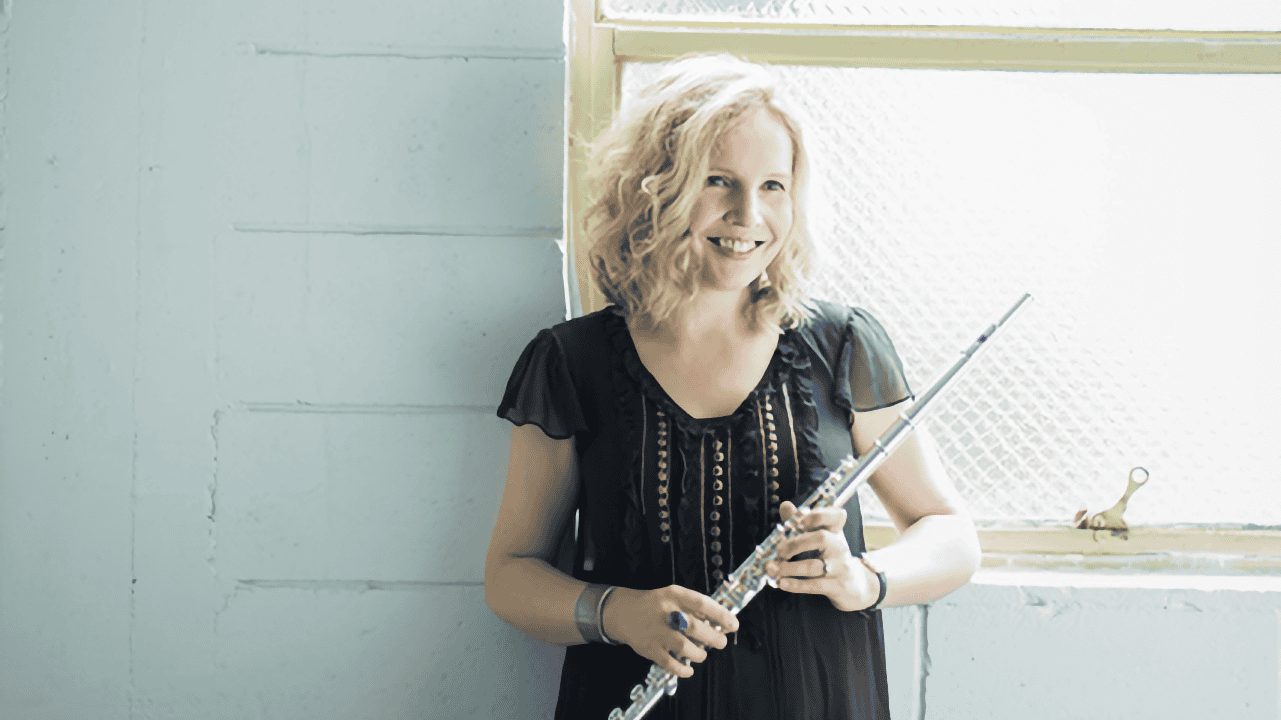
Meet Lorna
Lorna McGhee is principal flute of the Boston Symphony Orchestra, and has previously served as principal flute in the Pittsburgh Symphony and co-principal flute of the BBC Symphony Orchestra in London. She has performed as guest principal with orchestras including the Chicago Symphony, San Francisco Symphony, and London Symphony Orchestra, and has appeared as a concerto soloist with ensembles across the U.S., UK, Canada, and Japan. An active chamber musician, she is a member of Trio Verlaine and has recorded several albums, including a Gramophone Editor’s Choice selection with the group mobius.
She has taught at the University of Michigan, the University of British Columbia, and Carnegie Mellon University, and is an Honorary Fellow of the Royal Academy of Music. Scottish by birth, she studied with William Bennett in London and is a lifelong student of English literature and the Alexander Technique.
In this episode, we explore…
0:00 – Introduction
2:02 – A line from one book that shifted how she thinks about confidence
3:15 – What she told herself before one especially nerve-wracking performance
4:30 – What can happen in your body when pressure hits at the worst moment
6:30 – What to do when your pre-performance routine doesn’t go as planned
9:08 – A different way to think about playing it safe
9:30 – One way to think about what all that technical practice is really for
11:30 – A reframe she leans on to get herself on stage anyway
13:00 – One approach to keeping your body from tensing up in the moment
13:15 – A common assumption about the Alexander Technique worth reconsidering
16:01 – A more relaxed way to think about whether the audience will like it
16:30 – What to do if your mind goes blank mid-performance
19:04 – A small ritual her teacher relied on before performing
24:00 – A gentler way to respond to your own mistakes
34:27 – Why getting better doesn’t always make the fear go away
36:02 – A reframe that changes how pressure feels
39:00 – Why working with your nerves might work better than fighting them
43:00 – What she brought with her, written down, before her biggest audition
49:15 – A different way to think about the odds in any audition
[00:00:00] Lorna MCGHEE: Whatever you practice, you reinforce. So the last thing you want to do is keep throwing yourself at that difficult passage with tight hands and expecting a different result. You're only, you're only teaching yourself, A, to be anxious about it, and B, to be uncoordinated.
[00:00:17]
[00:00:29] Noa KAGEYAMA: You've been the principal flutist with the Boston Symphony now for, I think, almost two years, if I'm remembering correctly. And previously you were principal flute in the Pittsburgh Symphony and have performed as guest principal with many other major orchestras and have had many, many high-profile performances as a soloist or in chamber music settings,
[00:00:47] All of which to say you've had a lot of success performing at a really high level under a lot of pressure. But I'm also kind of assuming that there must be at least some auditions or performances over the years that didn't necessarily go the way that you would have liked and, and maybe you've even had some of those, like, really sort of almost traumatic days that stick with us and make us question ourselves even months or years later.
[00:01:11] I think a lot of times when we see musicians perform, we assume that they feel as confident on the inside as they appear to be on the outside. And sometimes there is that alignment between our inner and outer selves. But I wonder if this is something we could kind of start exploring, as in, like, is it really the case that musicians who look and play confidently and courageously, like, really feel that Or is it often possibly the case that musicians look more confident and play more confidently than they actually feel on the inside? And, or even things like is it possible to play well even if you're not feeling like 100% confident, or do you have to be 100% confident to win a big job, et cetera, et cetera.
[00:01:50] But I wonder if we could just kind of play around with that topic a bit.
[00:01:53] Lorna MCGHEE: That's a great topic and, yeah, I, I 100% believe you can play really well even if you don't feel confident. and i- in fact,
[00:02:02] Dana Sinclair in her book Dialed In, she talks about, uh, it doesn't matter how you feel, it's what you do. I find that just tremendously empowering because often... a- I mean, it's-- we almost never have the ideal circumstances.
[00:02:18] You're always going to feel nervous. You know, there's al- there's always going to be some feeling of discomfort, I would say, because to be a performer is just to be vulnerable.
[00:02:28] I think we can really equip ourselves, like, philosophically to deal with that, and so not, not get carried away by how we're feeling.
[00:02:37] So there's a lot of underpinning, I think, that goes, uh, into that. Like, you really have to have a strong philosophy about why you're doing this performance or what you're wanting to convey or what your relationship to the audience is, what your relationship to the jury is.
[00:02:53] I mean, to have kind of considered those things beforehand and, a- and then it doesn't matter if you feel... i, I mean, confidence is really overrated. And I, I think something that I did recently when I had to do a solo performance with Boston was right before walking on stage, e- every time I was just choose courage, choose courage, choose courage because I, I think that's much more important. It is like the choice you make rather than just how you feel. You're not at the mercy of events. You're not buffeted around by them.
[00:03:26] Sometimes you may feel more confident than others, but it really doesn't matter. And, uh, just having a really good game plan and, and good g- like having your mental approach really thought out and crafted before, and just accepting your vulnerability, and accepting that with kindness.
[00:03:50] And then to get back to the first part of your question, I was thinking about that this morning, actually. I thought, "I must tell Noa about some of the..." Maybe some of the most disappointing things that, happened to me were also... I mean, this sounds a bit twee, but, but they, they actually were catalysts for really developing your craft.
[00:04:12] And so I, I, um, when I was younger, I was in the finals for the Royal Concertgebouw Principal Flute audition, and um, In, in that final round, none of my low D's came out. And that had never happened to me before. And it was because the pressure of the situation, you know, it went right to my jaw, and so I was sort of really holding a lot of te- tightness and tension in my jaw.
[00:04:39] And, you know, for low Ds, you need the airstream to go at a certain angle, and and my jaw was in the way. So, um, that was really disappointing. And, and it was also confusing because it had never happened before.
[00:04:53] But it was also something that set me on a path, um, of just, okay, well, that's going to happen now. You know that's going to happen, so what are you gonna do about it?
[00:05:05] So I, I, I had already done quite a lot of Alexander technique before that. When I was a student, I, I practiced so hard. I was just very ambitious and driven, but also very anxious. And so the way I was practicing was just kind of random effort everywhere all the time, as opposed to poise, which is right effort in the right place at the right time.
[00:05:28] And so my h- my left hand would go numb. So I ended up having Alexander technique lessons then, and I... It was incredibly helpful, and it really helped me understand how to practice constructively. Like, just take responsibility for the way you're organizing yourself physically, but also how you're, uh, organizing yourself mentally as well because the shoulders don't get tight on their own.
[00:05:53] The fingers don't grasp the keys for dear life unless there's an element of fear there as well. I mean, It's psychophysical. And so it gave me really wonderful framework for practicing well. But I think I'd never been in maybe quite such a high-pressure situation as that final round, and I really wanted the job.
[00:06:15] It was another occasion that, that, that, um, I was in the Rampal Competition, the International Flute Competition in Paris, and, and the first round went really well, and people were so nice. They said, "Oh, what a beautiful sound," et cetera, et cetera. And then on the day of the second round, I couldn't find a bank that would exchange my traveler's checks.
[00:06:37] it was in the days of traveler's checks. And, and, uh, so I was in a panic. I was running 'round the streets of Paris trying to find... I wasn't staying in a very touristy area.
[00:06:46] So by the time I got to the competition, instead of having a spacious maybe two-hour window to warm up nicely, I got there 15 minutes before I was due to play, and of course, I kind of crashed and burned.
[00:06:57] And, and people were saying, "What happened to your sound?" And again, that- that's the psychophysical. Like, I was just holding so much anxiety there that, uh, I wasn't able to deliver what I was able to do.
[00:07:12] And so those are the two... I mean, there's been plenty of other rejections, but those are the two main ones that I really learned from, you know, and they helped me in the future.
[00:07:25] Noa KAGEYAMA: There are a couple things you've said already that, that, I really wanted to, to dig a little deeper into, and I think they're interrelated.
[00:07:31] I mean, you had talked about needing to be vulnerable in performance or on stage, um, and before the Boston, um, concerto performance, you had the mantra, "Choose courage," and you also talked about needing to equip ourselves, um, for the pressure of the situation. I... The thing that I really wanted to kind of look at for now was this mantra of choose courage. I mean, I think on some intuitive level, we all probably have a sense of what that means, but, but it can also be kind of abstract. Is it possible to, to maybe share some examples, musically speaking perhaps, or, or in the piece itself, like what you might have meant by that to yourself?
[00:08:13] Lorna MCGHEE: Something I'm very interested in is, is the idea of playing generously, playing openheartedly. When I think of the people I really look up to like Yo-Yo Ma, Joyce DiDonato, Anne-Sophie von Otter there's a selflessness and an openness about the way they make music.
[00:08:40] I think the enemy is playing defensively order not to go wrong. I- maybe slightly hiding your light because you don't want to, uh, be embarrassed, you don't want to let yourself down, you don't want to, or you don't want people to reject you. And then, so I think there's a way of playing in order not to go wrong, which is not really making music.
[00:09:08] That's only, like, physical execution. It's not, there's no communication in that. And something I'm really interested in, and actually you're to blame for this because I remember in one of your, um, uh, podcasts you talked about, on the door of a dance studio, the little notice, "the only reason to practice technique is so the so- so the body doesn't get in the way of the soul expressing itself."
[00:09:32] So I think for me, like, the whole point of practice, and the whole point of mental preparation is is to get rid of the obstacles that are in the way of the soul expressing itself.
[00:09:45] So if I'm going on stage feeling like I need to protect myself, or defend myself against rejection, then I'm only gonna play half of what I can do, and it's not going to reach anybody.
[00:10:03] The best that you can hope for with that is that somebody will admire you. well done." You know, "You, you, you navigated that well." But it's not necessarily going to touch people or, or reach them on a human level.
[00:10:17] But at the same time, it's, it's so... I mean, we are fragile. It, it is such a human thing to feel like, "I want people to like it. I want..." You know.
[00:10:26] And so I, I love this idea that choosing courage is sort of in a way i, I don't want... This sounds too harsh, but it's sort of ge- getting over yourself. Like, like taking the focus off yourself. It, maybe that's a better way to put it. Less self-regard, less self-defense, and more, commitment to the task at hand.
[00:10:49] So that's how I would define courage.
[00:10:53] So yes, this could go wrong. Nevertheless, I've trained to the best of my ability. My job is to express whatever the characteristic of the music is that I'm playing. My job is to, connect with people and to be connected my- with myself too, and connected with the composer, you know, sort of empathetically to, to co-create with them.
[00:11:22] Yeah, this is frightening. Nevertheless, I've, I've prepared as best I can, left no stone unturned, and the concert's going ahead. I just love that wisdom of no escape. I, I mean, it's, it's such a reality check. The concert's going ahead.
[00:11:40] H- uh, choose. You have to choose.
[00:11:43] Are you gonna play or are you going to defend or a- are you gonna participate fully in that exchange with the audience?
[00:11:52] Noa KAGEYAMA: My impression is that this means allowing yourself or maybe pushing yourself to take risks in that moment, where there's no guarantee if it's going to work out the way that you want or not. And, what came to mind is, you know, I think often of like myself even in master classes as a- child, after I'd already played, the teacher would say, "Okay, let's work on some things and then they'd ask me to do a part again, and it would already sound better, but then they'd ask me to like do more of this or do less of that or, you know, kind of tease apart some of the details.
[00:12:25] And then I'd do like a tiny bit more maybe. But then they'd need to, keep pushing me to do more and more still and I think there's sometimes a technical element of that 'cause it's harder to, to do some of those things.
[00:12:36] but also even just not wanting to do too much of something and be ridiculous or feel silly or something, and and I'm wondering if that's along the lines of what it means in that moment to "Choose courage,"
[00:12:50] Lorna MCGHEE: I think I can define it a little bit more clearly, like from, from a technical point of view. in a way it's much easier to tighten up, It takes quite a lot of presence of mind. I refuse. I refuse to do that. I refuse to get tied in knots physically a- and to, to, to redirect yourself. So, a lot of people I think have the misconception that Alexander technique's a- about relaxation. It's nothing to do with relaxation. It's, it's to do with skill, to, to m- uh, coordination and skill.
[00:13:25] And so you're not going to feel relaxed when you're walking into an audition or, or playing a difficult concert. So it's like, uh, part of the choosing courage is like how, how you respond to the stimulus. So yeah, this is a, this is a high pressure occasion. I feel vulnerable. Nevertheless, in the face of that you can choose, uh, okay, free the neck.
[00:13:54] So, so even something as simple as like freeing the neck or if you have a, you know, for flute players or a violinist if you've got a big shift, you know, you might kind of, "Ah, I hope I get the shift," and, and then brace to do it. Or, or for the f- flute players, you know, flying up the opening scale of the Daphnis and Chloe solo, it's, it's, it's very, very tempting to, to grasp and brace there.
[00:14:18] But I think part of choosing courage is I refuse to do that. I will make a different choice. I will choose to keep the body peaceful. Um, and so, that's one way of maybe defining it a little bit more on the technical level.
[00:14:37] And then philosophically, I remember, I remember one Alexander teacher I had, uh, cracked me up. She said, "Lorna, you have to allow all the possibilities to be on the table, including complete catastrophe because only then can, are you free to move."
[00:14:55] You know, rationally it could happen A- and I actually find it really strangely comforting and empowering to just accept that fact, 'cause we sort of brace against that so much. But actually it could happen. And then just choosing, nevertheless, I'm going to offer what I can offer, and release everybody from having to like it. They don't need to like it. In fact, it's unrealistic. I also find this very comforting. It's, it's really unrealistic to think everybody's going to like everything you do.
[00:15:30] I And we're often so afraid of that. But it's quite nice, it's quite nice to give the grace of ... To the audience, you don't have to like this. it would be nice if you did. You know, of course everybody wants to feel appreciated, but it's also, like, just, you know, rationally speaking, you can't please everybody.
[00:15:51] I s- I saw this wonderful, little saying recently in a shop window, You can't please everyone. You're not a pizza."
[00:16:01] And I, I just think that's helpful for us. And I have actually had to use that, expression of, allow all the possibilities to be on the table. I remember once in Pittsburgh playing the Badinerie of, uh, Bach's Suite in B minor, and it's something I've... I know inside out. I've played it from memory since I was, like, 14 or something like that.
[00:16:23] And I, the music was up in the dressing room. I was just waiting backstage to go on, and all of a sudden I was pressing the wrong buttons. I was like, "What note comes next?" And, and there was no time to go and get the music. There was no time to do anything, so I just thought of this, allow all the possibilities to be on the table, and then it does allow you to play.
[00:16:46] I mean, that's a bit of a extreme example, but I do love that philosophy.
[00:16:50] There's so much in our business about judgment and about rejection or praise and blame or humiliation or, or, or a lot of accolades, and it's hard to navigate I mean, honestly, there, there's been times in my life when I've wanted to leave the profession altogether.
[00:17:10] Seriously I, I did look at going in other directions at several times in my life, but I, I love music.
[00:17:19] So then it's a choice, and always remembering you have this choice, that nobody's making you go and take that audition. Nobody's making you do that solo thing. So I think it's really empowering just to own that choice, and then equip yourself the best you can s- on, on every level, in your preparation, in your practice, refining your coordination, in your mental preparation, and even your sort of philosophical outlook. Your emotional response to what you're doing,
[00:17:50] And, you know, it takes a while to figure it out. And, you know, I don't think we ever really do totally figure it out, but we can make our peace with these high-pressure situations, and learn to flourish in them, not just survive, but learn to thrive.
[00:18:04] I was so lucky with my teachers. My teacher, William Bennett, was so fearless and so uninhibited, and there was so much joy in the way he made music, and I tried to emulate that because as long as the breath is going this way, leaving the body, you're communicating.
[00:18:21] I asked him once, "What do you... What goes through your head when you walk on stage?" Because he immediately puts the audience at their ease. And, and you felt this warmth, and it was just enjoyable, and I always enjoyed hearing him play, and you were always moved by it.
[00:18:37] And, um, and he said something really interesting. He said, "When I walk on stage, I, I try to, you know, lo- look at members of the audience, acknowledge them so that they can relax." I thought that was a really interesting thing to say, so they feel acknowledged, and they can relax.
[00:18:58] And then he said he wasn't a religious man, but he said, "Then I say a little prayer. I will do my best." And then he would play.
[00:19:04] And so there was just that kind of beautiful humility and acceptance of the vulnerability and really a clear sense of what your role is. I mean, so, so part of the taking care of tension or tightness is not just so that your low Ds come out in a final of an audition, but it's also so that your audience can relax, so the jury can relax, so they're not watching you struggle or strain and then that creates this kind of sympathetic mirroring in them.
[00:19:36] It makes them anxious, you know, if your shoulders are up round your ears.
[00:19:40] Noa KAGEYAMA: The way that we initially kind of got into this subject, it might seem as though high-pressure performances are this, like, battle almost between us and ourselves in a way. But as you were starting to allude to earlier just a moment ago, that's not necessarily how it has to be. It's not always something that we experience in that sort of way. Performing can be the most, magical, thrilling, engaging, inspiring experience, for a musician to have.
[00:20:11] And so I wonder if you can speak to what those moments feel like, or, or maybe you've used the word or the phrase equip ourselves before, which makes me wonder a little bit, like, what is the process of doing that, you know, in the practice room in advance?
[00:20:28] Uh, you know, the nuts and bolts of that, but even the mental side of it, so that when we do go on stage, we do have a clear idea of what we want to say, um, and what that might mean or look like.
[00:20:40] Like, I kind of operated under the assumption for most of my life that at some point I would get to a point where I could play everything perfectly, and then I could really worry about the higher level musical things.
[00:20:49] And then I got to the point in grad school, I was like, "You know what? Maybe I'll get to that point someday, but it's not happening anytime soon." Um, in the meantime, all my teachers are asking me to focus on these other things that I keep pushing off. And, and so I got to the point where I started to be able to look at a score and look at the music. and understand and make choices and figure out what the composer might have been getting at.
[00:21:12] And I realized one day that when I was focused on those things and not just on trying to impress everybody with how cleanly I could play, performing did feel very different. and even my experience of nerves started to change.
[00:21:25] And, and so I, I'm kind of guessing in the back of my mind that maybe that's part of what you meant by that. But, but yeah, I wonder if you could elaborate on, on that and what that looks like in the practice room.
[00:21:34] Lorna MCGHEE: Yes. May, can I answer the first part of your question first about what does it feel like? I mean I, I love playing. I love the noise of the flute. I love sitting in the middle of an orchestra and being surrounded by, by that beautiful sort of e- envelope of that, that embrace of the sound there. I mean, it's, it's thrilling.
[00:21:54] It's thrilling to me, and I love those moments when you can hear a pin drop in, in a concert hall. You know, the... And, and you feel it. You feel everybody's listening, and I think those are the moments we live for because it's so... There, there's so few experiences in our world where, where there's that collective shared experience now.
[00:22:18] And, and it's such a beautiful way. Here you are in a room full of strangers, and you've felt this moment together. And, and it's... So it's all about connection. I mean, I, I feel so clear about that. my job is not just, it's not just to play the flute well. it's to, it's to offer that connection, you know?
[00:22:43] And, uh, w- with my colleagues and together with my colleagues, and then with the audience, and, um, That's what I live for, and I, I love that. And so when one can surrender to that, you know, you do all the really hard graft.
[00:22:57] And, now I get to, to the other part of your question. Ultimately, everything is about storytelling to me.
[00:23:03] I mean, I love the noise of the flute, but I'm not really that interested in, playing the flute really well. I mean, it's, it's a means to an end. It's a means to tell a story and to share what it is, you know, about... Everything we do is about being human, you know? In the, in the music. So always trying to characterize or, uh, w- what is happening dramatically right now, or what is the atmosphere, or what is the tone color.
[00:23:33] Those are the things that interest me, and it's the telling stories without words. I, I... That's the only reason I do this.
[00:23:41] And, um, then the practice part is just trying to get... Just trying to remove all the obstacles. And, and really, technique is just pure and simple, it's just physical coordination.
[00:23:57] What I love about the Alexander technique that I really learned from that is, there doesn't need to be any crashing moral judgment. It's just, is what I'm doing efficient or inefficient? It's not like, "Oh, you idiot, why did you play that out of tune again?" Or, "Why can't you get that passage right?"
[00:24:15] It, it's such a relief to take that awful moral judgment and just say, "Ah, I just haven't found my coordination yet." What would help? How can I find my coordination?
[00:24:27] So I love to chunk on, on m- micro levels. Just, just, okay, f- for wind players or flute, flute, flute players, what, what is the airspeed I need here? What, what is the angle of the air, you know, so that that note speaks with e- effortlessly, effortless effort. So I, I'm just trying to do away all the time in a way that for me, the process of practice is just refining this kinesthetic map. What do I need? What do I not need?
[00:25:01] And, and so that, that it's really, um, so trustworthy. Like, you know physically exactly what you're doing. Your coordination is really smooth and efficient, and then that allows you to be spontaneous musically. That gives you the confidence. Here we come back to the confidence again.
[00:25:21] That allows the confidence to be able to take musical risks, uh, because your kinesthetic map...
[00:25:29] when I perform, I'm never trying to recreate anything. I'm never trying to recreate anything. It's, it's always slightly different, and you never walk into the same river twice.
[00:25:40] I mean, the fundamentals are the same.
[00:25:43] You know, like if you're playing the beginning of Daphnis et Chloé, you need to lift the airstream up roughly this angle, and you need to step on the gas pedal to get up the hill. You know, those high notes are resistant.
[00:25:54] And how resistant? You know exactly how resistant they are, and you meet that not with tightness, but with just beautiful organization. Uh, you know, not too tight, not too loose, just, just what's required. And, and then, then you're free to enjoy making music. So I would say the bulk of my practice is just this kinesthetic map.
[00:26:19] Noa KAGEYAMA: I wonder if you could just elaborate on, on what you mean by kinesthetic map?
[00:26:22] Lorna MCGHEE: Yeah. kinesthetic map is really e- everything to do with, like, how you're organizing yourself physically.
[00:26:28] The foundation of your fini- kinesthetic map is, like, okay, Allow your feet to rest on the floor. You know, soften the tops of your feet. Relax your ankles. Let go of your calf muscles.
[00:26:42] Soften the knees. Make sure you're not gripping at the hips. Release your arms from your back all the way to your fingertips, release into length. Free the neck. Think up along the spine, you know, forward and up with the head. So crown, crown of the head, like a tree in the forest looking for the light.
[00:27:02] You know, the crown of the head sort of orienting towards the ceiling. Not, not pushing at all, but just, just orienting there, and then you feel like you have roots going down through your feet. So you have that stability of the skeleton, first and foremost. And then, and then just on the, like, keeping that awareness from head to toe, you know.
[00:27:24] Then becoming more specific. So when I'm doing my warm-up or when I'm doing the chunking of excerpts, often for flute players, when you're playing fast, you are, you, you, or, or you're playing fast, um, finger passages or fast articulation passages, your tone quality drops.
[00:27:46] So finding a reference, you know, maybe playing one beautiful long note at, at the top of the run, just, just there. Okay, then clocking what is the airspeed What is that spaciousness there in the jaw, i- in the mouth with the embouchure What kind of airspeed is that? Um, and then just refusing to compromise that.
[00:28:13] So then you might do a little bit of the run slowly, or you maybe just do a few notes of the run maybe, or even maybe the top and the bottom of the run, just two long notes. But you play them with a glorious tone, and that, that kinesthetic map of like, there's the airstream, there's that spaciousness in the jaw, there's that not too tight, not too loose in, in the embouchure connecting those two notes.
[00:28:37] And then, and then you build your, build your argument from there. You know, you, you fill in the, the run without compromising that.
[00:28:45] Or, uh, maybe there's a difficult finger passage where you're prone to sort of grasp the keys. Oh, that, that's a really difficult combination there and, and you kind of grasp it, and your wrists become really tight, and you might be anticipating that difficult one, and so slightly falling off it that way.
[00:29:09] So maybe just isolating two notes and doing those with excellence, with zero stress in the body.
[00:29:18] So, so another way of saying it, finding your kinesthetic map is sort of really noticing On a, on a very, uh, detailed level, how am I moving? How am I moving my body moment to moment?
[00:29:36] And when things are not helpful, like i- if I'm grasping for that note and then pressing the keys, it's not gonna make the note any more right if I press the key harder. In fact, in fact, it's obstructing my breathing. It's, it's making my fingers more unwieldy. So can I take responsibility for myself and keep the wrists free, and just maybe isolate, go for the jugular.
[00:29:59] Where is that, where is it the most difficult there? And can I do the ironing and just see if I can execute that without that, startle response i- in, in my phys- physiology?
[00:30:14] So that's what I mean about doing the ironing. A- a- and can I, can ... And then, you know, you bring that spacious ease from head to toe, to the table.
[00:30:23] Quiet mind. If you put the right ingredients, the cake will come out. It, it won't fail you, or the ship will come around. I've mixed metaphors.
[00:30:31] It's just, you know, that kind of detailed work where you don't get in a flap. You're not unrealistic. You're not, you know ... You don't have to be Heifetz. Most of us aren't.
[00:30:43] But, but I mean, somebody like Heifetz just built up incredible coordination, and that ... I mean, I think that's something we can all do. It's not beyond us.
[00:30:51] And it's also sort of a, a mental discipline 'cause it's kind of humiliating in a way. It's like beginner's mind. You know, okay, that leap is really not clean be- you know, because I'm anxious about it, I'm throwing myself at it, and I'm...
[00:31:06] What do you need? I need to move peacefully and, and not be pressing the keys hard. I need to keep my breathing spacious. Keep everything free and, and fluid so that, um, I'm not getting tied in knots.
[00:31:22] And, and also whatever you practice, you reinforce. So the last thing you want to do is keep throwing yourself at that difficult passage with tight hands and expecting a different result. You're only, you're only teaching yourself, A, to be anxious about it, and B, to be uncoordinated.
[00:31:40] Something I do a lot of as well, you know, for the flute, we're always worried about running out of breath 'cause you waste so much. You know, it's like you need as much as a tuba player really because you lose half of it. And so for, for me, another way of refining the kinesthetic map might be to, you know, in a difficult excerpt to, to play the first phrase and then just stop completely at the at, at the breath, and then take a wonderful, spacious, relaxed breath, and then continue, and then again at the next breath mark so that I'm not training myself to have a, an anxious, stressful breath.
[00:32:23] I, I, I'm just cutting that habit.
[00:32:27] And then s- so, so with training in this way, and then building it up, of course you have to play it fast with peaceful breathing. But then I, you know, I might just focus on one thing at a time. You know, once I've done that sort of preparatory work, okay, let me see if I can do three, three phrases and keep my poise and not lose it at the, at the breath marks.
[00:32:51] Can I keep breathing efficiently and reflexively?
[00:32:55] I don't focus on anything else. I'm not trying to play it super musically. I'm not trying to do six million things at once. It's onl- it's only the breathing. Can, can I focus on the breathing and take care of business with that?
[00:33:09] Like one thing at a time, so that, that way you build up your kinesthetic map, you know? Just focus on one element of the coordination, and then you get that under your belt, and then you, you keep coming back to it and reinforcing it too. It's never just one and done.
[00:33:25] Like That's what helps you build your trust in yourself.
[00:33:27] And then, and then when you've done that systematically, then you can juggle six balls in an air, in the air at once and cope with it and, and keep that peaceful body.
[00:33:39] So something I'm really, really interested in this, i- is this idea of the peaceful body because I think to create any kind of art is to make yourself vulnerable and to put yourself out there and risk rejection, risk ridicule, risk whatever, risk indifference, you know?
[00:34:02] And, I have great respect for artists of any discipline. I mean, it takes a lot of courage. It's much easier not to. And so I think, I think performers have the right to have a peaceful body, but nobody will give it to you. It's like something you, you have to claim for yourself.
[00:34:20] There's a beautiful quote by Pablo Casals, "Playing an instrument should increase a person's confidence in themselves, not increase their fear."
[00:34:27] But often the more advanced we get, the more our fear increases, perhaps because there's more to lose in a way or, or higher pressure situations, bigger audiences or more critical audi- Who, who knows? Whatever.
[00:34:39] But, um, I think that's a mantra that we can live by. It's like we don't have to be diminished by these things.
[00:34:48] We don't have to contract.
[00:34:50] I remember when I was going through my tenure process in Pittsburgh, I had a little mantra, "Do not contract. Do not con..." Mentally or physically, you know? 'Cause you know you're being judged. The conductor will ask you to do this, do that, do this, do that, and it's like, "Is this okay?
[00:35:05] Is this okay?" You know, no. S- stay connected to your, back, y- your, your stability, and what helps you play your best. Stay open 'Cause frankly, the other stuff doesn't help. So it's also just practical I mean, this is such a beautiful, beautiful art form. It can change people's lives. You know, it never, will never stop a tank, but it, it nevertheless, you know, people will sometimes remember performances throughout a lifetime.
[00:35:39] I'm 54 now. I remember performances in my 20s that I will never, ever forget or where I was so moved listening to somebody play, and that's not nothing. Like, that's such a gift and, you know, I think it's not to be underestimated.
[00:35:55] And so Billy Jean King, the wonderful tennis player and advocate, she has this saying, "Pressure is a privilege."
[00:36:02] Sometimes you feel the pressure is a burden. But actually it's a privilege. How great, to get the chance to play at that level or, or in Symphony Hall in Boston. What a beautiful privilege. What a maybe once in a lifetime opportunity to, to do that. It's so transient, it's so fleeting, but it's not nothing.
[00:36:24] I think it can help us to be kinder to ourselves. I've certainly felt pressure as a burden, and then you have to kind of talk yourself around. Uh, I remember when I was in Pittsburgh, Emanuel Ax came to play with the orchestra, and there was also a little chamber concert that, you know, he kindly, um, agreed to play, and, and a few of us were lucky enough to, to play with him.
[00:36:51] So I, I got to play Gluck's Dance of the Blessed Spirits and also the beautiful Carmina Untracte. And I remember practicing at home just feeling thoroughly miserable. The, oh, it's not good enough and, you know, you kind of do a number on yourself.
[00:37:07] And then I, I suddenly had this realization, "Lorna, this may be the one and only time you get to play a piece with Emanuel Ax.
[00:37:15] Don't miss it with this nonsense. You know, you can play Dance of the Blessed Spirits. You can play Carmina Untracte. It's not beyond you. Just do your best, practice well, practice appropriately, and then show up. Uh, just, just show up and get o- you know, get over yourself. It's... A- and just en- you know, enjoy.
[00:37:38] And it's, I think in our business, I know sometimes it's not helpful when people just say, "Ah, just go and enjoy yourself. Just do good." I- i- in a way you need, you need the equipping part as well, y- you know, in order to be able to enjoy it because- Our nervous systems are also not nothing.
[00:37:58] I think when I was younger, I used to try and override my nervous system and just say, "Okay, look, Lorna, you're, you're, you're not at death's door. You're not living in a war zone. Y- you can walk on stage and play this. don't, Don't be so vain or, or, or, uh, you know." But now I'm, I, I have a little bit more respect for the nervous system.
[00:38:21] And then you bring the rational mind to the table as well. Of course, you're not in a war zone. There is no threat to your safety. The only threat is that you might humiliate yourself. You will survive that. You will live. It might not feel very good, but you'll be okay.
[00:38:36] You may have to choose another profession or leave the country, but you'll be okay fundamentally. Nevertheless, the nervous system is registering a threat. You have to kind of befriend your nervous system and be your own best ally that way.
[00:38:54] So I, I think it's both and. So now I don't try and override my nerves or my, my nervous system. I try to work with it and just say, "Okay, Lorna, you're, you're not... Like, get a grip. you can do this. It's... And it's not beyond you, and you have the skills to do it."
[00:39:12] Nevertheless, can you take care of your nervous system by having a whole battery of things that help?
[00:39:21] So, so for me, it was like- Alexander technique, uh, procedures like the semi-supine constructive rest, which helps you release your spine so that you're, and for your neck, so you're more coordinated, your breathing is more coordinated.
[00:39:38] So that's how I would start off my practice. Having a really, really good warmup routine where you're covering all the bases. So for us on the flute, that would be just, you know, get, get command of your breathing. You know, connect with your breath, like long oceanic breaths, and then bouncing breaths.
[00:39:56] It's like, it's like open strings, you know, for a string player or just connect with your breath. Get the, get the air moving through the flute peacefully, calmly, nowhere to go, nothing to do, just resonate, get the breathing flowing. Uh, you know, these kind of fundamentals, you know, doing, uh, flexibility exercises so that when you do your big leaps in Daphnis or whatever, it's not a mystery.
[00:40:23] You know where those notes live, and you're just in, in your, in your warmup, you're just reinforcing your kinesthetic map so you can be peaceful, and efficient, and accurate, and skillful. And, you know, you do finger dexterity, a little bit of dexterity. Um, uh, what else? Yeah, flexibility. Articulation. You know, so like a tennis player, you're, you're practicing all the shots separately, and you're practicing your serve, you're practicing your backhand, you're practicing your volley so that you can play the game.
[00:41:03] You can play the ball wherever it lands on the court. That's, that's sort of my approach to the warmup.
[00:41:09] When I auditioned for Boston, I made a pact with myself. This feels very vulnerable, you know, especially I was 52 at the time auditioning for... You know, that this later stage in life to be putting yourself on the line again.
[00:41:24] And so I made this pact with myself that in my practice, whatever I do is gonna be constructive. So whatever you repeat is with a clear intention, and, like, what are you gonna do differently, and how are you going to refine that kinesthetic map? Like, what... So I'm really, really, really into this idea of practicing proactively, not reactively, not playing and then what goes wrong, but, but practicing in a way in order to go right.
[00:41:56] So a ton of chunking, a ton of breaking things down and, and just putting them back together again with peaceful body, with really good coordination, with no stress. So it's like stress levels are really low, but attention is very high.
[00:42:12] So it's very different from reactive practicing, where it's like, "Ah, why did that go wrong?" And then you go back and try and fix it. And, um, so I, I, I... It's a much more pleasant way to practice and just trying to be really, really, really disciplined. Like, whatever you repeat, make it constructive.
[00:42:36] I don't know if this is helpful to share this, but I, have a little notebook here that, you know, wh- when you have a big performance coming up or... i, I made this notebook when I auditioned for Boston.
[00:42:48] You know, when I get nervous, I get a little bit spacey and dissociative, so I could just end up doing a warmup playing long notes till the cows come home. Uh, you know, but I, I had to... I, I wrote down my whole warmup, you know, and I timed it. This will take me 45 minutes to do, and if I only have 20 minutes in a warmup room, this is what I'm gonna do.
[00:43:10] You know, so it was all mapped out so that... And I, and sure enough, I did get very dissociative and spacey, and it was so helpful to, okay, just read the instructions. And it was something I relied on quite a lot.
[00:43:21] And then, you know, waiting in the practice room, instead of testing yourself on, on the excerpts, that's a surefire way to make you doubt yourself, 'cause the minute something goes wrong, it, it, it brings some doubt in your mind.
[00:43:37] So I only, I only did the excerpts, like, really slowly and just, again, to refine and just to remember your coordination. And I, I wrote down maybe three things from each one that, you know, what's the challenge in this one? Okay, what do I need to remember about the kinesthetic map here? And then, then just isolate those chunks. Maybe play the whole thing slowly, leave it, next one. And then also have a very clear idea what you're wanting to communicate with each one. So a sort of cl- a clear Clear map physically, and also a clear intention, you know, expressively.
[00:44:20] And, um, and then just trying to keep your s- nervous system very quiet. So, centering exercises as, as you, you teach, N- Noa. And, um, I had breathing exercises, uh, just not, not to do with the flute, but to help me calm my nervous system. So I had a whole battery of things there that helped.
[00:44:42] You're taking responsibility for your whole self, and also taking care of your whole self, so that walking into this thing that can feel like walking through fire in a way.
[00:44:53] You know? I mean, nobody likes being judged. It's very uncomfortable.
[00:44:57] I'm sure everybody feels when you're in the warm-up room, everybody else sounds magnificent behind closed doors, and you feel anxious, and then you feel, oh, and I definitely felt this, like, "Get me out of here. This is uncomfortable. I don't like this. G- let me out of here."
[00:45:16] This is part of the equipping yourself, you know, really having these strategies and tools. You're going to feel like that. So what helps you to stay present? What helps you to keep a peaceful body? What helps regulate your nervous system?
[00:45:29] What helps you stay open expressively? So in addition to those sort of nuts and bolts thing, I, I, I also had at the back of my book, like, some quotations that help me to remember.
[00:45:43] Like, one of them is a beautiful Zen quote. " We move beyond notions of success and failure, praise and blame, fame and humiliation, to try and create a work that is of benefit."
[00:45:53] Or I, I, I love literature, you know, and so one of my favorite quotes is Toni Morrison, Forget your name in the street. Tell us what life has been for you in the dark places and the light."
[00:46:03] Those things really help me remember that's my job. When I'm in the audition, I'm playing Shostakovich Six, and it's this very, very lonely flute solo, or something as sweet and beautiful as the Carmen Entr'acte, or as life-affirming as Brahms One.
[00:46:21] That's Toni Morrison. Like, what has life been for you in the dark places and the light? And that's our job. We're artists. We're not just instrument operators.
[00:46:29] Those things help me stay centered.
[00:46:31] And also, you feel very alone in those situations when you're in the practice room, warm-up room, waiting to go on stage, and sort of in your mind's eye calling up the people, that have meant a lot to you.
[00:46:47] So I, I actually, to, to the Boston audition, you know, in the, in the back of my little notebook, I, I just had the names of some people that meant the world to me. You know, like my first flute teacher in Scotland who, who made me just fall in love with the flute and fall in love with music. And every single time you played, you had to be telling a story.
[00:47:07] And then William Bennett, my teacher in London, again, like, that was the worst crime if you were not saying something with the music.
[00:47:13] So just, just sort of summoning them up in your mind's eye, okay, remember what you were taught. Remem- you know. And also, just in honor of them, carrying on that tradition.
[00:47:25] Or, um, before the Boston audition, it was... Th- that audition was, I think, January 9th or something like that. And so I'd just been home in Scotland and with my family, with my aunts and cousins, and they're, they're wonderful musicians. My, my uncle and cousin are guitarists, and they play mandolin and, and they do a lot of folk music.
[00:47:46] And so we, we did s- we, we always would play after, like, the Christmas dinner. And, uh, it's so happy to make music in an environment like that. And, you know, I even, I even played them a little bit of my Mozart that was coming up in the audition, and it was just so lovely.
[00:48:05] And it... So just even in your mind's eye, imagining they are on the other side of the screen, 'cause I always find the screen a bit daunting 'cause it's... I mean, I love-- I live for the communicative aspect of playing and, and in a way, visually, that screen takes away that element of communication visually. And but you have to be...
[00:48:28] your intention has to be stronger than the screen, that you want to share something with the people behind it, behind the screen.
[00:48:34] And, and really, it's, It's a difficult situation for everybody to be in, also for the jury to be in. It's really stressful.
[00:48:42] Having s- been on the other side of the screen now myself a lot, it's really stressful because you want to make sure you don't m- miss something, or you don't make a mistake, or you, or you don't want to have conflicts with your colleagues if you have differences of opinion.
[00:48:55] It's, it's, it's really stressful. So sometimes I think, I think it's helpful to bear in that, bear that in mind when you're performing, that maybe, you know, whether you win or lose. I mean, most auditions you're going to lose. So it's quite helpful just to accept and, and just, "Okay, I'm just gonna offer what I can offer and let the chips fall."
[00:49:19] Maybe something you play will brighten somebody's day on the other side of the screen, or it might move them. Or, you know, then, then that's wonderful. That's wonderful.
[00:49:32] Anyway, this comes back to, like, all the possibilities have to be on the table. m- most auditions you're not going to win.
[00:49:37] Just, just the law of averages. I mean, just the... It's kind of stacked against us, isn't it? You know, there's... They can only give one place, and they have to choose who, who they feel fits that best, and it, it needn't necessarily be a...
[00:49:53] I mean, I think probably the best audition I've ever played, I was rejected, and that really hurts. It kind of stings 'cause there's no, there's no hiding because you didn't play defensively. It's like, I just really opened, opened up and, and gave everything, and it couldn't have gone any better, and still it's rejected." And that can be quite painful.
[00:50:13] But, but it's all... You, you bring your rational mind to the table. Uh, they j- they had to pick the right person for their section, and, and, uh, y- you know, the person that they picked in that audition is somebody I respect enormously. Uh, you don't begrudge them anything, and, and at the same time, you don't do a number on yourself.
[00:50:32] I, I did everything I could, and some things we can't control. And then it was also here, it's another case where it was very helpful not to override your system. Like, in the same way as not overriding your, your nervous system, you're not overriding your d- disappointment. It's okay to f- it's okay. You're human.
[00:50:51] It's okay to let that run its course, and then also for it not to diminish you.
[00:50:57] You You know what I did after that one? I, I listened to some recordings of my old teacher, William Bennett. It, it reminded me why I love music and why I love the flute and... You know, so sometimes when you're feeling disheartened, just turning towards what is precious to you, you know?
[00:51:13] And then you, you don't get... Yeah, you, you don't get depleted.
[00:51:19] And it's okay to be disappointed and...
[00:51:22] My predeces- predecessor in Boston, uh, Elizabeth Rowe, she wrote such a beautiful blog post, uh, right before the audition for Boston, uh, for her, for her job.
[00:51:35] And she said, you know- I- it's such a stressful environment. I, I mean, people are putting themselves through the fire taking this audition, and so much effort has gone into it. And, you know, one person may be lucky enough to win the job. And just know that whether it goes your way or whether it doesn't go your way, it doesn't define you. I, I think that's so wise.
[00:51:59] Noa KAGEYAMA: The last thing if, if you have time for it is, um, if you only had 20 minutes to practice, what would you do ' with that 20 minutes?
[00:52:10] Lorna MCGHEE: Yeah
[00:52:11] I have this exercise where I do singing and playing, and I, it's sort of just very, very oceanic type breaths, so it, uh, it feels so good. And so you take these long inhalations with a peaceful body, and then as you breathe out through the flute, you also s- hum.
[00:52:31] You, you sing and play. So it kind of gets, it wakes up all the resonance in the body, like the head resonance, like singers talk about the chest resonance, and, uh, you sort of feel the vibrations there. And, uh, it feels so beneficial, and then it, it sort of wakes up the instrument of your own body and, and puts you in sync with, with the actual instrument.
[00:52:56] And so I just, I love doing that, and it it, it feels So good and, and, um It fundamentally connects you with your breath and also the, the desire to communicate because it's like, it's so vocal. It, it, it's less about the flute, it's more about the voice, you know? And aligning your voice, aligning your breath with the task at hand.
[00:53:21] So, uh, and it opens up your sound and your resonance, but also it, it kind of just first things first, you know, human expression, and this puts us in, in contact with this instrument. So that's what I would do.
[00:53:37]
Sign up to receive the latest episodes via email
Enter your email address below to get the latest episode in your inbox.
See Lorna perform on Tuesday
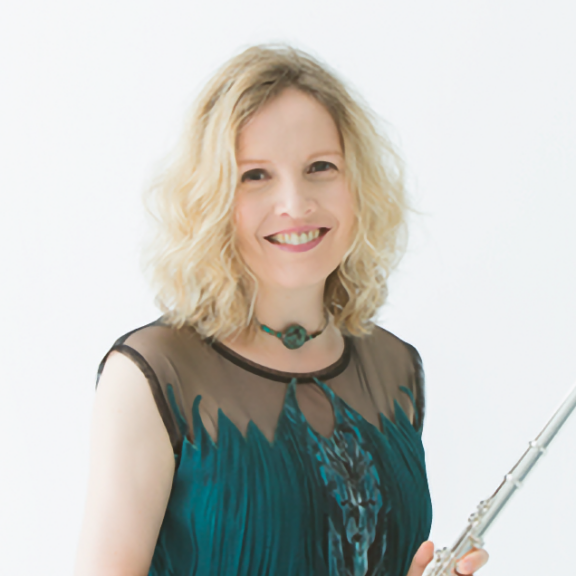
If you’re in the western Massachusetts area, you can see Lorna perform as featured soloist with the Boston Symphony at the Tanglewood Music Festival on Tuesday, August 4th (2026).
The full program is here.
Connect with Lorna
You can connect with Lorna, and see her discography here:


I saw that the audio clip with Lorna was 55 mins long and thought, mmm, that’s very long! (I always listen to your interviews) I made myself a cuppa and sat back to listen. I loved it! I am a very average guitar player and singer, and I sometimes perform and go through the same issues as people like Lorna. I learnt so much from listening to the interview, I will use her many tips and insights and I know it will help me. Due praise to you too Noa. You know when to just let your interviewees talk, and your questions feel just right.
Thank you, John! Glad to hear you enjoyed it and found it helpful!
What a wonderful interview! I particularly resonated with her characterization of pressure as a privilege! I think that is a useful framing for many difficulties, and I’ve used that framing myself in some non-musical contexts.
Oh my gosh I’m not even 1/3 through and feel like twenty thousand light bulbs have gone off in my head already. This is fantastic. This interview is going to rank up there with Robert Duke’s for me as re-listen, write down and apply to practice. So much great advice so well expressed. It makes so much sense. And can be applied actually to many aspects of life.