

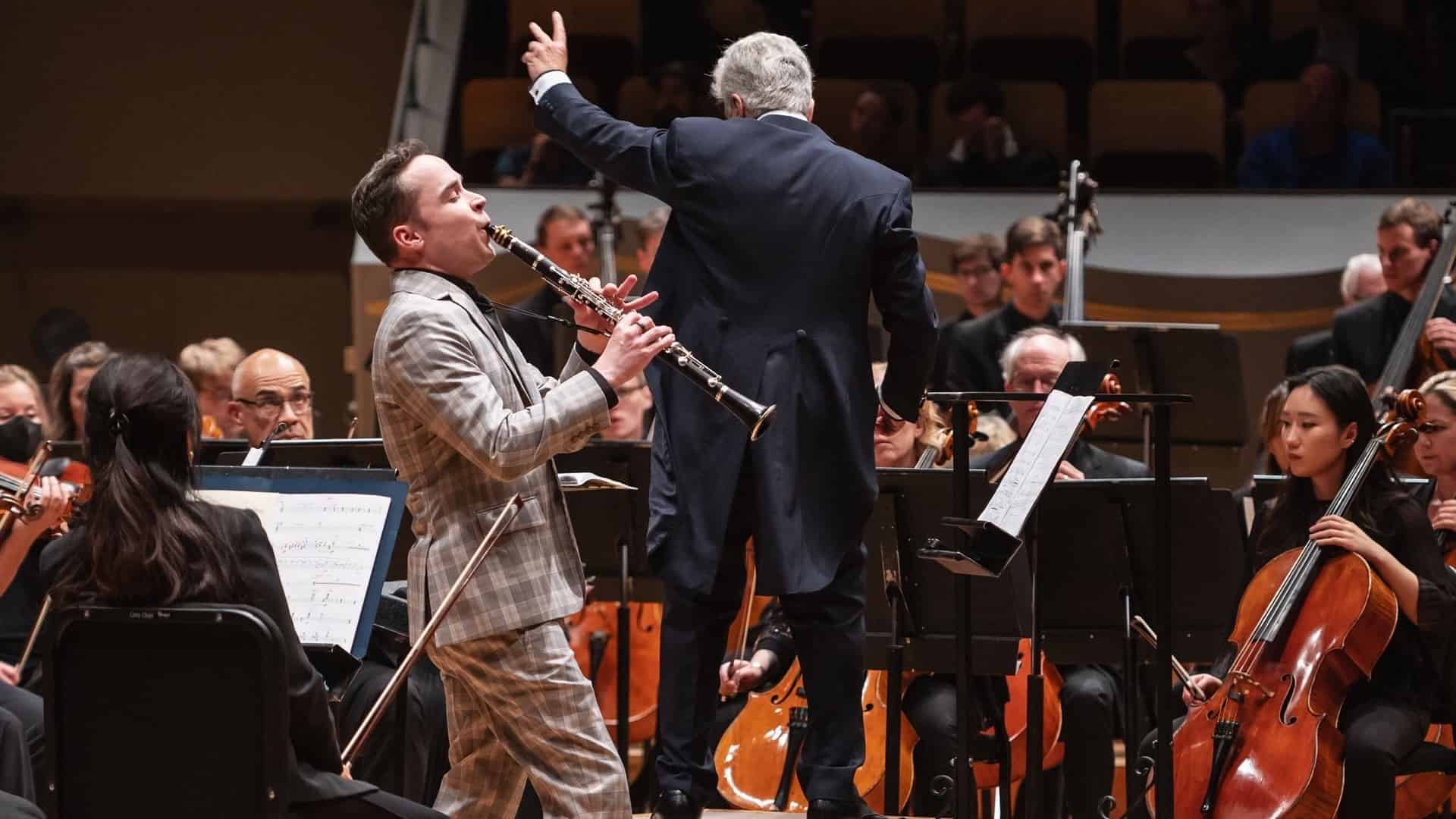
In this month’s conversation, I’m joined by Jason Shafer, who is principal clarinetist of the Colorado Symphony and on the faculty of the University of Northern Colorado and the International Festival-Institute at Round Top. Jason is also nearing completion of a master’s degree in performance psychology, and so we explore the many ways in which his performance psychology studies have influenced his approach to practicing, performing, and teaching.
In today’s episode…
In today’s episode, Jason explains what it means to be a healthier practicer and performer, and what this might look like on a day-to-day basis. He also discusses why he feels our goal shouldn’t be to eliminate performance anxiety per se (which is aligned with the research in ACT), but learn to live with it and perform optimally regardless, and how he personally embraces the word anxiety. We explore the mental challenges of returning from a serious injury, and how Jason overcame his own post-injury challenges. We also discuss on-stage focus, why it’s so tricky to figure out what musicians are focusing on when they’re having a great performance, and Jason explains why he prefers “attention redirection” to “attention control.”
Jason reveals the most surprising thing he’s learned in his performance psychology program, and how this has changed his approach to teaching. He also reflects on some of the most impactful things he’s learned from non-clarinetists, and explains why it’s so valuable to seek feedback from musicians who play instruments other than your own. We also talk about what happens behind the screens in orchestra auditions, why pleasing everyone is not possible, and what we should be trying to do instead.
I hope you enjoy the episode!
- 4:01 – What it means to be a “healthier” practicer.
- 6:55 – Why compelling performances are more about your strengths as a musician and less about your weaknesses.
- 9:49 – How to identify your strengths, and overcome the mental hurdles that makes this task much harder than it sounds.
- 15:16 – The duality of overcoming and living with performance anxiety. And why Jason actually likes and embraces the word anxiety.
- 19:56 – How he overcame the mental challenges of recovering from a significant injury.
- 24:05 – Why attention control (or redirection) is such a critical – but often overlooked – skill for musicians.
- 33:16 – What is one of the most surprising things he has learned in his performance psychology program?
- 39:48 – Some of the most valuable lessons Jason learned from musicians who play instruments other than his own. And why, especially if you are are auditioning for orchestra jobs, it’s so important to play for people who play other instruments!
- 49:18 – “Selling your pepperoni pizza” – aka why trying to please everyone on an audition committee or in an audience fails, and what we should be doing instead.
[00:00:00] Noa KAGEYAMA: So you've been the principal clarinetist at the Colorado Symphony for, I think, almost a decade now or so and we've known each other since you were in New World way back when, and we've continued stay in touch, and I think it was maybe a few years ago you sent me an email with some questions about degree programs in performance psychology, and I remember getting really excited and intrigued and curious about this new, not, actually not a new interest of yours, one that I think you've maybe had in some form or fashion for a while.
And now you're getting close to finishing up, I think. And so I just wanted to chat with you a little bit because I've gotten more emails over the years, increasingly, about this sort of curiosity and interest, from teachers and performers and folks who are in high school still and looking forward to careers and different things.
And, maybe a good place to start would be just to see if I could ask you what were some of the dominoes that started falling that led you to start thinking in this sort of way.
[00:01:09] Jason SHAFER: Yeah, absolutely. Well, it's fantastic to talk to you as always, so thanks for having me. Um, I think the very first domino is really meeting you at New World, where I was really working hard towards auditions, but I hadn't really realized just how much understanding the mental side of preparing for high pressure situations was just a massive piece of the puzzle that was missing for me, personally.
And I found that, you know, as I started to work with you and continue to use your ideas and read about it and look into it further, I really just I started to realize that it was benefiting me both in terms of my health in the practice room, but then of course in my performance quality and my ability to overcome my own performance anxiety and live with it.
So it really ended up being such a key to my own audition preparation and my own just success in my career. And I think that's kind of persisted because even though I'm a full time performing musician, I still am using the concepts of performance psychology and things that you've taught me and things that I've studied so much in my own performance.
Um, I had a serious injury at one point, and it was really a huge key to the recovery from that. Um, so actually I think you phrased something about that I had, you know, written to you with some ideas about, oh, maybe I should be studying this more. But I think actually one of the biggest dominoes that fell was I started to really be teaching workshops on performance psychology related things and how to overcome and live with performance anxiety.
And I think it was you that told me something like, well, you know, some training actually matters too, you know, like your experience matters, but, and you said it of course, much more, um, politely and kindly than that, but um, I really did realize that if I'm going to really be spending more and more of my time helping others with this that some real training and some real certification in this really makes a big difference and that's definitely proven to be very true.
[00:03:23] Noa KAGEYAMA: There are a number of things that came up already just in your explanation of that that I'm curious about. There are two that I wanted to take a moment to touch on because the way in which you put them just sort of caught my ear. One, I think you might have said something about better health in the practice room.
And also, I think a couple times already, something about learning to overcome and live with performance anxiety, and the combination of overcome and live with, I thought was also kind of interesting. So I mean, maybe I'm making too much about nothing, but I wonder if you could speak a little bit to both, maybe first with this notion of better health in the practice room.
[00:04:01] Jason SHAFER: Absolutely. Um, no, you're not, uh, making too much out of nothing. I think those are big things. I think one of the biggest things that, especially working with you, but, just becoming aware of how performance psychology can help performers, um, is that health in the practice room. And I think actually it's not even so much for me, it wasn't so much of the idea of I'm learning massive things that are really things that I'm changing and trying to do that are new, but more to actually develop awareness of all the things I was doing that was particularly not helpful. Um, so for me, I mean, one of them was just realizing that as I got closer and closer to a stressful performance, I would work harder and harder and get more and more critical.
And that's exactly the opposite of what, for most people, is really, truly effective. And so even just starting to develop awareness of, I didn't even realize I was doing that. It was just the sort of natural inclinations that I think a lot of performers have, especially people who are oriented towards beat myself up and get every little detail worked out and the harder I work and the more I'm hard on myself, the better I'll do.
I think that's an inclination that a lot of us have and maybe don't even realize that we have. So, I think when I'm, you know, referring to thinking back and thinking about my health and the practice room. It was almost more of a like there wasn't some big healthy secret that I was missing but more that wow I just had no idea that some of the things I'm doing are actually actively becoming a detriment to my playing.
[00:05:42] Noa KAGEYAMA: I think we hear sometimes concepts from athletics, you know like tapering and so forth and the idea of, playing a little bit less as you get closer to the competition or the audition and, you know, starting to maybe do more run throughs and performance practice, but less of the nitty gritty details and so forth.
But I think there's a deep part of us that feels scared, maybe insecure to, to take that approach, and I don't know if this is a good example, but I know that you recently had a solo performance with the symphony and, you know, playing in front of your colleagues and so forth for a composer who's still living and so forth.
I imagine that could be a stressful situation and I'm sure it's a work in progress over the course of years, but yeah, how does one start to get more confident or comfortable with that approach to performance preparation?
[00:06:40] Jason SHAFER: It reminds me of a couple of things I think first there is some image you gave to me a long time ago, and I'm still not sure if it's the right bird, but it's that the ostrich that sticks its head in the stand. I think it's an ostrich that does that. At least that's what you told me. Um, but it's this idea that as a performer, the performance gets closer, we benefit from the idea of sticking our heads in the sand about our own playing in general. So it's the sense of, okay, is right now, two weeks before my performance, the best time to change who I am as a clarinetist? Probably not, right? So I think the first aspect is kind of understanding for me that that's actually truly helpful and that the more that we wish things were different about ourselves, especially in those final little phases right before we have to perform, the more we focus on that, the more we think about all our weaknesses, the harder it is to perform and the harder it is to truly be in the moment on stage and love what we're doing.
And I think one of the things that's helped me accept that that's true and one of the things that's really helped me commit myself to that without the worry of I should be more critical or any of those thoughts is the fact that a great performance or a great audition or any great live performance, in my opinion, is a lot more about the strengths that you have and a lot less about the weaknesses, um, Actually, that reminds me of something else you told me, which is that, it's actually worth it for us to acknowledge what our strengths are as performers, and try to make them super strengths, to really be proud of them, to be aware of them, to be excited to show them off, and that it's kind of human.
It is just human to have weaknesses, and we're always going to have them, and we're always, we can always try to improve them, but we're never necessarily going to get rid of them. Just like we never necessarily get rid of performance anxiety. So I think this has proven true even when I've sat on audition committees, I remember a specific audition that I was sitting on the committee and everyone's, you know, taking lots of notes and we get to the final round and the person we hired was someone that made me cry when they played.
And they had plenty of problems in their playing and weaknesses and things I noted, but it was an absolute yes for hiring this person. It was because their strength was just there, that music making was there. So when you talk about this idea of, you know, how can we get to that point? I think it's really, truly experiencing and accepting and believing that it actually helps.
I've talked to a lot of students about this and I think it, it always becomes easier for people to take this kind of an approach once they've done it a couple of times and realized. Oh yeah, this actually does help.
[00:09:41] Noa KAGEYAMA: So it takes that initial leap of faith perhaps of trying it a couple times to see how it works out. That makes a lot of sense. In my head, it would seem like identifying one's strengths would be a straightforward sort of task. But is it? I mean, when you work with students, like, have you found, or even for yourself, I mean, how does one identify one's strengths in that sort of way?
[00:10:05] Jason SHAFER: You know, it's funny you say that because when I've worked with students or even some of the clients I've started working with, that seems to be, especially for performing artists, one of the hardest hurdles is actually being okay with saying you love something about the way you make music or perform in whatever way.
For me, it seems to me that one of the biggest hurdles in identifying those strengths is realizing that something that is a strength of yours can always be made better. And I think that has held a lot of people up from being able to say, yes, I love my sound, or yes, I love my articulation, or my expression, or my interpretation.
Because it is absolutely just demonstrably true that we can always make every aspect of our playing better. So I think we all like to resist the feeling of saying something is a strength because, oh, it's not perfect, right? So I think the first thing is accepting that. And then the second is, I think, really taking time to record ourselves and listen back with new ears and really be able to see when we listen to that recording, that something is truly a strength and sometimes it's surprising what that strength is, but, um, I think once we accept that a strength is still always a work in progress and and sort of really be willing to actually listen to a recording and write equally positive comments to equally negative comments, for example.
I think so many of us either have never done that or haven't done it since we were maybe in high school or something. So, you know, I think it's those kind of steps seem to help guide us in the direction of being able to truly find our strengths.
[00:11:49] Noa KAGEYAMA: You used the word love a few times, something about loving some aspect of how you make music or something along those lines. Is that how you, you phrase it with students?
Because that does seem like it would be easier to answer than what are the things that you do best, right? Because that then gets into that whole area of, you know, relative to this other person, maybe not so much, or even relative to where I wanted to be, not so much. It becomes really tricky, in terms of being able to give ourselves credit for things that we enjoy about the way that we do things.
[00:12:23] Jason SHAFER: That's beautifully put. Yeah, I do think that it's, it's almost like a, a two layered love because in one sense you have to really love how you perform something and, and you know that you're loving the music, but you're actually also really loving yourself in the process to do that. I mean, it's, music is so deeply personal, I think, and it's actually something I like to say to people is that, um, the fact that music is so personal and the fact that music is ourselves is both the best thing and the worst thing about it.
Because it's, you know, it's the best thing because we get to have opinions and express ourselves and make it such a part of our lives. And then it's the worst thing because we have to overcome the sort of constant judgment both from ourselves and from other people that make it feel like a personal attack on ourselves, like as human beings.
So I think so much of our, the love that you mentioned here is, it is, I think actually twofold where we're having to sort of nurture our love of ourselves and nurture, yes, I do love the way I play this and I love my strengths. And also, yes, I love the music and I love doing it. Um, and I think nurturing those two things can sometimes go hand in hand and sometimes separates a bit.
[00:13:48] Noa KAGEYAMA: Is there a particular way in which you ask students or other musicians to listen to their own recordings so as to identify strengths? Because, you know, I'm just kind of going back in time, but I think if I were to listen to a recording of myself, who knows, maybe even now, um, my ear would very quickly go to, like, a few specific things that I tended to fixate on.
[00:14:10] Jason SHAFER: My sort of simple challenge that I give to most people is to, especially if you're not really sure, if you're very new to doing something like this, is to very simply listen to a recording and write equally positive and negative things. Or, you know, positive and constructive, however you want to put it.
And for most people, that's a tremendous challenge. And those positive and negative things can be small, like you really just liked the way you played one note, or they can be massive, you know, about the entire performance. And the same thing with the constructive things. But I think even just pushing yourself to do that challenge, with one recording, you might not get your whole picture of your playing and your strengths and weaknesses as a whole.
But I think if you push yourself to do that over time, patterns start to emerge. And that's when I think people start to really see, well, when I really do force myself to look at these positive things, I'm really starting to see something that not only I can see how other people love, but that I truly love too.
[00:15:16] Noa KAGEYAMA: Maybe that's a, as good a transition into this other thing that occurred to me as you were talking about this duality of overcoming and living with performance anxiety. I wonder if you could say more about how those two things fit together for you.
[00:15:32] Jason SHAFER: Sure. Um, whenever I'm doing a workshop or I'm teaching a couple of classes at a couple of music schools next semester about performance psychology or performance anxiety, I almost always start with that idea that I think it's all about living with it and not trying to eradicate it, performance anxiety.
Um, and mainly, to be honest with you, mainly that comes from just my own personal experience. It is true when you look and read about performance psychology concepts that there's all these theories of activation and these ideas that, yeah, if you're actually at too low of a level of excitement, that's also detrimental to your performance in many ways.
But even just from my own personal experience, I feel like I've had really underwhelming performances, both when I happen to feel really very low on the anxiety spectrum and very high. So, I think, my first thought when I started trying to learn about how performance psychology concepts could help me as a performer, I first was just instinctively taking that sort of critical musician mindset of, okay, this is a problem.
I have to get rid of it. And it's been a lot harder to live in the gray area and say, no, I'm going to accept that I'd like to be anxious. And I would like to experience that increased level of excitement and energy that's beyond what I feel in the practice room. Um, and so I think that even just accepting and feeling that that's our goal is to stay in that gray area of I'm still going to have performance anxiety.
Um, I think for me, it gets the most genuine results for ourselves. Because for the most part, when you hear people say something along the lines of, oh, I don't get nervous, they're probably either lying or just really struggling with self awareness or insecure. You know, we all, we all fool ourselves from time to time in various ways, but I've just found that as we are picking out approaches and committing to mental skills we want to try, the more we can say, oh, I want to monitor this progress and then I'm reaching optimal performance, and I still feel that excitement and that I have lived with my performance anxiety and it's there, and it's part of me, as opposed to it's taking over my playing. I think that approach seems to be the most durable and genuine.
[00:18:10] Noa KAGEYAMA: This is a little bit more of a nerdy question, but do you still, for yourself, use the word anxiety in these contexts? Or, now that you have an expanded vocabulary, having, you know, explored the research on all this sort of thing, I mean, do you conceptualize it differently for yourself?
[00:18:29] Jason SHAFER: That's a great question. Um, I guess the simple answer is no, and I think I actually, for myself personally, I actually like anxiety, I like anxiety is quite not, maybe not the right phrase, but I, I like using the word anxiety, because I've struggled with anxiety in my life on a number of levels, and even just outside of the performing realm, and I almost like you know, seeing it in my life as, yeah, that's anxiety, and I like associating it with that term and being okay with it.
I can actually see how for some people that might not be the right term for you, but, you know, your own language matters tremendously for yourself. So, for myself personally, I almost like it because it helps kind of explain to me. Oh, yeah, going to the bathroom eight times and my high heart rate, like, yeah, that's kind of like anxiety.
So, I associate that term in a way that, that sort of, I feel like I can live with it and not be afraid of it.
[00:19:36] Noa KAGEYAMA: Well, that sounds like it's the key, being able to accept it in some way and be able to perform optimally as much as possible, regardless of whatever that experience is, which maybe relates a little bit to this other thing that you mentioned a little bit ago in terms of the injury experience that you had, and we don't need to get too deeply into the injury if you don't want to, but I am curious about the mental aspect of recovery.
When you talk to athletes, especially in highly physical sports like football, for instance, you hear on TV that, you know, it often takes like a full season of just cultivating trust again in your body before being able to really play like you did without thinking too much about things and worrying about things. And, you see a lot of anecdotal evidence of this being the case where people come back from these major knee surgeries and such and, you know, technically they're healthy the next season, but it's really like the season after where you start to see them fulfilling their potential again.
And, you know, there's a big mental hurdle that has to be overcome in some way. I'm just wondering if there's any bit of that that you might be able to share in terms of how some of these mental skills that you've cultivated over the years or mental understanding of injury and recovery helped you to get back to a place where you're able to play and trust yourself again.
[00:21:02] Jason SHAFER: Absolutely. You said something, I think it was cultivating trust in your body again. That's such a beautiful way to put it, um, because I do think that the psychological side, the mental side of recovering from an injury is probably overlooked a lot. I would imagine both athletes and musicians and performing artists.
Um, for myself personally, that was exactly the journey that I found quite difficult, is even though I physically was recovered well from that injury. I basically found myself on stage with an almost, like, immovable attention on the injury. So it was this sense of, like, wow, like, all I'm thinking about is this, is my past with this injury, or this, what I've gone through with this thing.
And, and I remember thinking, well, okay, I think I need to actually first just have awareness of that because I had had before the injury for me at least was more long lasting and kind of over time, which I think allowed that misplaced attention to occur so strongly. Um, so really, I'm talking about attention a lot here because that ended up being such a key for me in terms of really feeling that I was cultivating that trust in my body again So I would essentially set small goals for each performance I was giving where I would say, okay if I can keep my attention on the music, anything that is not the injury, on really being in the moment with playing with my colleagues or what I'm trying to express, if I can even do that for only a few minutes at a time, that's progress.
And really, you know, actually keeping track of that and acknowledging it and being proud of, if I have to play a two hour concert and I can have five minutes, wow, I'm really enjoying myself. That was actually really difficult. But once I started to really truly achieve that and acknowledge that, I really found that from that point forward, then I started to really move forward into that, nurturing that trust of my body again.
So, I think for me it was both the awareness of where my attention was, and the acknowledgement of achieving those goals as time went on. I did want to mention one other thing, which is that for many musicians, an injury can become, and athletes, an injury can become almost a traumatic response. Um, and I think in those cases, there's actually, I've known a number of people that have benefited greatly from finding someone that does EMDR which is, as you know, a very kind of specialized form of therapy that's very effective for those that have had a traumatic response to something. And so hearing more and more cases of musicians finding that useful, especially with injuries, I think is worth noting.
[00:24:05] Noa KAGEYAMA: You mentioned attention. And, as you know, it has been a particular area of interest for a long time for me and one that I find myself talking about a lot. I wonder if you could say more about the role that focus or attention plays in performance. I mean, I think we all know that we should be focused on stage but in terms of what that actually means and where it goes and how it can be different from context to context, depending on, you know, if you're playing by yourself or if you're at an orchestral audition or if you're doing a recital with a pianist or, you know, with a trio or in the context of playing in an orchestra where, you have an exposed solo or an entrance versus when you're just part of the mix and different conductors come in and maybe have different demands.
And I wonder if you could say more about that to kind of give us a picture of, you know, if we were all psychic and could read your mind, like, what, like whereabouts your focus or attention would be going on a good day if you had full control over your ability to direct your attention.
[00:25:07] Jason SHAFER: I'll try not to talk for an hour, but, but, you know, I, I also, you were the one that first really inspired me to get so excited about it. Um, I do think that in a very simple sense, the first step to really being aware, that's a weird thing to say, but placing your attention on your attention is actually realizing that where we place our attention really matters and that it is something that we have control on as a skill to work on. I think for myself and for many people that I've talked to about this, we almost have just, many people have just never spent time even thinking about that. A student, for example, last week was playing something for me and they played through a page of music and the first question I asked was, well, what were you thinking about as you played that?
And it. took the student a while to be able to answer that question, and then kind of listed somewhere between 10 and 15 very specific things that all could have been made better about what he had just played. And that was fascinating because that also wasn't even my question, which was, what were you thinking about as you played?
But what he remembered was that as he was playing, he was just constantly keeping notes of all the things that should have been better. So, that's a great example of the idea that this particular student hadn't even really considered that maybe not focusing critically the whole time could actually help perform and enjoy, you know, maybe he might actually enjoy performing if he wasn't doing that constantly.
So I think that's really my first simple answer to that, which is just that becoming aware that we can work on where we're placing our attention, I think is one of the biggest hurdles for a lot of people. In one of the workshops that I taught, I spent a lot of time talking about attention and where we place it.
And it was interestingly the hardest thing for people to understand because it was so far, I think, from people's thoughts of like, wait, I can think about something different when I play music? So, I guess that's maybe my first response is just, I think we have to be willing to experiment, and willing to actually play an excerpt and think about a character, or think about hearing the orchestra behind us, or think about something that really gets us in the world of the music.
And I suppose maybe the second most important thing for me is the idea of redirection. Um, because a lot of literature says things about attentional control and trying to exert control over our attention. And for me, even when I just played these three concerto performances, which I really did genuinely enjoy myself and made tons of mistakes and but loved it and had a wonderful time performing it.
My attention was not 100 percent in the music all the time. I occasionally did just drift to like, oh, oops, I just missed a whole bunch of stuff that sounded really bad or that wasn't the note at all. I had those thoughts and it popped into my head. And I had practiced so much the process of redirecting it, that those moments were relatively fleeting.
And for the most part, I can look back on those performances and be proud and remember the joy of performing it as a whole. So for me, the key In really incorporating thinking about attention into my performing is mainly actually this concept of I'm going to accept that for me personally, I struggle with just being in this perfect flow state 100 percent of the time, and my brain just tends to pop in with these thoughts that I wish I weren't having.
And so I actually accept that I do need to do redirection and it doesn't make me a failure to be redirecting my attention.
[00:29:15] Noa KAGEYAMA: Back in the day, of course, Robert Nideffer's responsible, I think, for this idea of there being different dimensions of attention and this whole attention control training that he talked about. And I think that's found its way into sports but in music, I think maybe not so much.
And, one of the challenges in music, I think, is that when we're having a good day and we're in the zone, we're often not all that cognizant of what it is that our attention is doing. It is difficult to pinpoint where our attention is when we're having a good day. Because a lot of times once we notice that in that moment, then we're no longer in the zone and then it's hard to get back there. So I wonder if, given your reflection on this and what you've been studying and learning, do you have a sense, like, if you're going to help a student practice getting into the zone a little bit more frequently or more consistently, what sorts of places have you found yourself going, attention wise when you're having a good day?
[00:30:17] Jason SHAFER: It's a great question. I think the first place I try is actually in the practice room by myself with whatever that specific piece of music is. I have to ask myself that question as part of the preparation process of if in an ideal world, I just wanted to think about anything in the world I wanted to, what would it be?
And so, a lot of the time, that is the character of the music, or the emotion that I'm trying to portray. But sometimes it's not. Sometimes it is something more along the lines of, well, this is a piece of chamber music, and in this moment, all I want to be thinking about is as I'm playing this long note, the violinist plays this beautiful melody that that's what the audience should be paying attention to and so while I'm holding that long note, all I want to be doing is just thinking about it and listening to that violinist. So I suppose those examples really maybe underscore the point that, for me, it depends on the piece of music, or it depends on the context. It sounds silly, but there are actually times, as a professional musician, in which you're playing a concert that really is not the song of your heart.
And I think it's actually quite equally important in those contexts to not just spend the entire concert just thinking about how you don't want to be there. I mean, then you're spending hours with a negative association with your instrument.
So even in those moments, I'll find myself even practicing placing my attention on the audience loving it, or even on a smaller scale, placing my attention on who I'm playing with in the orchestra, and can I play in tune with them. So I suppose in instances like that, I actually accept that there's no way that as I'm playing these quarter notes, I'm going to be really just so into the emotion and the character of the music.
It's just, I know I couldn't do it. So still though, even in those instances, I can choose something that I think benefits me as a performer in general. So I suppose maybe it really starts in the practice room, but then it also takes a commitment to continuing it even through performances you might not be as excited about or ones in which you're not featured and a high level of anxiety.
[00:32:43] Noa KAGEYAMA: Sounds like finding little mini challenges to keep yourself engaged and present. It reminds me of the book, Mastery by George Leonard, where he talked about even when you're driving your car, instead of just driving your car, you know, see if you can stay exactly in the center of the lane, just finding little challenges like that to just keep you engaged.
I've tried that before, and nowadays, some of the cars will do it for you, so it takes that away. Or at least it'll warn you when you're getting too close to appearing like you're falling asleep and steering out of the lane.
But, but yeah, I wonder if you could also share a little bit about some of the things that you've learned in your program. I wonder if there's anything that, like, surprised you or that's really reinforced things that you came to understand intuitively or through teachers you've had but couldn't quite explain or articulate in a way that you can now, or maybe there's more justification for it perhaps?
[00:33:40] Jason SHAFER: Absolutely. When you said that something that surprised me, um, one thing definitely popped into my head right away, which is, one of the classes I had to take was just basically fundamental understanding of the different theories behind what you do as a counselor. So it's theories of therapy, like Freudian things, or behavioral approach, or existential approach, all these different approaches that therapists take.
And of course I'm not yet a therapist or, you know, I'll just be a performance consultant and I'm not a psychologist, but learning about these theories, I was kind of excited as I went through the class because I thought wow by the end of this I'll know, you know, what is the best approach for a one on one session with somebody like what sort of ideas or approach should I take and I couldn't believe it, but there's just over and over again this idea that the number one thing that has been proven to produce the best results in any sort of therapeutic relationship is the quality of the relationship and that you get along with the person really well and that you have a good connection And I was blown away and I mean I guess a little disappointed at first but it actually reminded me of there's this wonderful book by Eric Booth the Music Teaching Artist's Bible.
And it's essentially a book that I've used when I've taught pedagogy before. But he says, uh, it's guiding you into what are, what makes you a great teacher, and what are the qualities that you have to have. And in the middle of it, somewhere, he just says, I think it's the, he calls it the law of 80 20, where he says 80 percent of who
you are as a teacher is who you are as a person.
You know, and then 20 percent you can kind of change and become a better teacher and all that stuff, but 80 percent is just who you are. And it was like kind of dumbfounding, because I'm like, I'm reading this book to become a better teacher. You're telling me I can only change about 20 percent of that?
So I think even as I go through these classes and I think about how I want to help people with the concepts of performance psychology, and I want to help them optimize their performance, the training really does matter. And it's a huge part of efficacy and I think in some ways training can change very slightly who you are, but for the most part, it's almost just like giving a great performance where the best parts of my performance will be my strengths and not the time I've spent trying to change my weaknesses.
So I think that kind of applies to all of us. Whether we're just teaching students or we're trying to optimize our performance or you want to be a consultant and you're working with somebody else that I think about that probably my greatest efficacy when I'm trying to help someone, even with all of these studies that I've done in performance psychology is going to end up being who I am and what I bring to it from my experience and who I am as a person in this in that time. And I guess that sort of really inspired me as a teacher as well.
I suppose maybe a little more about the actual mental skills that I've learned more about is I used to help my students in essentially the same way. Um, I would always basically take the same approach with them. And it's kind of cliche to say, Oh, every person's different and I treat them individually.
But I do find that, for the most part, even a skill that has been studied tremendously thoroughly, such as where you're placing your attention, or breathing techniques, or anything that's a specific mental skill, probably will have some efficacy for someone, but that everyone's different about which ones are really their primary things that really make a huge difference for them.
And even already I've found with certain people, like one person will find, well, I tried really incorporating breathing exercises into my practice, or I tried really incorporating, really changing where my attention is. But what really helped was changing where my goals are and reflecting on my goals.
And so I think I find that the really amazing thing about performance psychology and a lot of these studies and when I read through all the incredible things on your blog, for instance, is that there's, at least from my experience, virtually nothing that's going to be tremendously harmful, but that some things are more helpful than others.
And that, that really varies. So, honestly, the number one piece of advice I give to students or when I teach a class on performance techniques for performing artists, um, is I really push experimentation, so that if you've tried one thing, and it really is kind of a, eh, thing, there's more to try.
[00:38:38] Noa KAGEYAMA: In that sense, it might be similar to music. I mean, I can think of a few things where teacher would say this to me, probably would say it to me repeatedly over a span of time, and it never really sunk in. And then years later, somehow it would come up again from somewhere else, maybe, and I'd like really embrace it and it'd be transformative and I go back to my old teacher and could sort of tell that that wasn't a surprise to them.
I imagine it might be a similar sort of thing where sometimes we're ready for things and sometimes we're not. And sometimes we need certain things more than others.
[00:39:13] Jason SHAFER: I had a beautiful experience that reminds me of that, where I was sick one week for my university clarinet students, and so one of my clarinet students went and took a lesson with one of the graduate students that week. And then came back to me the week after and was so much better on that one thing I had been trying to tell them.
And I at first was like, boy, I'm a terrible teacher. But then I thought, no, this is actually a wonderful human thing about what we do. And I think as a teacher, I'm just happy when my students get something. And if the way I phrased it wasn't the perfect one, then I'm glad someone else did.
[00:39:48] Noa KAGEYAMA: As I reflect more on the experiences that I've had over the years, I was lucky to have a number of terrific violin teachers, but also got to play for and coach with and study with a number of non violinists who weren't my primary teachers as well, And I think most of us have had those experiences too, and sometimes I think we don't give those folks enough credit for the transformative effects that they can have in like a 30 minute masterclass or, you know, a one hour piano trio coaching or something at a random summer festival. And I'm just curious when you look back on experiences that you've had and maybe the teaching that you do now and the things that you tend to focus on or prioritize or bring up or notice, what are some of the more influential lessons or nuggets of wisdom that you've gained from, a) people who weren't your teachers, or b) people who don't even play the clarinet.
[00:40:49] Jason SHAFER: I'm so glad you asked that, because when I was a student at the Eastman School of Music for my undergraduate degree, that was the first time that I'd heard that orchestra committees that are hiring for an orchestra full time position are almost usually, for most instruments, comprised of instruments that are not your own.
It can differ somewhat from, sometimes a violin committee is a lot of violins, but the truth is that there's pretty much always at least some people that don't play your instrument on those committees. So, I was really inspired at that point, from that fact to go take lessons with other people. And I remember specifically having a couple of lessons with the Oboe professor who's still there, Richard Kilmer, who's an incredible musician and incredible pedagogue.
And just him saying sometimes things that were the polar opposite of my clarinet teacher, and sometimes just a similar idea, but something I had never thought of at all in a certain way. And so you're absolutely right that it was lessons like this that I felt really shaped my playing in some senses even more than when I just look back on the clarinet lessons I had.
Interestingly, also, when you said kind of the biggest influences, of course, lessons like that oboe professor pop into my mind, but actually learning and being open to learning from my colleagues was probably one of the most important things, not only at Eastman, but also when I went on to the New World Symphony and was playing mock auditions for non clarinet players, for instance.
I learned so much from their approach and so many times where I would go into a mock audition and I would play the Mendelssohn scherzo and think that was the worst articulation I've ever had and someone would write wonderful articulation, but this was terrible. I'm like, wow, I had no idea. I wasn't even thinking about that.
So I really think I learned from my colleagues both in understanding how their ears worked. But also in trying to take the approach even from listening to other clarinet players and learning something from the comparison because I think we, we inevitably compare ourselves to other people, especially those that play the same instrument.
And I really found that I would kind of accept, well, I'm always going to think that, yes, what this person does is better than me, objectively, while they can just do that. And I can't do that yet. And I tried to also not just say, well, I'm good at this and that's my strength, which is an okay, balanced way to view it, but to also actually really take the time to listen to them and understand how they were doing that thing I couldn't do quite as well. And learning from that, as opposed to just being scared of it. So I suppose I'm taking your question a little bit off track, but it's the idea of not only learning from people who don't play our instrument, but I think being willing to look at those that do play our instrument in a productive sense and not just in a beat yourself up sense.
[00:44:00] Noa KAGEYAMA: I think especially for musicians who are planning on taking orchestral auditions, that openness to feedback from people who don't play your instrument can be really helpful. But I think even for folks who may not be especially interested in taking orchestral auditions. I think we do very easily get ourselves into a very narrow range of feedback.
I guess we could call them filter bubbles, you know, using terminology from elsewhere. and a lot of times I think the feedback that we get tends to be much more sort of instrument specific than musical necessarily, just because I think we're all struggling with the same technical challenges and so forth.
So that makes a lot of sense I think even just on a general level. You said, Something that again, caught my ears, something about learning how their ears work, you know, different colleagues and instrumentalists who don't play your instrument. I wonder, could you expand on that a little bit? And if you have any specific examples of where you've discovered how a different instrumental colleagues ears worked differently than yours.
I'd be keen to, to hear that.
[00:45:08] Jason SHAFER: Sure. yeah, I do think that our ears, you know, the way we interpret and hear any piece of music is just a product of our whole lives. So, a violinist that has studied with violinists for 20 years is probably going to have different ways of hearing music than me. And actually the thing that popped into my head the most when you said that was, I specifically have remembered multiple times serving on string committees for our orchestra.
And I'm doing another one coming up actually. And I love it because the experience is endlessly fascinating to me because they hear things that sometimes I have to really, I wish I could have like recorded someone's audition and gone back to hear it because I can't, I don't remember hearing that at all.
And it's funny because in our orchestra, in some committees, but not all, we vote by, afterward, in between a round, raise your hand if you want this person to advance or whatnot. And, there would be so many times it would be like me and one other wind player on the committee and it would be the two of us.
Then all the string players, then the two of us, then all the string players. And the truth, though, is that the people that ended up being hired were all of us. And so there's something really magical about reaching out to those people that don't play your instrument. Because if you If you really please, if you're a violinist and you really please violin players, that probably can get you really far, and maybe to win an audition if you're talking about a professional orchestra, but I was always struck by, I always agreed with who we hired in the end.
And so I think that's a interesting idea for me that I think sometimes the playing for other people might not completely fundamentally change everything about how you play your instrument, but it might be just enough icing on the cake that it really makes a huge difference.
[00:47:06] Noa KAGEYAMA: Maybe you could share a little bit as a clarinetist or wind player, where your ears tend to gravitate towards when you're listening to other musicians, whether it's specifically strings or brass players, whereas if you know where some of your string colleagues ears tend to go to, because I think you're right that we all, even within instruments, we have our own peculiar preferences or places that our ears tend to go, but there might be some generalizations in different families or instruments.
Yeah, I'd love to hear some specifics if you have some that come to mind.
[00:47:42] Jason SHAFER: As you're asking that question I was like, okay, quickly process how I can say this in such a way that I won't get in trouble with the string players in my orchestra. But no, I do think actually though, one major thing is that I do find that as a wind player, I'm a lot more forgiving of certain things than a string player would be.
And I think the opposite is also true, that when a string player listens to a wind player, they're much more forgiving of certain things. Like, for example, I do remember playing mock auditions for string players, and as a clarinetist, you know, we're always struggling with reeds, but I can't complain about that with a double reed player nearby.
But I remember thinking, oh, my reed, my tone quality is just, I barely even sound like a clarinet, like this is embarrassing. And then I would, I would even get comments of being like, oh, I liked your sound and I'm blown away by that. Even in that particular instance, the string players that would give me those comments would often be saying things that I was not able to do.
And so I think, um, with my sound, for instance, so I would, you know, have a reed that was maybe a little restrictive and I hated the tone quality, but I was so obsessed with the fact that I didn't have the sound I wanted that I was so focused on that that I wasn't being expressive enough. So, I wonder if, sometimes, the key to really playing in such a way that all different kinds of instruments would love how you're playing it.
For me, I think, comes down to realizing that sometimes the things that we're the most worried about are actually the things that someone's the most willing to forgive us for. And that what really holds us back, is when we can't overcome our worry about that thing. And we can't just let go and play really musically.
so again, I, I'm sort of, uh, hedging on your question so I don't get in trouble, but I do think also, Maybe they're, mostly I find that when, when I'm listening to a violinist, for example, I'm much more willing to forgive a little bit of poor intonation here, or a little bit of strange sound here, or something, because it was so musically convincing.
And those that play the instrument are often less forgiving of that, because they're very, very aware of those issues. And I think sometimes those discussions are fascinating. , Even when I've been on a committee for my own instrument, I find that other players are actually willing to ask the question of, is this hard on the clarinet?
Or, you know, this is a thing I'm noticing here. So I think really I'm I don't just, I'm trying, you know, I want to answer your question in a way that's useful, and I do think that it's perhaps the most important thing is to learn from someone else's ears, and not necessarily feel that you have to change your entire playing based on what that one person would say, like, I don't think that you can really please everybody with your playing, ever.
So, let me conclude that by saying one last thing that my oboe colleague in the orchestra here, Peter Cooper, told me once, which was, when you're really trying to sell a piece of music, it's like making a pizza, where you're not trying to just have a pizza where you put one of every topping on it to please everybody. Instead, your goal should be to put pepperoni on it and sell the pepperoni and say, like, you want a pepperoni pizza, even though you don't like pepperoni. And I love that because it's true that I voted to hire people on audition committees that I didn't particularly agree with something, but I was just so convinced.
So I think that, you know, when we talk about playing for other instruments, I think, and playing for other people, you know, flute players or oboe players for me, or string players. I think about, well, how is it that I can sell my pepperoni pizza that they will love? Not just trying to get the one topping from them that I need to add in to my playing.
Sign up to receive the latest episodes via email
Enter your email address below to get the latest episode in your inbox.
Notes
Books that came up:
- A.C.T., Attention Control Training: How to get control of your mind through total concentration, by Robert Nideffer
- Mastery: The Keys to Success and Long-Term Fulfillment, by George Leonard
- The Music Teaching Artist’s Bible: Becoming a Virtuoso Educator, by Eric Booth
Connect with Jason
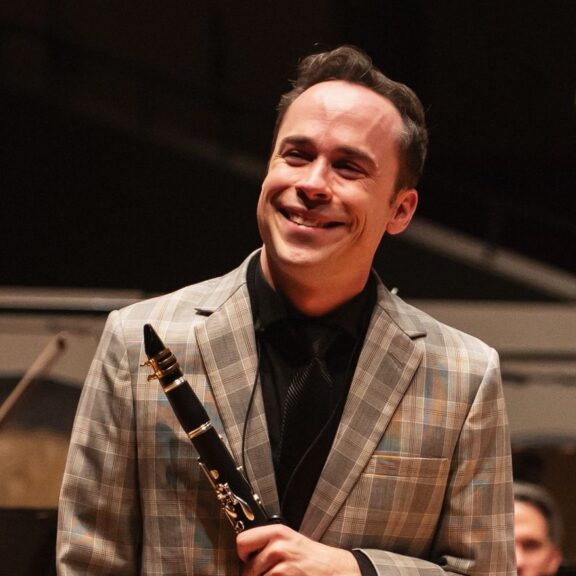
You can connect with Jason and learn more about him here:


I am a student that Jason has helped redirect my performance anxiety from doubt to positive energy. We have spent a couple of years working on this and since my performance of the Hannuchaka Overture (Solo clarinet and string orchestra), I have been playing with more confidence while having loads of fun.
Thank you, Jason, for your dedication and kindness.
Thank you, Robert – that is very kind!