

If you’ve ever had a memory slip on stage, you probably remember all too well how terrible this felt, and how traumatic this can be.
Being completely lost, having no idea what comes next, and having no map to guide you towards the end, can be one of the worst things we can experience in performance.
But it doesn’t have to be this way! Although very few of us (if any?) were ever taught how to memorize, there has been a lot of really significant research in the last couple decades – specifically in the area of memorizing music!
So if you have struggled with memory, or aren’t sure exactly how to approach the process of memorizing, I think today’s episode will help you develop a process that will enable you to feel much more confident on stage, and trust your memory more completely. And maybe even enjoy practicing a bit more too. 😁
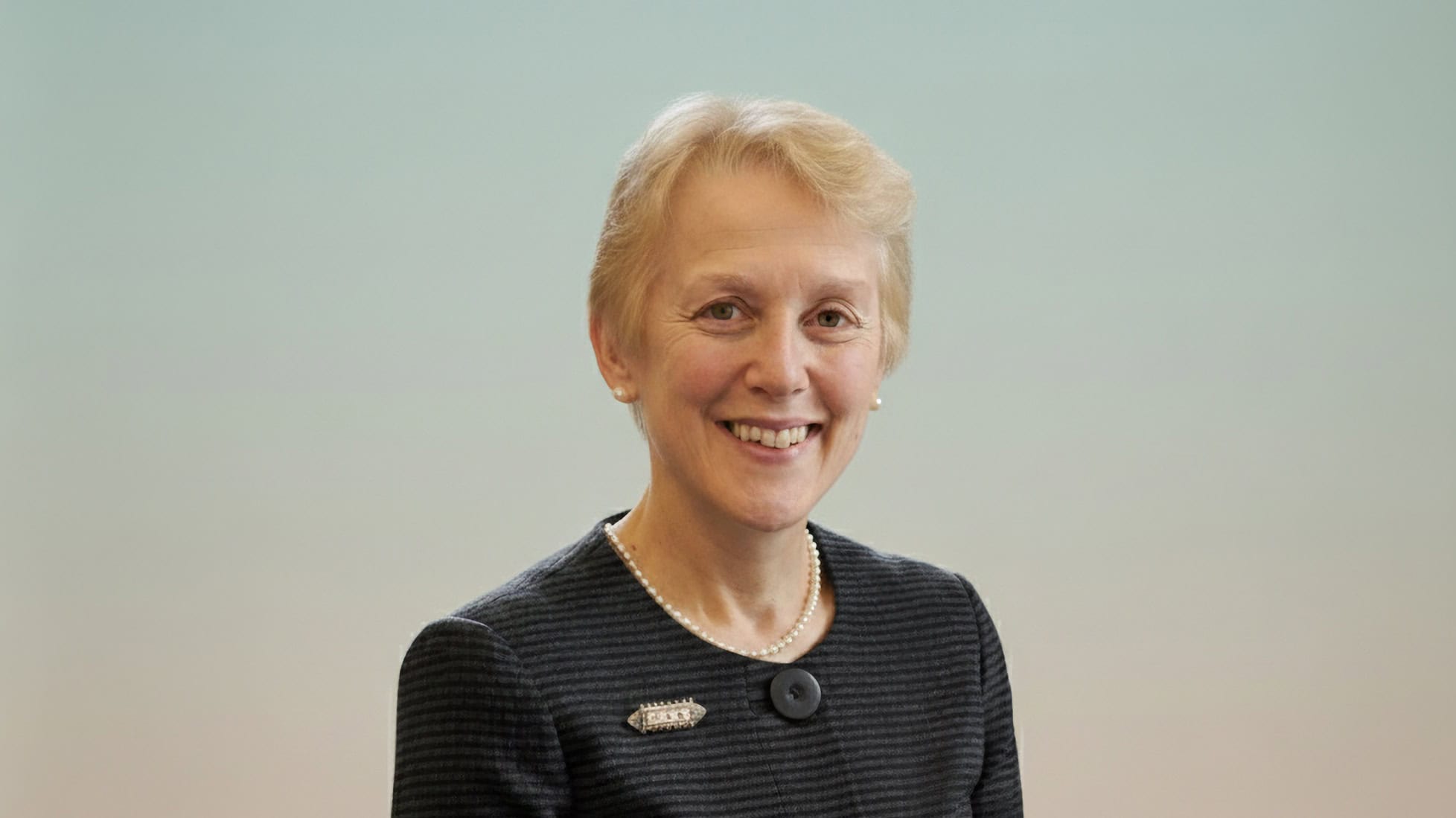
Meet Jane Ginsborg
Jane Ginsborg began her career as a professional singer after studying music at the University of York and voice at the Guildhall School of Music and Drama. But her curiosity about how singers remember words and music eventually led her into psychology, where she completed a PhD under John Sloboda at Keele University and studied with Anders Ericsson at Florida State. Her early research on singers’ memorization strategies earned her the British Voice Association’s Van Lawrence Award in 2002, and set the stage for two decades of work exploring how musicians learn, practice, and perform.
Since then, Jane has combined her background in performance and psychology to lead wide-ranging projects on everything from memorization to health and well-being in conservatoires, and even music-making with hearing-impaired performers. She recently retired from the Royal Northern College of Music, but continues to supervise PhD students, review, edit, write and do research!
In this episode, we explore…
- 02:25 – Common memory challenges for singers – should words and music be learned separate or together?
- 04:26 – Embodied memory in performance
- 06:36 – What Jane discovered from interviews and her first observational experiments with singers and pianists.
- 08:35 – A controlled study with 60 singers reveals when to separate words and notes – and when to combine them.
- 11:27 – Experts vs novices: different strategies
- 14:31 – What really predicts successful memorization
- 16:38 – Self-regulated learning in music practice
- 18:23 – Learning vs memorizing: what’s the difference?
- 26:09 – Serial cueing vs content-addressable memory (aka the dangers of rote repetition)
- 32:16 – What Kiri Te Kanawa’s 1983 memory slip reveals
- 35:49 – How to ‘chunk’ music effectively
- 40:50 – Tips for singers struggling with German, French, or other languages
- 46:59 – Schoenberg, text errors, and engaging with language
- 53:48 – The underrated role of mental practice
[00:00:00] Jane GINSBORG:The really crucial thing is that the best memorizers, the fastest memorizers, who gave the most accurate performances from memory, were not the ones who made the fewest mistakes. They were the ones who set out to memorize from the beginning. So they didn't spend an enormous amount of time just singing the song over and over and over and over and over again. They
[00:00:30]
[00:00:42] Noa KAGEYAMA: So you've had the unique experience of being a professional musician before then pursuing a career as a researcher and scholar. So some of your early research I think was an observation even of yourself as the subject. And your research in general I think really looks at the sorts of questions and issues that I think all musicians could appreciate and, and that musicians face on a daily basis.
[00:01:04] So very practical, um, and important and useful sorts of things. And one of the big questions that I often get from musicians and that I know musicians often deal with is memory, right? Like especially pianists and singers, it seems my wife's a pianist and it was always so many notes, you know, relative to the single notes that I would be playing.
[00:01:24] And singers as well 'cause not only is there music, but there's words often in languages that we don't know quite as well. And then there's having to act and then there's other people around and staging and all sorts of things. And so, when it comes to memorization, I think specifically with singers, perhaps, I wonder what are some of the most common memory related challenges that singers face?
[00:01:51] Jane GINSBORG: You've really taken me back to the very beginnings of my PhD research, uh, because you are right. I was a professional singer before I became a researcher, and so the question that I had asked myself for all of the years when I was practicing and rehearsing and performing was. Do I remember the words and the melodies of songs and arias as two separate, um, things.
[00:02:25] Are they a double load on memory or do I remember them together? And I remembered having been terribly frustrated when a teacher or somebody in a masterclass would say it's really, really important to be able to recite the words of a song as though it was the words of a poem. because that is an unbelievably difficult thing to do if you are used to singing the words with the music.
[00:02:58] And so the very first thing that my supervisor said to me was, are other singers and other musicians interested in this topic too? And the only way really to find out is to talk to other singers and to other musicians and find out whether it's something that's of interest to them. So I began by interviewing five singers.
[00:03:27] And a pianist who accompanied singers was brilliant because he had lots of stories to tell about singers who forgot the words, or singers who got lost, but also he had a kind of side hustle accompanying himself and singing when he sang Tom Lehrer songs, for example. So, so he was very good on that. And I didn't find, and a little bit like you, I began with a kind of a, a prompt question. How do you go about memorizing a song? I thought we'll stick with songs because operas are a little, you know, there are, there are prompters in operas and it's a completely different kind of rehearsal process. So I thought we'll just stick with songs. And so I asked these six people and they told me not six different things, but clearly it was something they were interested in.
[00:04:26] One of them was an opera singer, and he said he regarded a score as being like Benesh notation for a dancer. So he didn't just have the words and the music. He also knew where his eyes would be looking, what he would be doing with his hands, where his feet were. Um, so it was very much embodied for him.
[00:04:56] My former singing teacher said, well, you'll remember, Jane, I always told you, speak the words to the rhythm of the music. It's very important that you get the prosody sorted out first. But the really important thing that came over was that the meaning of the words is really important for the way that you interpret a song and the way that you perform it, but not from the point of view of learning it for the purposes of memorizing it.
[00:05:34] Because once the song is memorized, that's the point where you can start doing the interpretative work and actually figuring out, what did the composer mean? What did the poet mean? How am I going to put this over to an audience? So that was the first stage to find out what other singers, um, and as I say, the pianist who accompanied himself, he said, oh, the words go with my fingers.
[00:06:06] Again, it's completely embodied. And so if I forget the words, then my fingers don't know what to do. And if my fingers don't know what to do, then I dunno what to do with the words and I'm not really thinking about what they mean. It's like, um, it's like rote repetition. So that was the starting point. And I then went on and I did three studies, one observational study and two experiments.
[00:06:36] But actually I didn't do the research on myself. It was at a time when cognitive psychology was overwhelmingly, um. Um, a kind of, the, the hard, hard science, it had to be objective, you know, it was qualitative research was only just beginning to become accepted in psychology departments.
[00:07:04] And so the research. I felt had to be very objective and it had to be very quantitative. And I was quite surprised in my PhD viva, that the one of the examiners said to me, but Jane, you are a singer. Why don't you do research on your own practice? And that was what gave me permission in a way, to go on and do a whole series of studies in which, as you say, I did look at my own practice, but actually not so much my own practice as what happened when I, as a singer was working with a pianist, um, or with, or with another musician, a viola player, towards the end of this series of studies.
[00:07:50] So I was interested in what happens in the context of collaborative learning, because unlike pianists, in particular, singers very rarely do all of the work on their own. It's a much more collaborative and collegial activity.
[00:08:10] Noa KAGEYAMA: One of the things that, that you started speaking to and that, um, I think is a question that even non-singers have in, in slightly different ways is, um, is it better to, like, what does the process of learning a new song for instance, look like? You know, what point are you looking perhaps just at the words and the lyrics and at what point are you looking, maybe only at the music or at what point are you looking at both?
[00:08:35] And I think your research suggests that, you know, there's some nuances and it depends, but largely speaking for singers at a certain level, it's more effective to memorize both the lyrics and music simultaneously. And that I think, makes sense on paper, but I'm wondering if you can kind of flesh it out a little bit and share some of the nuances and differences and like, what does it actually look like to do those two things simultaneously?
[00:08:59] Jane GINSBORG: Thank you very much. It's such a good question. And again, it takes us back to my PhD research because what I wanted to know was, is it better to learn the words in the music separately altogether, and if so, in which order? And so I did do a study in which I gave singers a lot of singers. There were 60 singers in this study.
[00:09:21] And I devised a new unaccompanied folk song. And I had a lovely day choosing the words of one folk song to the tune of another folk song and putting it together so that nobody would ever have sung this particular folk song.
[00:09:39] And for a third of the singers, I gave them a poem to learn to learn off by heart. I took the poem away from them and I gave them some music to learn off by heart. And then I came back and I gave them the song. And at that point they said, oh, it's the same words and the same music.
[00:10:03] And then I did it in the reverse order for the second third of the participants. As I say, there were 60 participants in all in this study, So it was 20, 20 and 20.
[00:10:14] Um, I gave them the music first, then I gave them the words, then I gave them the whole song.
[00:10:20] And then for the third third, I gave them just the song. And I said, you've got the same amount of time, it was 25 minutes in all, just to learn this song. But the deal is you don't ever separate the words and the music.
[00:10:37] If you are reading the words out loud, play the tune on the piano. They had a piano to play. Um, and if you want to hum the music on its own, have the words in front of you so that you are always doing it together
[00:10:52] Though, because this was an experiment, I had two groups of singers and one group was, they were, I called them novices and experts.
[00:11:04] They weren't really, because they had to be able to sight read the songs. So they were, they were all capable of sight reading the song, at least to a certain extent, um, at the beginning of the, at the beginning of the study. But there was a, a real divide between them in terms of their, their expertise as measured by their qualifications.
[00:11:27] So for the experienced singers, it was very clear that it was better for them to learn the words and the music together.
[00:11:39] For the less experienced singers, very often it was learning the music. It was memorizing the music that was holding them up. So if you are memorizing a new song and reading music isn't your forte, if it isn't the thing you are best at, you've got to get the music straight in your head, then focus on the music first.
[00:12:04] That is really important. The music's got to be there before you can peg the words to it. It doesn't work the other way around, but if you are a good enough musician to be able to read the music and memorize the words, then the crucial thing is to memorize them together.
[00:12:25] But once again, I would say that that is only for the purposes of memorizing.
[00:12:32] And when it comes to memorizing a song for a performance, then it's absolutely crucial that you begin by looking at the text because you need to know what it was the composer wanted to do when they set the text in that way, and i'm telling you what I would do. But in the observational study, I asked 15 singers to learn and memorize a new song.
[00:13:04] It was an unfamiliar song to, to all of them. It had been an unfamiliar song to me. It was by a composer I had never heard of. Um, I was terribly surprised when a few years later, um, I heard three songs by this composer being performed on the radio, and one of them was my experimental song. That was a great treat.
[00:13:24] It was the only time I ever heard it, except for the six months I was transcribing. Um, recordings of 15 singers, um, who learned and memorized this new song and. I had had this idealistic, um, fantasy that if I had three groups of singers, experts, amateurs, and students, whatever the expert singers would do would somehow be the right thing to do.
[00:14:01] And that actually was not the case because I found a way of measuring the accuracy of performance at the end of 90 minutes practice over the course of six up to six practice sessions, so I could measure how accurately they performed it from memory, and I could also measure how long it had taken them, how many repetitions of each beat of the song.
[00:14:31] Okay, so it was quite a complicated thing to do, but what I found was that I had two experts who memorized fast and accurately, and I had one student and one amateur. So in the end, it wasn't a function of experience or of expertise as a singer. It was of course, and I think we'll probably go on and talk about this a bit more.
[00:15:01] It was a function of the quality of practice. And the really crucial thing is that the best memorizers, the fastest memorizers, who gave the most accurate performances from memory, were not the ones who made the fewest mistakes. They were the ones who monitored their progress and who recognized when they had made a mistake and put it right. They were also the ones who set out to memorize from the beginning. They knew that this was the task. So they didn't spend an enormous amount of time just singing the song over and over and over and over and over again. They broke it two sections they learned and they memorized section by section. They then put the sections together and sang two sections together, three sections together, four sections together, and so on.
[00:16:08] And you know, when I look back on it, a lot of the answers to the questions that I then went on asking for the next 15 to 20 years, the answers were there in that very first study. And to my enormous delight, um after I had done this, other people came along and developed a model of self-regulated learning.
[00:16:38] I didn't call it self-regulated learning, but in the end that's what it was. They set goals and they met those goals. They monitored their progress, they evaluated their progress, and so they headed towards their goal. So that's essentially what the theory of self-regulated learning is all about, and I was very pleased that other people came along and, and, and developed the model that can now be used and is now used in sports and in music and throughout many domains.
[00:17:20] Noa KAGEYAMA: So it sounds like what you observed was a combination of learning and memorizing. Um, is that generally, 'cause earlier I think it seemed like you might have differentiated a little bit between learning a new song versus the process of memorizing a new song. I mean, one of the parts of learning it presumably, and you can tell me if I'm mistaken, is, you know, looking at the text and the lyrics independently, perhaps for a little while of the music and the melody to make sure you, especially if it's not a language that you know, especially well, to really try to figure out what's going on, what was intended and character, mood, and all these sorts of things. Um, and that being a different process necessarily than, than memorizing the entirety of what that song might be.
[00:18:09] I wonder if you could say more about the difference between learning and memorizing what the learning phases perhaps might look like for a singer, because this is something that might look different for other instrumentalists.
[00:18:23] Jane GINSBORG: I think it's a really interesting question. I'm thinking about the work that was done way back when, beginning of the 20th century, when, memorizing took over from improvising as the great skill that musicians needed to have. When I think back to piano pedagogues like Edwin Hughes and Leschetizky, they talked about the importance, they may not have called it this, but the importance of analytical memory or of analytical knowledge. If I think about most instrumentalists, they begin so early that they graduate from very easy pieces and studies to sonatas and to romantic pieces and concertos so that by the time they're playing the great works, they've, they've been introduced to the idea of musical structure and of tonal music and the role of modulation and the relationships between keys.
[00:19:50] There is an awful lot that we take for granted. I mean, if I were to pull down, um, an early Beethoven piano sonata or a Bach prelude and fugue. I, I kind of know what, I, kind of know what to expect. Uh, I can look through the score and I've got an idea of, you know, in it, in the crassest, most basic of terms how it should go.
[00:20:22] There's a kind of an understanding of that. I think for most singers at the point where they begin to train their voices and to think about singing professionally, they haven't had those years of acquaintance with songs or with the repertoire. I may be, I may be doing other singers a disservice.
[00:20:55] And if I think back to my own childhood, I actually knew from a terribly early age that I was going to be a singer. And singers and songs, German lieder, French melodie, I grew up with these just as much as I did with classical music for piano and strings. But I spent years, decades, sight reading through volumes of lieder by, by the great lieder composers and also and the French writers of melodie. And I didn't actually, as a child, care about what the words meant. I only wanted to pronounce them. Um, and books like S.S. Prawer, the Penguin Book of Lieder. Um, and then, you know, later on there were, there were other translations, Bernac's, uh, book on French melodie.
[00:21:58] I mean, these were Bibles because they were ways of, of understanding what the songs were about. And I learned French and German and Italian, and then later on Russian so that I could have access to these texts. So there is an awful lot and I loved poetry and I read poetry for pleasure. And so let me just assume that other singers are the same as me as I was.
[00:22:27] You, you will always start with what is the song about? You know, it's one of the reasons I get so cross with music psychologists who talk about happy music and sad music, because how can you say this is a happy song, or this is a sad song. You say, this is where the poet starts. This is where the poet ends.
[00:22:51] If you take the first song in Winterreise, it's in the minor key, but it is when it turns into the major in the last verse, that's when the knife really turns. So this whole idea of happy and sad, you know, fast and major, happy, slow and minor, sad, it, it doesn't speak to what songs are about.
[00:23:15] So, that process. I don't think I would call it learning. I think I would call it engaging with, assimilating, um, taking on board. It, it's, it's a, I think assimilation is the best, is the best word, or it's the best concept because that includes making it one's own. It's, it's what, how do I want to put this song over?
[00:23:48] What have I got new to say about it to, you know, there've been enough great singers of great works. What, you know, what, what, what can I, how can I make something new outta Gretchen am Spinnrade or Heidenröslein. I mean, those are the, and that's with the classical repertoire. Now, in my working life, I actually specialized in contemporary music and working with composers.
[00:24:18] But that experience of working with composers, with live composers and being able to say to them, you know what, what's, what's this about? Is this right? Am I getting what you want? It is translates ex, it's exactly the same with music by a composer who is dead. I always felt that I was saying to the composer, is this right?
[00:24:44] Is this what you wanted? Um, do you know, is this, is this what you heard? Could it be different? It's a way of assimilating the music, but engaging with the composer. That's the learning process. And until you've done that, well, it's at the same time because the notes have got to be the right notes in the right place at the right time, so they all go together.
[00:25:15] But once all of that has happened and you've got it in your head, and you've got it in your voice, that's the time then to be thinking and to be, you know, the, the ground's laid or you know, the walls are stripped, ready for repainting. That's when you can start actually doing the work to make a piece that's been learned into something can be performed from memory, so that it really feels to the audience as though it is coming from, from your heart.
[00:25:47] It's coming from my heart to your heart. That's why we say off by heart.
[00:25:52] Noa KAGEYAMA: one of the things that you and others have differentiated between in terms of memory is this idea of serial cueing and also content addressable memory, and I, I wonder if you could say a little bit about the difference between those two processes and how they fit together perhaps.
[00:26:09] Jane GINSBORG: Totally. So, something that novice musicians of all varieties do is they start at the beginning and they go through to the end, and then they start again, and they go through to the end and they start again, and they go through to the end. And if you do that enough times, you kind of remember what comes next, just because one phrase triggers the next phrase, which triggers the next phrase and so on.
[00:26:39] And that's what we now call serial cueing. At one time we called it associative chaining. It came from other theories of memory, but in recent years, in the last 10 years or so, we've begun to refer to it as serial cueing. So the idea is it's serial in the sense that it's one bit, one bit follows another and cueing, because the end of one section cues the beginning of another section. So that is serial cueing and it's what happens as a result of rote repetition.
[00:27:17] Now, rote repetition is incredibly useful. We learn our scales from rote repetition. I mean, we don't learn them that way. We, you know, we begin by thinking about them very hard. But what we want to do is to have them under our fingers so that when we see them in a piece, we can just play them and we don't have to think what note comes next or what finger do I have to put down next.
[00:27:41] We just know. So. Don't, don't, don't get me wrong, I don't have any problems at all with rote repetition, but it does leave you with this memory that can be very, very easily disrupted. Somebody moves in the audience or your mind is you, you, you, you just forget for a moment. Years and years and years ago, I did some research with a Chinese student on differences between Chinese trained and British trained students, music performance anxiety, and the Chinese students talked about something I'd never heard of, which they called blocking, and they described it as the sensation of being on the ceiling, looking down at themselves, playing so that they were dissociated from what they were actually doing.
[00:28:34] And that is such a dangerous feeling in a performance of just not being there and fully present. Right. So that's serial cueing. Very, very useful for being able, you know, for your fingers, knowing what to do when you are, when you've just forgotten for a moment. You know, you can, I, you know, it's like reciting your address.
[00:29:00] You can do it without thinking. But saying the word address brings me back to the idea of content addressable. And it's as though, I mean, we've, we've talked a lot, Roger Chaffin and I have talked a lot in our research about what we call, uh, performance cues. And they're really landmarks for retrieval.
[00:29:23] They are the landmarks in a piece of music that function as retrieval cues when we perform from memory. And it's the kind of memory that lets you go back to the beginning of the coda or two bars before the climax or, you know, the end of the chorus at the beginning of the first verse.
[00:29:47] You know, it's that content. It's knowing, knowing the structure of the piece, knowing where the section boundaries fall, and being able to go to one of them at will so that you don't have to go back to the beginning to get to where you wanted to go. And Roger used to do this absolutely marvelously in, uh, conference talks where he would say, um, how long does it take you to be able to start singing the third line of Happy Birthday to you? And you know, because, and most people will start at the beginning until they get to the beginning of the third line. And then he would sing it and he would say, well, you see, I've practiced because I've got content addressable memory for the third line of Happy Birthday to you. So that's, that's, that's the trick and that's what we want to be able to have.
[00:30:46] Now, I actually amused myself before we started this by reminding myself of the, um, occasion when I first started thinking about singers' memory. And it was as long ago as 1983 when I was watching the Met Centennial on a tiny little black and white television. And Kiri Te Kanawa, got lost in Dove Sono. It's a terribly famous aria, which I knew very well, and I saw her getting lost.
[00:31:26] I heard her getting lost, and I spent years trying to figure out what had happened, and I came up with all kinds of hypotheses. And then years and years later, YouTube was invented and I discovered the recording on YouTube and I found it. And I now can tell you exactly what happened and where. The only thing was, when I watched it again this morning, I realized I've played that clip so many times. It now almost doesn't sound wrong to me. So I had to go back and find another recording, and I found another recording of her singing it in context and not making the same mistake. And it's very simple. It's a, it's what we call a switch.
[00:32:16] It's where the same music can go in one of two, or if you are unlucky, even more directions, and you go the wrong way. And this was towards the end of the, the aria, which she must have sung hundreds and hundreds and hundreds of times. And she must, you know, she must just have not been thinking about where she was.
[00:32:41] And instead, of staying on the same note. In order to carry on to the next phrase, she did something that happens earlier in the aria, which is to go up a fourth, and that took her in the wrong direction.
[00:32:56] So we call these switches. And the trick of content addressable memory is to know where you are, to monitor where you are all the time so that you don't go in the wrong direction. When it, when you get to a switch also so that you know where to go to if you do have a lapse. Because as we found out quite recently, it was a, and we published a paper about this, oh, within the last two or three years where we went back and we looked at my data from years ago, we discovered that lapses happen at section boundaries.
[00:33:46] But that's where recoveries take place as well. So you are, so, you are more likely to have a lapse at a boundary, but you are also more likely to be able to recover at a boundary. So. If you have content addressable memory, if you know where the section boundaries are and if you are fully present while you are performing and kind of it's like following your, following the icon of your car on a sat nav, you are keeping an eye on what you are doing instead of thinking about something else.
[00:34:22] Then should you forget where you are, you can jump to the beginning of the next section boundary and not do what Kiri Te Kanawa did on this occasion, which in fact was to jump back. So in fact, she came in, when she did recover herself, she came in wrong and there was another bit of scrambling to do. Not that you would ever notice from watching the video, but hey, that's how it works.
[00:34:47] Noa KAGEYAMA: earlier you mentioned a study in which I think a professional musician and then a student and maybe a couple others had actually approached learning and memorizing more effectively for greater accuracy and performance than some of the other professional musicians and others had. And I think you might've mentioned then, or I might be inventing it in my head, um, that they did do some more of the chunking or the divisions of, of chunks of music or phrases.
[00:35:16] And, and I didn't ask at the time, and now I'm kind of wondering, um, presumably the professional musician would've had more theory and analysis and so forth, and perhaps technically speaking might've divided the music into more musically meaningful or like correct chunks than maybe the student might have.
[00:35:37] But I'm wondering like how much of that, like how important is it that we divide the music into musically meaningful chunks that are like, correct as it were.
[00:35:49] Jane GINSBORG: I am so glad you asked that question because, because I'm quite often asked this, and I always say they only have to be meaningful to you. The important thing is that they're your chunks. And going back to the first study that I did on my own practice, this was at a point where, as I say, Roger had published his first series of papers on the work he did with the pianist, Gabriela Imre, and she had prepared for performance, for memory, the third movement of the Bach, Italian concerto.
[00:36:27] And I wanted to know what happened when there were two people working together. And Roger said, well just record all your practice and rehearsal and then, you know, and write a synopsis of each one and we can analyze later and see what actually happens. And so the next concert that I had coming up, I was the soprano soloist in Stravinsky's Cantata.
[00:36:52] And there is one movement, which is for soprano and the small instrumental ensemble. And my husband was my rehearsal pianist and also the conductor. So we had the instrumental score and we also had a piano score. And so we worked on, we worked on, well, we were actually, we worked on both together and there's a funny story about that, but one of the first things we did was to look at how we, we came to analyze the rehearsal sessions, you know, months later we discovered that he had broken it down into I think, four main chunks. I had broken it down into seven because it was more important for me that I knew that it went verse, chorus, verse, chorus, verse chorus. Then there was a kind of a, um, prayer. There was a little interlude, and then there was a kind of a closing section with a coda at the end.
[00:37:52] And, and that wasn't useful for George. He didn't need that first section divided into all these smaller sections. I needed them because they were different words and because there were switches, but he needed the kind of the through composed idea, if you like.
[00:38:10] The funny story is that, um, we, one of the sections that we argued a lot about, was the end of one section where we never seemed quite to end together and to start again together. And so we rehearsed this bit a lot, and it was only a long time later that we compared the orchestral score with the vocal score. And in the vocal score it was a three eight bar with a pause. And in the orchestral score it was a four eight bar with a pause.
[00:38:57] So there was actually a mistake, the publisher had had just not checked this. So that was very funny and explained why we had had so many arguments about it.
[00:39:09] So the sections are down to the individual, and I would always say there's no such thing as correct, but when you look at the way that children memorize, often they will do it page by page rather than phrase by phrase or line by line.
[00:39:28] And it's interesting now that I am beginning to learn pieces on an instrument I have returned to, I find myself also thinking, well, no, I'll go back to the beginning of the line, and then I say to myself, this is ridiculous. You know, I'm a musician. I know where the phrase actually begins. And sometimes the phrase doesn't begin at the beginning of a line.
[00:39:53] And so I, I make it the beginning of a phrase rather than the beginning of a line. But then I'm learning very easy pieces.
[00:40:00] Noa KAGEYAMA: Well, it's interesting that the tendency, perhaps when the instrument is less familiar is to make the chunks or the divisions very concrete and perhaps not connected to the music. That, that, it's interesting to know, you know, I was talking with a singer earlier, and this is a sort of question that as a violinist, I wouldn't have thought to ask, so I wanted to make sure to ask, and you might have addressed some of it already.
[00:40:23] But, um, so the question had to do with her students who struggled in, in languages like German and French, uh, because they didn't quite understand the language, um, and the nuances and the meaning of everything, quite like a, like a native speaker would. And so they had difficulty chunking the text by meaning, and they were instead trying to learn phonetically, just sort of rote learning.
[00:40:50] And she said that they do translate the words and, you know, word for word and poetically, she said. But still, again, without really grasping the language as a native speaker would, she said that she finds that they continue to struggle. And I wondered if you have any suggestions or advice or thoughts on how to approach that
[00:41:11] Jane GINSBORG: so again, this is really interesting and it takes me right back to the very beginning. It goes back even further. but I'll start in the middle, which is that, um, when there was a point in my career when I sang a lot of music by Stravinsky and I learned my first Russian songs phonetically, uh. I didn't read Cyrillic, I had somebody write the syllables out for me, and I learned them that way.
[00:41:46] Those songs. I can still rattle off because I learned them without understanding them. I understand them now, but when I learned them, I learned them without understanding them. But if I go back to my very, very early childhood, the very first singing that I ever heard in the home, um, was songs in Hebrew because I'm Jewish and my father used to sing and we learned songs, we couldn't read the alphabet.
[00:42:23] Um, we learned them. I don't even remember writing them out. We learned them by ear and some of those songs and chnts, I still have in my head that, you know, that I, and when I did learn to read Hebrew, it was only barking at print. I knew what it, you know, I could read it out loud, but I didn't know what it meant.
[00:42:49] I gradually learned what some of the words meant. And I remember at 13, preparing for the equivalent of a batmitzvah, my father gave me, you know, sat me down with a chunk of Hebrew. There was no English to be seen, and he just said, this is the word for God, Adonai. Pick it out every time you see it. It was like flashcards.
[00:43:15] It was the story of Abraham and Isaac, here is actually, it wasn't Adonai. It was Vayomer, and he said, every verse starts, And he said, so I can still pick out a Vayomer at a hundred paces. Um, pick out every time it says Abraham or Abraham or Isaac. Um, and so gradually the words kind of come together. And so in my second PhD experiment, I wanted to reproduce this situation.
[00:43:49] And so I gave singers two songs to learn. Matched texts, matched music. Um, that was quite a difficult thing to do, but I did it and one song in meaningful English words and the other in non meaningful words. But because it's not necessarily easy to read a phonetic transliteration, I decided to use digit strings.
[00:44:24] So strings of numbers with the odd real word thrown in because in any language you very quickly learn which word means I and which means love and which means you. So, you know, there, there are commonalities.
[00:44:44] What we know, What I know from all of the research I've done and all of the research that I've read, is that it is the music that frames the words so that we, that's how it's possible to sing, to memorize, and to sing, uh, long roles in languages we neither speak nor understand.
[00:45:12] I, I watched this, I've heard this at my own institution where the opera school put on Káťa Kabanová in Czech and nobody in the cast, chorus, nobody spoke Czech, but they were marvelously taught. And, you know, the Czech speakers I knew who came to the performance said it was completely faultless.
[00:45:40] I mean it, you know, which is wonderful. But for me, I wanted to learn about meaning. And so I would always urge singers to get at least a working knowledge of a language. So it, it adds so much richness to the experience of learning songs, of preparing songs for performance.
[00:46:12] When you say you watch your wife, she's got so many, she's got two hands and she's got so many notes to learn. And as a violinist you only have a single line. And by the time you are a good violinist, you know most of what you are playing is within your capacity. The same is true for most of the vocal repertoire.
[00:46:34] What makes it interesting is actually what it's about. And so for me, I was always looking at the more layers of understanding I had, the more interesting a task it was, and I hoped would the more interesting an experience it would be for the people who listened to me. You also learn a lot of things along the way.
[00:46:59] I did one study, in which, um, the, again, it was looking at my own practice and it was really trying to replicate the Stravinsky study with something else. And the concert I had coming up included, um, Schoenberg's Two Songs, Opus 14. And I had sung them, but years ago I was, and I hadn't memorized them, so I decided I would memorize them again and they would be the beginning of the next study.
[00:47:30] Um, but also I had given my students a task to do, which was to choose a piece of music and then come back the following week and tell the rest of the class about it. What was the question that it raised for them, that they were going to answer over the course of the coming term? And because I hadn't taught this, this group before, I thought, well, I'm gonna have to be prepared in case they haven't done this.
[00:47:55] In case case nobody's done the homework, I better do it for myself. And so I got the songs down off the shelf. Now, in the olden days, the only thing I had was the score andS.S. Prawer's Penguin Book of Lieder, right? So that was, I had a translation and I had the score, but now I had the internet and I had Alex Ross's book, um, about 20th Century music.
[00:48:26] And yes, there was a chapter on the Schoenberg songs, and he talked about these two songs, and he talked about this being the birth of atonality, farewell to tonality, the beginning of atonality, which is rather peculiar because not really true. The first song ends in D Major. Hey, nevermind.
[00:48:44] But then I found there, there had been, um, he'd also written an article about it, and there was somebody else had written an article about it, and he had written, this other author had written a whole article about, a misprint in the score, in the text.
[00:49:03] And that the word mild mild appeared in the score as wild wild. And you know, it was the illustrations of how an m can look like, um, a w and so I thought that's interesting. I wonder what the text of the poem actually said. So by this point I was able to get the poem down. I discovered all kinds of discrepancies between the score and the text of the poems.
[00:49:36] It ended up with me doing the only bit of musicological research I've ever done, including a visit to the Schoenberg Archive. To my great delight, I discovered he'd actually scribbled out. I now can't remember what it was though. I think it was the difference between kalton and klarin and he changed his mind about it.
[00:49:55] I mean, really interesting because that it changed the way I thought about the way I performed the song. Now, I wouldn't have been able to do that if I didn't have a working knowledge of German and the interest in doing so. So there you go. That's the answer to your fellow singer. We can do it, but it's a lot more fun to engage with the language and not to do it.
[00:50:22] And so I didn't just learn Russian. I also learned some Czech and some Polish. Hungarian I have really struggled with, um, but a little bit of Norwegian for Grieg and so on.
[00:50:36] Noa KAGEYAMA: So yes, ultimately diving into the language itself for a better understanding helps in so many ways. Um, and it also sounded, brings us back to something you spoke about earlier where it seems like fundamentally though, um, even before that stage of understanding the language speaks to the importance of, of having the music, um, well learned.
[00:50:59] And so I guess that, makes me wonder about atonal music. I mean, you talked about doing a lot of contemporary music in your own performing career, and is there anything I always, to be honest, struggled with atonal music just in terms of understanding and grasping it and just didn't have the language really in a way that I could understand it.
[00:51:19] Any thoughts or suggestions on, on how that might affect memory or, or what we should do about it if atonal music is not something we've encountered or absorbed very much of in the past.
[00:51:32] Jane GINSBORG: I think the, it goes back to the same issue about interest and also quality of practice. Again, I was lucky enough to be able to do a study on this with a student some years ago. We looked at the kind of easy in, easy out hypothesis. I mean, I had really struggled. I once went to a series of master classes at the Britain Pierce School with the great, great russian soprano, Galina Vishnevskaya.
[00:52:01] She didn't like the songs that I had brought to the masterclass. And she told me to learn the lullaby from Sadko. And she said, you bring it back in two days time and you perform it from memory. And I kind of, you know, well, all right, fine, fair enough. It's atrophic song. I had such trouble with it because it was so in quotes, scare quotes, easy.
[00:52:25] Okay. Difficult music. By the time I'd learned it, I'd memorized it because I had had to put so much work into learning the intervals and learning them to make them sound like melodies. I don't have absolute pitch. I didn't have absolute pitch. I had very good relative pitch. But you know, by the time I had learned, I sang a lot of, Webern songs, for example, and, you know, they were tunes by the time I had learned them.
[00:52:56] But that's, because I had to put the work into learning them. Whereas the lullaby from Sadko kind of sang itself. And so it was much, you know, not exactly in one ear and out the other, but it didn't need the assimilation that those songs by Webern or those songs, by composers of the 20th, um, and 21st Century needed.
[00:53:22] So once I'd learned that, you know, once I'd got my voice round the, again, imaginary scare quotes, difficult, modern music, then it was really in my mind, in my body, in my voice. And so that's the music that I have then going through my head. You know, the, the two words I haven't used are mental practice.
[00:53:48] For me, the really important thing is, is having the music in one's heart and one's mind, so that you can, you can be working on it, imagining it, remembering it, playing it through in your mind's eye and your mind's ear all the time. The practice we do is not limited to what we do in the studio, and so I think for atonal music, it just takes longer, but then it sticks for longer as well, and that's the point.
[00:54:28]
Sign up to receive the latest episodes via email
Enter your email address below to get the latest episode in your inbox.
Connect with Jane

You can connect with Jane and learn more about her projects here:

