

Whether it’s auditioning for orchestra jobs, securing a residency for your string quartet, or building up your teaching studio, have you ever had one of those moments where you begin to question whether things are ever going to work out?
Where you wonder if you should continue to stay on the path you’re on, or pivot in a different direction?
Of course it’s impossible to know how the future is going to play out for us, and no way to know what the “right” amount of time is to stay on any given path. Which makes it easy to stick with some things longer than we should (from unfulfilling jobs and unhealthy relationships to those jeans you love but haven’t fit into for years 😅) while giving up too quickly on other things.
Because in an age where we are constantly bombarded by everyone’s highlights, and none of their lowlights or the countless hours of unglamorous work that they put in along the way, it’s easy to feel like we’re falling behind while everyone else is living their best life.
Yet some things just…take…time.
For instance, Game Of Thrones author George R. R. Martin once said “Most people were startled to find out there were books that preceded Game Of Thrones. I’m a case of working forty years to be an overnight success.”
So…if we can’t know how long we ought to stick with something, perhaps in the meantime, we could improve our approach to the journey itself?
Like, is there a way to do the work with more patience, self-compassion, and genuine enthusiasm? How can we bounce back more effectively to setbacks and critical feedback? And how can we get ourselves to believe more strongly that we really do have what it takes to achieve our biggest goals?
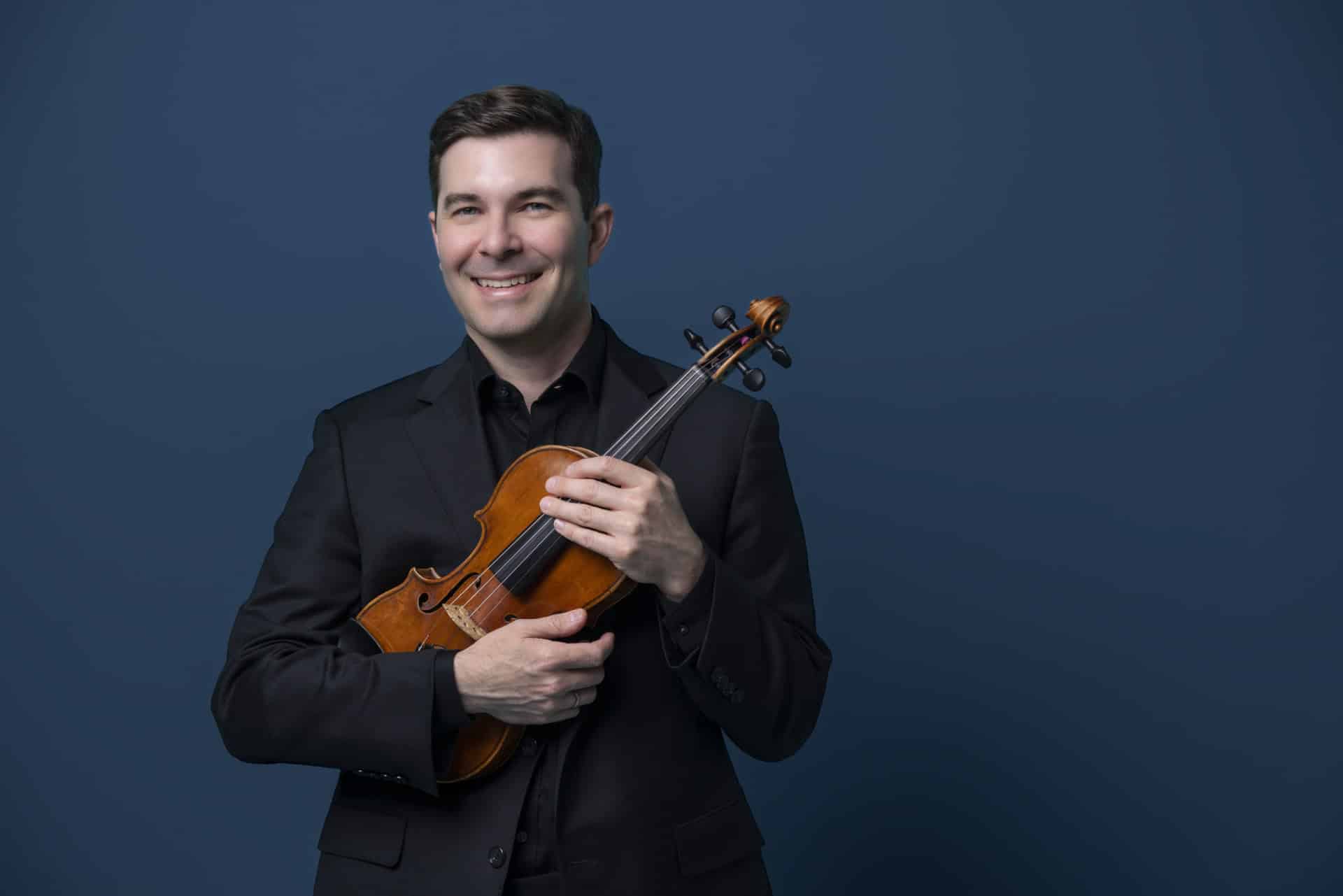
Meet Nathan Cole
Violinist Nathan Cole was recently appointed concertmaster of the Boston Symphony Orchestra – remarkably, only the fourth violinist to hold this position in the last 104 years. He has been first associate concertmaster of the Los Angeles Philharmonic since 2011, and previously held positions in the Chicago Symphony and St. Paul Chamber Orchestra.
Nathan also co-hosts the podcast Stand Partners for Life with his real-life partner, violinist Akiko Tarumoto (assistant concertmaster of the Los Angeles Philharmonic), and has taught thousands of violinist worldwide through his online instructional programs.
In today’s episode…
- 00:56 – The 20-year journey to becoming a concertmaster
- 02:01 – The unique challenges of concertmaster auditions
- 03:27 – Understanding orchestra culture and fit
- 04:55 – Learning from feedback and growth opportunities
- 08:03 – Balancing assertiveness and respect in leadership
- 10:18 – Bouncing back effectively from critical feedback
- 18:18 – Preparation strategies for concertmaster auditions
- 31:10 – The importance of musical intentions and specificity
- 38:15 – The Tabuteau system and how to make detailed musical decisions (and why this level of specificity is so helpful)
- 47:56 – Balancing technical and artistic preparation
- 51:23 – Final thoughts and upcoming events
[00:00:31] Noa KAGEYAMA: So first off, congratulations on being named concertmaster of the Boston Symphony Orchestra.
It's pretty exciting I'm sure for you and for Akiko and for the family.
So this isn't your first major audition, by any stretch of the imagination, of course. You've previously been principal second of the St. Paul Chamber Orchestra, member of the Chicago Symphony, and first associate concertmaster of the Los Angeles Philharmonic for the last 13-ish years, I think. Uh, so, I'd love to hear about your concertmaster audition journey and how that may have been different from previous audition experiences, perhaps. And to the degree that you're able to talk about it, I'd actually be curious to hear more about the part of your concertmaster journey that begins before Boston was even on your radar. Like, like, when did you start thinking about concertmaster auditions? And what sorts of skills did you start working on to help prepare you for the day when you might have the opportunity to be in this sort of position?
[00:01:25] Nathan COLE: Yeah, it's definitely been a long journey. I was astonished myself this year, actually before I got the Boston job, I was thinking a little wistfully, um, man, I've been auditioning for concertmaster for 20 years this year. , and it was true, I took my first concertmaster audition exactly 20 years ago, so yeah, I've been doing it, a lot, and for a long time before Boston came up.
As far as, and I can, I'm happy to share things about specific auditions and all of that. I think what's different about concertmaster auditions is that you, you're auditioning for a role in the orchestra that's very different from any other role. So it, while it is, of course, about how you play, because what isn't, orchestras are always looking for something more, and you do realize, assuming that you, you have some of these auditions that don't work out in your favor, you do realize after a time having auditioned how much of that other stuff is completely out of your control. There's a lot that is in your control, but there's a lot that isn't, that has to do with the culture of each particular group, who was there before, what people liked or didn't like about them, who the music director is, because some orchestras have a different process either formally or just informally for choosing a concertmaster than they would for other positions. So, for it all to work out, you generally need, I guess what you would call buy in from a lot of different constituencies in the orchestra. Whereas for a, a section position, or, or even, uh, other instrumental positions in the group, it, it, you may just need to demonstrate, , your best stuff on stage in the audition that day.
[00:03:27] Noa KAGEYAMA: You mentioned orchestras are looking for something more, , and it may vary from orchestra to orchestra, like you said, and culture to culture. I wonder if you could say a bit more about what that is or what you've discovered along the way and, and also like how do you find out what it is that they're looking for?
Like, I mean, do you talk to folks in the orchestra or other concertmasters of other orchestras or different conductors you may know well enough to talk about this sort of thing? Like how do you research or prepare for that in advance and find out what that might be?
[00:03:56] Nathan COLE: I, at one point I got much more into that, because after a few of them that where I didn't get the job, I thought, well, this is, yeah, it's, it's not about how I play so much. I've got to figure out what they're looking for. And, , that, that can lead you to some not very good places either. I think what it is in the end, , and I, I have definitely undergone some, growth, I would hope, over the last 20 years. So I've changed in certain respects. But you do have to find a situation that, that fits you also. If you're not a fit, um, then you're just not. And you're not going to be able to change, uh, meaningfully enough, uh, to turn a not very good fit into a fit.
And, and both sides are gonna be able to, to see that very easily. It's a, a lot like a, right, a personal relationship or a marriage or something. So I took one audition, in [city name] years back. This is one of the, one of the very first ones I took.
And at that time, the music director was just honest enough with me to say, you know what the way that you look or, or move or don't move when you play is not really what I'm looking for. I'm looking for a different kind of leader. I want, I want something different visually. And so, you know, I'm just, I'm letting you know that.
Which is a lot more honesty than I've gotten in some other places. And you know, it's something that they couldn't have told me. over the phone, uh, or by looking at my resume or even necessarily by listening to a screened audition. You know, they had to see me do the job. And, once he did, then, then I knew it wasn't going to be a fit.
In some ways it's not a fair process if auditioning ever is a totally fair process, Because especially for a concertmaster, um, different parts of the orchestra or even different members in the same violin section are going to be looking for different things, right?
And you can't be all things to all people. But if you look at what makes for effective leadership, I think in any industry, trust, I think is one of the first words or concepts that comes to my mind. Have to engender that Really from the moment you walk into a room, from the moment you sit down, from the moment playing starts in rehearsal, you have to make people believe that they can go by what you say, they can go by what you show, and that you're musically a person of your word, if that makes any sense.
Because as concertmaster, ultimately you're going to be making some hard decisions, some spur of the moment decisions on stage, you're going to be Asking or, you know, demanding in a way that people follow you without always knowing why or without always agreeing. And so to do that they have to see that you're generally right and that you have everyone's back, right, that you're going to look out for them.
[00:07:17] Noa KAGEYAMA: Right.
I forget who said this, maybe it was Dwyane Wade, but he talked about a tendency to to defer too much or to pass too much, right? To almost think, well, you know, there's Kevin Durant, there's Steph Curry, like, I'm not going to take a shot, I'm going to pass it to them, right? And so sometimes, and I think we saw this, there were moments where there were too many passes, um, and then ended up passing up really good shots in favor of worse shots.
And so, you know, I mention that because from what you were just talking about, I wonder, when you get into that setting, when you're joining the orchestra, like how do you balance being assertive and being yourself with also being open to and respecting the culture that already exists there?
[00:08:20] Nathan COLE: Right, I'm, I'm glad you mentioned the Olympic basketball because I was watching that too. Yeah, watching LeBron, particularly, who is one of the steadiest hands and maybe the most important person on the court in, in crunch time, although, of course, Steph Curry really bailed us out in, uh, in some of those moments, but in, when I watched LeBron, I thought, okay, that's a, that's the concertmaster, right?
The ball's always ending up in his hands. He's not always the one taking the shot, but, That's where everybody's attention goes. That's where everybody's looking when things get tight. And yeah, when I, when I talked about some personal growth, I think that's the kind of thing that I know has changed about me over the years, whether we're talking about just playing in an orchestra or taking these auditions.
And when I, when you talk about concertmaster auditions, you're almost always, also talking about some sort of trial period, because very few concertmasters are going to be hired just from an audition. You're almost always going to have to come in and do the job, and , just what you were saying, this idea of passing, how to find that balance, , of not, not rocking the boat too much. , not jumping in at every opportunity to say, Hey, look at me, listen to me, I can solve this problem, I can make this better. But at the same time, yes, very much being there when, when your moment comes to whether it's a solo or whether it's just a decision that has to be made. We're going this way, not that way.
it Has to feel like you, right? You can't, you can't sort of try on those clothes and become a different person in the audition or, or during a trial week.
[00:10:18] Noa KAGEYAMA: Related perhaps a little bit to the [city name] audition that you mentioned previously, where you did get some feedback. I'm curious, a) what that felt like to get that feedback in the moment, and how you learned from it or how you recovered or bounce back from that and relatedly, if you could share a little bit about some of your, I don't want to call them audition failures. But more, not even setbacks, but maybe more like audition growth opportunities where you haven't been offered the job. And each time, presumably after you get over the initial disappointment and frustration, you must have found a way to learn something from it and grow from it, which then eventually prepared you to be able to be whoever you needed to be to serve the orchestra in the way that, that they would like you to in this particular situation.
So, um, you know, whether it's [city name] or whether it's multiple auditions that you can think of, I'd love to hear about those, those learning opportunities and bounce backs.
[00:11:22] Nathan COLE: well, so when I got that feedback in [city name], right, of course it didn't feel great. I think there were probably, uh, uh, If I can remember, there were a lot of emotions that came at once. I mean, there's sort of, um, some sort of shame and then at the same time defensiveness. So, and, and these things would seem to be contradictory, but at the same time I felt like, oh, geez, I, you know, I guess I'm not, I'm not doing this very well.
And then at the same time thinking, well, hey, that, you know, they're off base. I know how I want to do this job. I know I'm doing it well. But there was enough doubt that those things could coexist. And, if I recall, I, I made some sort of effort to, you know, I thought, well, look, I got nothing to lose.
Let me sort of try on a different physical persona and see what it would be like for the rest of this week to, to move more, to, to be more obvious in, the things that I think would be helpful to show. And I remember liking some of that, , feeling, but then also coming to the realization, like we were talking about before, it, it, it just didn't feel totally like me. And so I sort of just had to say this is not a fit with, with this music director, which is going to be a problem if you, if you want to be hired as, as concertmaster at that time.
I remember thinking that I got along well with the other violinists there. at that time, it was a long time ago, and I remember being happy about that because I thought, you know, my first responsibility is going to be to the people in my section. And I was happy that they seemed to to like my leadership, but that did make me think what if it's not just this particular music director, but what if that's something that I need to be more aware of because the rest of the orchestra sits further away from me than the violins do and you know, maybe I can learn from this.
Maybe the solution is not, you know, just move more all the time but to sort of know the spots, pick the spots , where things need to be more obvious, more clear, and kind of go from there. So, I would say I gave it consideration, and I sort of tried it out back in my home orchestra. You don't want to be moving around, , more than the other people in your section, really. But I thought, you know, in some bigger moments, let me, let me be especially aware of what the principals are doing, what the concertmaster here is doing, what the other principals are doing, how the concertmaster and the conductor communicate.
You know, does it look like there is a lot of communication, or is it extremely subtle? So that was, right, that was one, one of the many times I didn't get the job. But like I said, that's one of the only times I got very direct feedback.
[00:14:38] Noa KAGEYAMA: Can you think of some other auditions in which you didn't get feedback, but you had to find a way to take away some lesson from it and find a way to grow in some way from that?
[00:14:50] Nathan COLE: I'm trying to separate a little bit ones where I just auditioned and I got some feedback from the audition as opposed to places where I actually came in and played, because they're, they're probably 10 or so orchestras where I've gone in and, and played as a guest on under some kind of consideration for the job.
I think in auditions, oh, and I can tell you, here was one really good piece of feedback I got, which also hurt at the time. Um, I was auditioning for [city name]. This was not for concertmaster, but for one of the other positions where you would play some concertmaster, and so it included a lot of solo work in the audition.
And, you know, I thought I played well, but didn't get to the end of the process. And I remember there were a couple passages where I really wished I could have had a bit of a do over, but I remember thinking like, oh, is it really just about those couple? And according to one of the principals, who was kind enough to give me feedback, , that actually was a big deal.
And it, it wasn't as though I had really crashed and burned, but what this principal said was, and he, you know, he named, a different concertmaster, you know, someone, a major concertmaster that I admired, and said, you know, they simply would never have allowed themselves to play that way on stage. Like, they would have worked things out so that that wouldn't happen.
So, that, that's the kind of player we're looking for, for this position. And, of course that hurt, because the implication is I'm not that kind of player. But eventually I, I turned it into, okay, I'm fine. Um, I certainly wasn't that kind of player today. Maybe I'm not that kind of player in general yet, but, but I will be.
And yeah, that really stuck with me in the practice room, thinking, Okay, this thing just happened. There's, there's gotta be a way, or a combination of things I can do, so that that doesn't happen. I can't guarantee I'm gonna be 100 percent all the time, but at least there's, there's gotta be a floor below which it's not gonna fall, no matter how tricky the place might seem.
[00:17:15] Noa KAGEYAMA: So I love what you did there in that, there were perhaps moments earlier when you were younger where it was easier to take feedback and internalize it as almost like a character flaw, or like you said, you know, this is the kind of player I am.
Maybe I don't have it in me to play at the level that I would need to to get a concertmaster job or win this audition or that audition. And there's a sort of magic key word that you used at the end, which, , psychologist and researcher Carol Dweck has talked about, you know, especially in her TED Talk- the word yet, right?
So, I'm not that kind of player yet. That's very different, obviously, than saying I'm not that kind of player, full stop. And I don't know if that's the sort of thing that maybe over the years you started to cultivate, or maybe that's something you were perhaps always cognizant of, even when you were younger and in school .
But, um, um, that leads me to wonder, When you leave the door open for yet right and it just is a matter of reevaluating how you prepare and trying different things in the practice room and so forth. I wonder if you could share a little bit about how you did prepare specifically for concertmaster auditions because you've been busy.
Family, dogs, uh, you know, stressful job, um, teaching and online programs and so forth. I mean, you've, you've got a lot that you have to juggle and so it would seem that being able to prepare smart, efficiently, effectively, is even more important, given that you don't have the luxury of time and unlimited resources of energy.
So, so yeah, I wonder if you can say, especially here, maybe as you prepared for Boston, like how did you balance all those things? I mean, even from the nuts and bolts of like, what time did you practice? And like, how long did you allow yourself to practice? And all those details, I think folks would love to, to kind of get some insight on.
[00:19:07] Nathan COLE: And just first to, to go off something you just said, if you don't mind, , yeah, this idea , of who, who am I is such an important one.
Um, you know, when I'm working with violinists who are auditioning for an orchestra. I often surprise them by telling them you have to, you basically have to believe that you're already a member of this group when you go into audition. I mean, you can't, be walking on stage acting like it's, you know, an episode of The Bachelor.
Like, oh, I, you know, I really hope they pick me. Wouldn't that be awesome if they pick me? You know, you need to be that already, and then this audition is. snapshot. It's a glimpse of who you are as a player. And if people recognize that you're basically one of them, then, then you're in that final conversation.
, And I think it took me a while to take my own, well, or even to, to formalize that advice for myself when it came to these concertmaster jobs. For a long time, I think I was just hopeful, right? You know, wouldn't it be great if they picked me? And over time, you, you, And it takes time, and it takes, a lot of solo performing and disappointments and, um, seasoning, but, then I believed, you know what, I, I am, I'm a concertmaster, and I'm, I'm just, I gotta get myself in conversations where that can become a reality, but I know who I am at this point.
, That said, when it comes to practice strategies, you don't, you don't just declare that and then, um, say, okay, well now I've done all I need to do. On the violin there's always things to take care of. I would say I practiced fewer hours than I've, certainly than I would have 20 years ago, because I just didn't have as many hours.
And I'll say too, you know, I'm 46 now and, you know, the body just responds a little differently. then I might have in the past, uh, when I was preparing for this, it was really mid season and I always laugh because it's, you know, in basketball, they talk about, you know, someone's in mid season form or you get those late season nagging injuries.
I do feel like it can be that way for us too. I was in mid season form. Yeah, that's fine. I was already in pretty good shape, but nagging things start to pile up. And if you insist on playing an orchestra rehearsal and then I'm going to do four or five hours today. Even if that had been possible with the family schedule, that would have been really dumb because I just would have gotten hurt. But my wife Akiko, you know, who's also, she's assistant concertmaster here in LA. Yeah, at this point we've been through this enough times. I know she's going to have to sacrifice. She knows she's going to have to sacrifice by taking care of everything around the house by taking care of the kids, so that I can have three hours free, if that's what I can manage after orchestra rehearsal or a double rehearsal or whatever it might be.
I would say times of day, anytime we didn't rehearse in the morning, that's when I'd do it after dropping the kids at school. So weekdays when the kids were in school, if we didn't have orchestra in the morning, that was, then I could knock it out all then. if we did rehearse, then my best times would be basically after the kids went to bed, and I'm generally better in the mornings than evenings, but you sort of take what you can get, and I wouldn't say that I went about this one so differently from, from others, But I knew from past times playing, on trial, or being a guest concertmaster, when I would hear talk from other sections of the orchestra, people really appreciated artistry.
I know that sounds silly to say, because of course they do. But even violinists in orchestras where I would play guest concertmaster, they, they, if they had compliments, they weren't saying, wow, you know, you play so well in tune or you, you, this, you're, wow, how did you do that with the bow or your, you know, they want to be inspired when they're hearing solos.
They want the kind of sound that wakes them up and that goes for every instrument in the orchestra. So that's what I tried to really listen for. Every second that I was practicing, no, I'm not going to allow myself to do slow practice that doesn't have the most beautiful sound, that doesn't have a shape, um, and recording myself and listening back, I can't let two or three beats go by where it's just normal and ordinary, even if it's pretty good, like, something needs to be happening, there needs to be a compelling reason for people to listen.
So that was a fun challenge and I do feel like that really is the kind of thing that helped out on stage when the pressure was on.
[00:24:39] Noa KAGEYAMA: Is this something that you were able to practice during rehearsals and during your job or was it something that you really were particularly intentional about during your practice and preparation for the audition bits?
[00:24:54] Nathan COLE: I would say it needed to be during times where I could really hear myself. So I will say some of the most valuable audition practice time was any time that I was sitting concertmaster , You know, in my, as part of my position here in L. A., anytime I had solos, you know, even if it was one, a single note, there are some concertmaster solos where you just basically play one note that gets heard above the group, or it emerges from something else, um, most of them.
More than that, obviously, but anytime I had a solo, I really imagined, okay, um, what are people hearing when they're hearing me? You know, what is my role not necessarily as concertmaster, but what, what is the sound of the solo violin? What is that role in this piece? , Scheherazade, which I got a chance to play in L. A. the same week that I would later go out and play it in Boston. Who is this character? What, what's she doing? I mean, I, I'd read the story before, and so I, I knew the story, but is there something different I might be doing if I really imagined that I'm, you playing a character that I'm acting rather than just playing the violin.
Uh, it makes it more fun and I, uh, I think it makes it more effective too.
[00:26:20] Noa KAGEYAMA: In terms of prioritizing what to practice and how much time you could allow yourself to work on something, because I think that's one of the challenges that I've been hearing from folks. Because You can't improve everything to the level that you want it to overnight or immediately. You have to trust in your process and trust that by the time audition day comes around, I'll be ready to play in the way that I want.
But sometimes it's hard to trust that. And so I'm wondering, especially given these blocks of time, how did you prioritize what to practice and what to practice for how long?
[00:26:57] Nathan COLE: in this one, this audition I was fortunate, , and it, it was this way I would say for the last five or six that I took, I knew everything that was part of the audition already. I, I had not only learned it before, but I had auditioned with it before, which makes It's such a difference, , and it's taking your first couple auditions is hard because you're learning material for the audition that you've never had a chance to test out before.
, And it's not to say that you can't do well, , it's just more difficult because you don't know how those pieces are going to react under pressure. And when we're talking about orchestra auditions, even concertmaster auditions, I mean, most of these solos with the exception of parts of Heldenleben, for example, still happen in a musical context.
And so, to play them completely unaccompanied in an empty hall is different from the normal context. And that's something, no matter what instrument you play, when you take an orchestra audition, you have to learn to deal with that. but the bottom line is, at least I knew everything before. So I had some idea. This is kind of a crude system, but And I'm sure folks will laugh, but it may be useful just to go down the list of excerpts and make a pencil mark. Like, what, what kind of face do I make when, when I look at this selection? You know, if they called this one out, is that like a happy face for me? Like, ah, yeah, I love playing this one.
And to some people that might sound strange, like, how could you like playing anything in an audition? But, but there are a lot of things that I do really just love playing. And if someone calls it out, like, yes, so glad I got the chance to share that. Is it a little bit neutral? Kind of like, okay, I'm not sure if that's showing my best or not, but okay, I can play.
Or is it like, yeah, , and I didn't have anything on there that was, oh, like, please don't call this because it's going to be a disaster. You can't, then I shouldn't be taking the audition. But still there were some where it was like, it's a little tricky to find that sound or that character right from the first bar of that. , Or, huh, yeah, that's one that somehow I've never quite settled on what the role of this excerpt or this solo is. And those were the ones I wanted to start with earliest on, as I was organizing my time. uh. Most of that work really was just getting things decided up here, I'm putting it in my head.
, What is the sound? You know, can I, even if I'm imagining someone else play it, and I do this all the time, I'm like, okay, whatever I'm doing now isn't working. How would Pinchas Zukerman play this? How would Perlman play this? Heifetz, you know, Heifetz maybe wasn't known for his concertmaster solos, but at least we can imagine.
What would it sound like? And, you know, is that the sound I would want. And it forces you to get pretty specific, because maybe it's, oh, Zukerman playing this? Yes, that's exactly the sound I would want for this. Okay, well, how is that different from what's happening now? What emotions, what, or what character gets called up in my mind when I hear that sound, when I imagine that sound, and now how to find that from the first note?
But to get it, I'm a believer that you have to hear it, you have to define it, in your inner ear, and then you figure out how to get it. I think I was able to win some auditions in the past, sort of trial and error, like, okay, let me try this, this, this, this, and this.
Okay, that's the best version, um, I'll go with that, and just try to do that every time. I think if you want to get, um, hired for a solo position you just have to be more specific and demand exactly the sound that you, that the music calls for.
[00:31:10] Noa KAGEYAMA: Sounds like a big part of your preparation was just having clearer goals or clearer intentions about what it is that you wanted from one note, one phrase to the next, and then being able to, like you said, figure out how to actually do that. I'm curious about the, this reminds me a little bit of the, the Galamian book, right?
Like, you know, part of it is knowing what you want, and then it's how to get it, and then being able to do it under pressure. How did you prepare yourself for that part of it? You know, how to, at the audition itself, you know, how do I get to the point where I can play it the way that I want the very first time under pressure.
[00:31:46] Nathan COLE: Some of it I think is allowing for a little bit of a pressure release valve. What I mean by that is I used to think, okay, everything's got to line up perfectly for me to win this job. You know, I have to be at my absolute best and I need, you know, every bar of this has to be the best version that I can play in order to win this job.
Um, and that's simply just never gonna happen. It's particularly when the pressure goes up, and you see it in basketball too. Rarely is Game 7 of the NBA Finals the best played game between both teams. It's rarely 10 people at the, at the top of their games just trading their best shots.
It's, it's often a lot of sloppy play and missed shots and fatigue and, because that's just what happens when the pressure's on. So, allowing for some of that and realizing that okay, even if not everything goes perfectly, that's just, I'm going to expect some of that and allow for some of that, but not fall to the level, right, that in my, that [city name] audition I mentioned where, you're giving the impression that so and so would never have let that happen.
I've found for myself that I actually do better with more specific things that I want to do with the music. , And I used to be, not afraid, but wary of that. I used to think, well, if I have too much of a musical plan, you know, and I'm planning out all my slides and planning the shape of everything, getting really specific about the sounds, then that's not going to be a good idea because then should things go differently in the audition, I'm going to feel, adrift, because it won't have been exactly according to my plan.
And to go along with that too, I had this belief, which I now know is mistaken, that none of the best players, none of the best artists make these kind of specific plans, you know, it's, they all, it's spur of the moment, they're inspired, they're so great that whatever they feel in the moment they can do.
Now I don't believe either of those things to be true, generally. So I found that the more specific things that I want to do with the music, uh, the better I feel on stage, even if they don't all come off exactly. Because it's only the very next note that I already have something else that You know, that, that I want to be doing, an opportunity, let's say, to make something great happen.
I found before, when I didn't have such plans, my mind could choose something bizarre to key in on. And then that's when you get the, the thing where it's like the audition's over and you're like, what, what happened there? What, I, I don't remember anything. Um, more and more lately, I feel like I have much more of an understanding of what the playing that I actually did.
[00:34:59] Noa KAGEYAMA: It sounds like the sort of strategy that would not force you per se, that's maybe the wrong way of putting it, but would enable you to be much more present in each moment because you can't hang on to what just happened a note or five ago, because that would mean letting go of your intention for this note that you're playing now and as it relates to the next one that's, that's coming up after it.
[00:35:20] Nathan COLE: I agree. And I still struggle with that. I mean, I'm sure you have much better terminology for this. I, I usually rely on the Inner Game books that I read, but, but this, there's the game, right? Whether it's golf or violin auditions or whatever, but then there's the meta game or struggle, right, that takes place between your conscious and your subconscious minds.
So, you know, in the inner game, you're represented by the self one and self two, and that, that constant back and forth between self one and self two is happening at the same time as you, the poor violinist, is trying to play this audition. Um, both things are going on at once and, , you have to have practiced dealing with that.
It's not reasonable to expect that to stop in an audition. , so you have to make nice with both, both of those selves and, and reach some accommodation and say like, okay, I know how to keep playing, even if someone's, you know, in figuratively yammering in my ear. I, I've, I have strategies for redirecting that, putting that off, let's say till later.
But I, yeah, I still struggle with it. Something happens I don't like, of course, I'm going to think about it. Um, Hopefully not for the next five minutes, but probably for the next ten seconds and maybe as I'm going from that piece to the next one, maybe it crosses my mind again.
[00:36:54] Noa KAGEYAMA: Not to put you on the spot, but I'd love to get a sense of the level of detail that might be involved in terms of, you know, having these intentions and knowing what you want from each note, from each phrase, and how it connects to the next. Maybe you could pick a, an excerpt or piece and because I'd love to, to kind of get inside your head for a moment and, and know what you're thinking about and what your intentions are that carry you through, even just like the first line of an excerpt or something like that.
[00:37:21] Nathan COLE: Yeah. Do you, uh, do you want me to grab a violin?
[00:37:24] Noa KAGEYAMA: Um, sure. Yeah, yeah.
[00:37:25] Nathan COLE: Okay. All right. Um,
[00:37:45] Noa KAGEYAMA: So if we were to be psychic and be able to get in your head while you're playing, yeah, I'm curious, you know, what does that level of specificity or detail look like in terms of having clear intentions from one moment to the next?
[00:37:57] Nathan COLE: Well, I can, I can take you sort of inside the preparation process, which which is a little different from, hopefully, from what I'm thinking on stage but I find that I need this kind of preparation in order to feel more free on stage. I don't know if you've heard about or looked ever at this, uh, uh, system, so called system of Marcel Tabuteau, the way, way former principal oboe of the Philadelphia Orchestra, but he's sometimes credited with starting the American oboe school or sound and he had this system, which unfortunately he never wrote down, so it was all up to his various students to interpret it, and share it, in various ways. So, my my grandfather, um, as a flutist, studied with Tabuteau and had his own take on the system, but most people seem to agree that it involved the numbers one to five, and that you needed to put a number on every note.
So some people sort of derisively refer to this as, you know, playing by numbers, but what it does is it forces you to make really detailed decisions about what's happening on a note to note basis. And he was fond of saying the oboe is not a trumpet. In other words, we, there's a limited dynamic range we've got to work with, and I think it's useful for violinists to remember that too.
We can play really quiet, we can play much more quietly than the oboe can, but we can't really play so much louder. I'm not even sure how the decibels compare it's not an unlimited range that we have, and I think a lot of times we like to pretend that it is. So these numbers, one to five, are not only volume, but it's supposed to be importance, intensity, life, vitality, kind of however you want to define it.
And there are, you know, different people say there are different rules to it, but you've only got five numbers to work with, so like, can we take a musical example? Um, there's a, the last movement of Brahms Fourth Symphony. If I speed it up a little bit, maybe some folks will know the tune, bowed.
Etc. And it's all just marked, you know, forte or poco forte, and hardly any other indications. So, What makes me feel really comfortable like I'm getting this music is if I go through the exercise of putting the numbers on these notes. Because right away, you're forced to decide. Most people that I've talked to about this have a hard time deciding what's more important, the first or the second note.
And you and I know there may not be a right answer, but if you've got to decide, at least for me. The time being, you know, it forces you to say, okay
The first note, okay, slightly more important than the second. Or the other way around.
Because violin teachers are fond of just saying, you know, Don't let the line die, don't let it die, connect, connect, sing, sing. You know, that's fine for a couple notes, but past that it's sort of like, It's going to all sound the same. So let's say that I, okay, first note I say is going to be a little bit more important than the second.
So I could call it 5. 5 is the highest number, so it could be 5, 4. But maybe I want to leave myself a little more room, so 4, 3. Something like that. It's important to say, too, this is, this only applies to the beginning of the note. So this doesn't say anything about what's going to happen during a longer note.
But you, you're making decisions about that. the front of the note. So,
clearly now, the quick note is, belongs to the note following. Right? So, I would say it's less important than the note that comes right after it. So, it could be something like 4 3 3 4. So
then I've got something like 4 3 3 4 3. And even just saying those numbers out loud, and writing them over the notes. I start feeling freer because as I play that over And over again, I'm not concerned with the violin thing of just, Okay, don't let it die, right? And kind of squeezing the sound. It's like, you know what, that second note doesn't have to be as much.
Then the pattern repeats. Maybe the second time the whole thing is shifted up.
I can even heighten the effect if I get rid of all vibrato, so that I'm just focusing on what shape the bow is making. , And then the question is, okay, now do I carry these numbers all the way into the audition? No, that's not a great idea. , But once I have enough repetitions playing it that way, and figuring out the relationships between the notes, then it helps me get clear on the overall character, the overall feeling, and I can remember the relationships between the notes.
It's not coming down to numbers, but I've had enough experience playing it that way. shaping freely. So hopefully that's enough of an example.
[00:44:12] Noa KAGEYAMA: Absolutely. Yeah. Now I'm curious about what happens within the note itself, right? And some notes go by too quickly to maybe have time to do too much with it. But there are others where certainly. How you begin the notes can be different than what happens in between it and how you end it into the next.
Is there a similar system or a different system for gaining clarity in your mind about those parts of the notes?
[00:44:37] Nathan COLE: Well, and that's exactly the right question to, to ask after. Sometimes you solve that when you're making the decision on the numbers. Like, uh, the note that I'm thinking of is the long one. The second note that I play, what's going to happen with that one? Um, If I decided that it was 4 3 3 4, then somehow the end, the beginning of the next note is going to be a similar importance to the long note.
Um, and you know, maybe I change my mind about that based on what I try, but, um, in that case your options are kind of, the sound stays the same, which is probably the least good option ever.
Sometimes it sounds more okay than others, but probably it's not great. , But if I'm going to start with three and start the next note at three, then probably that note's either going to taper off and then come back.
I slowed it down and did the exaggerated version, or the other way around,
where it develops a little bit in the middle. And both of those are going to sound exaggerated when it's slower, um, but they're probably both going to sound okay in tempo, and they're, they're probably both going to sound better than doing nothing, which, yeah, that was my default.
So mine comes away a little bit after the first gentle consonant,
and then warms up a little again at the end. So you can either make those decisions, I think actually singing it is a great way to, to do that. , And if you don't consider yourself a singer, you can, there are a couple things you can try. You can find a singer you like, like in, in this household, we love Matthias Goerne, for example.
, Find a recording of his, of a simple song, like a Schumann. , Play that song on the violin, make some decisions, whether it's going to be with this Tabuteau system, or just however else you might like to mark things. Make some really detailed decisions along the lines of what you were just saying. Just asking about what's happening on these long notes, um, decide on that before you listen to the singer's recording, and then see what choices they made, and that sort of, oh, I didn't, huh, I never thought about doing that, or, oh, I didn't realize I had the freedom to do that.
It, it's a project that I give people that I work with sometimes, um, Schumann songs, play them on the violin, just for this reason. It's, it's hard. Even a little bit of that kind of work really opens up your playing.
[00:47:47] Noa KAGEYAMA: It sounds really engaging and I could imagine getting lost doing that sort of work, for maybe longer than I would be able to afford to. I'm wondering how, you know, you balanced this kind of work, which sounds like it's Not only engaging but critical for really presenting yourself in the best possible light ultimately, but of course, you know, you also want to play in tune and so forth and there's only so much time.
Do you have a sense of how to balance all of this so you still show up prepared in the best possible way?
[00:48:21] Nathan COLE: Yeah, it's a little bit, I don't think you used the word yet, but I'll say luxury. It's a little bit of a luxury that you have when you know the material to some extent already, right? You've solved a lot of the problems of left and right hand in terms of just being able to play it well with a good sound.
But I do find that I work with a lot of folks who are at that place where they can play this stuff. But they don't feel super comfortable with it and they don't know what to do with it. But right, I mean, if you're trying to figure out where to shift and how to shift and how to play in tune then, then right you, you can't be spending all your time putting Tabuteau numbers on the, notes because that's kind of getting the cart before the horse. But I found a little of that each day sort of opened my ears and made me much more likely to play beautifully, even in the parts that I hadn't done that specific work.
[00:49:21] Noa KAGEYAMA: It sounds like you have probably integrated some level of that throughout, the auditions that you've taken over the years. And increasingly, and this is where the 20 years of auditioning for concertmaster roles ultimately perhaps comes into play, where now you do have the ability to spend more of your time on that part of your preparation, uh, that you've solved all of these other technical things perhaps in previous auditions along the way over the course of the last couple decades.
And, , it reminds me a little bit of what, your your colleague, the principal cellist at the BSO, Blaise, said in his podcast episode where he said, you know, one of the things that really helped him going into audition day was reminding himself that, the things that would enable him to play well and win the audition, hopefully, are things that he didn't develop in the last week or in the last 24 hours, but things that he developed over the course of many years or decades of preparing to put himself in that position.
And it sounds like that really is. It's this idea that, uh, you know, takes many years to become an overnight success or something along those lines.
[00:50:26] Nathan COLE: I've really enjoyed getting to know Blaise recently, , because it seems like he has the perfect outlook on auditions and also showing up for auditions for the job, too, and inspiring people around him. Yeah, at auditions, you know, we're opening ourselves. We're very vulnerable, right? We're all alone out there.
We're asking people to listen to us, to evaluate us. Um, so, It's worth remembering, giving ourselves credit, really, for uh, let's say you have a job, you can remind yourself, you've been doing this job, you've been playing these pieces.
If you don't have a job, no big deal, there are concertos you've played, recitals you've played, and you're like, I can play the instrument , and all of those things I've practiced are going to factor into this. Audition is not all about these 5 minutes or these 10 minutes.
[00:51:23] Noa KAGEYAMA: you know, if folks want to learn more about what you're up to, where they can learn with you and study with you and, and gain more insights along the lines of what you were sharing with us here today, how can people find you ?
[00:51:34] Nathan COLE: So my website, natesviolin. com that's the headquarters for everything really. And the way, you know, I, I stopped teaching one on one several years ago. So the, the ways that I work with people now are through my larger group program, which I call Daily Virtuoso. And that's really fun because we, we work on real cornerstone violin pieces and we've got some some time.
I based it basically on how things work in music school, where every quarter, you're probably working on a few pieces at once, a concerto, a recital piece, a showpiece so that's what we do every quarter, and I, I take folks through, through that, and Something else coming up, which is a little taste of that actually has to do with the concertmaster auditions that we were talking about, but from September 19 to 22, It's a four day free event that I call Violin Hero - Scheherazade, because that's what we're, we're doing the concertmaster solos from Scheherazade. And the two big ideas behind that one, it's Violin Hero, because I, I really do believe you have to, you're the hero of your own adventure, which performing is an adventure, auditioning is an adventure, but those were all my favorite stories growing up, you know, The Hobbit, any sort of ordinary person that sets out on one of these adventures and has conflict and gains skills and magical items and comes back home, the hero's journey .
But I'll be letting folks in, too, on the fact that, right, I've played these pieces a lot at different times of life, and it's meant something different each time. So, I don't expect to learn everything in one cycle. So everything you were saying about the repeated auditions, it's it's a big deal, because you can take what you learn in one cycle and apply it to the next.
Sign up to receive the latest episodes via email
Enter your email address below to get the latest episode in your inbox.
Notes
- 17:15 – I allude to Carol Dweck’s TED talk on the “growth mindset” and the power of the word “yet”. You can check that out here: The power of believing that you can improve | Carol Dweck
- 37:27 – For all the violin setup geeks 😂 out there wondering what shoulder rest Nathan is attaching to his instrument, that’s The ArcRest, which I learned about from setup guru Claire Stefani a few years ago and purchased myself to replace the classic pink makeup sponge that I used back in the day. If you’ve been using a sponge, or no/minimal shoulder rest, it basically feels the same, but totally opens up the sound of your instrument (there are also different materials available, each of which sounds a little different). Full disclosure: I have no connection to the ArcRest folks – just a big fan of what they’ve created.
- 49:46 – BSO principal cellist Blaise Déjardin, and his mental approach to auditioning, comes up in conversation – you can check out his podcast episode and Audition Day Book for cellists here: Blaise Déjardin: On the Kind of Practice That Facilitates Consistently Beautiful Performances
Connect with Nathan
You can connect with Nathan and get tons more insights, tips, and instrumental, practice, and audition advice at:
- Web: natesviolin.com
Violin Hero: Scheherazade (9/19-9/22)
Nathan mentioned that he’ll be teaching a 4-day, live, guided (and free) practice workshop on the Scheherazade solos from September 19-22, 2024 (at 4pm Eastern/8pm UTC). Whether you’re aspiring to take concertmaster auditions yourself, or simply want to learn some of Nathan practice techniques and strategies for better intonation, sound, and expressive clarity that you can apply to other music that you’re working on, it’ll be a great way to jumpstart your fall practice with some new tools.
- Sign up for Violin Hero: Scheherazade: https://natesviolin.ac-page.com/violin-hero-nc
Daily Virtuoso
Nathan also mentioned that you can study with him throughout the year via his online group learning program – Daily Virtuoso – where each quarter, he leads an in-depth study of a new set of masterworks from the repertoire. You’ll learn how to approach both the technical and musical challenges in each piece through live calls, practice assignments, and video lessons, alongside a supportive community of fellow learners.
- Join Daily Virtuoso: https://natesviolin.com/daily-virtuoso/

