

Whether we’re trying to level up our skills in the kitchen, get better at skipping rope, or gain insights or inspiration from our favorite musicians, there are a ton of great videos online with models that we can learn so much from.
However, if our goal is to become a better practicer, finding videos of great artists practicing and modeling effective practice habits are much harder to come by.
There may never be many fly-on-the-wall-of-our-favorite-performers-as-they-practice-type videos available to us, but we can learn quite a bit by picking the brains of our mentors, teachers, and those musicians we’ve looked up to for so many years.
Which brings us to today’s episode. Because whether you’re a string player or not, the interview below will give you deeper insights into what great artists think about when practicing, how they use their time effectively, what guides the choices and decisions they make, and more.
In fact, I’m pretty sure you’ll be a more thoughtful practicer and musician in an hour from now, after listening to the episode, than you were before listening. Of course, you’ll still have to do the work – but you’ll enjoy yourself a little more in the process! 😁
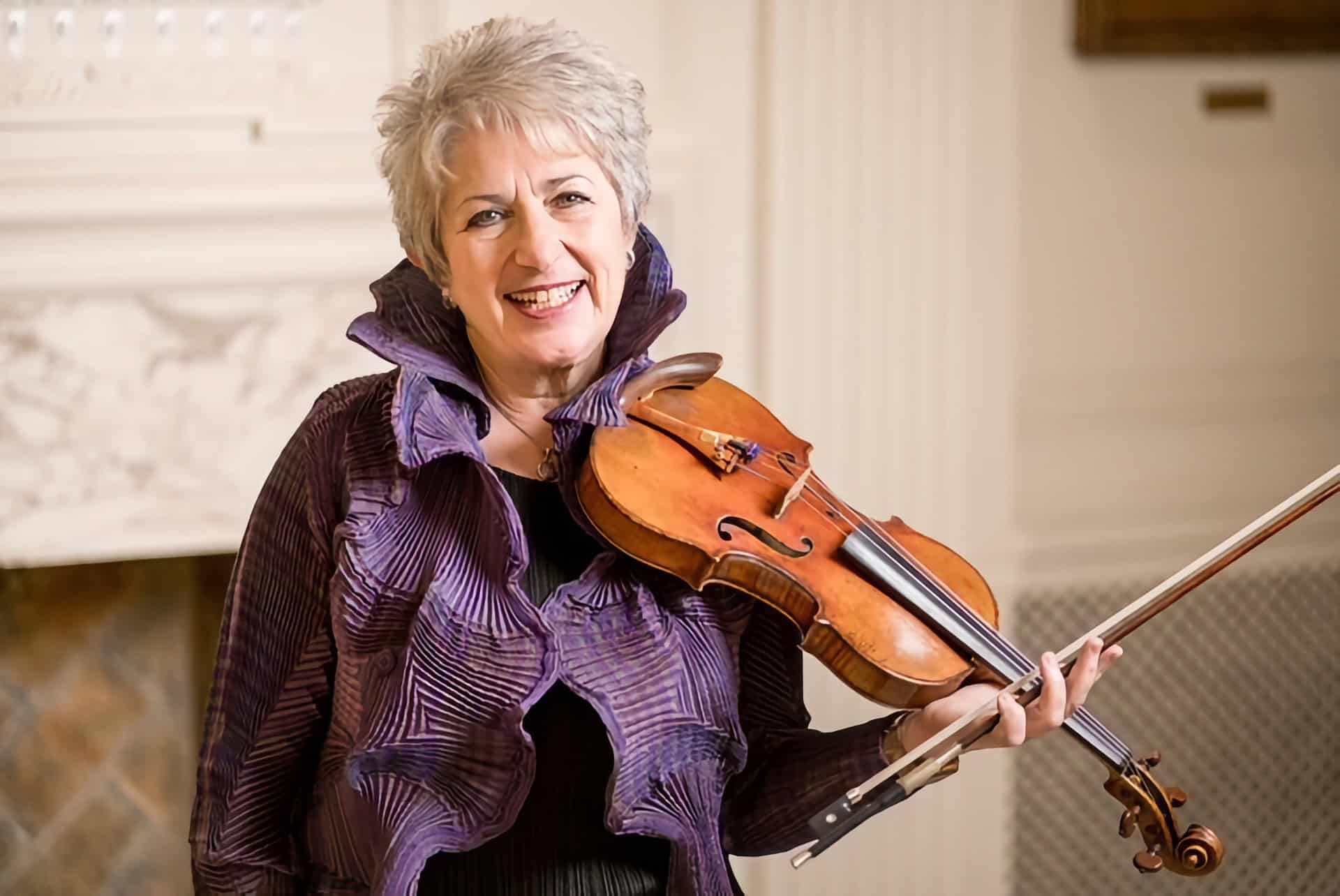
Meet Ida Kavafian
Violinist and violist Ida Kavafian has had a distinguished performing career, having been a member of the Beaux Arts Trio, founder of multiple chamber ensembles, and an artist-member of the Chamber Music Society of Lincoln Center. She is also a founder of the Bravo! Colorado festival, has been artistic director of Music from Angel Fire in New Mexico for over three decades, and serves on the faculty of the Curtis Institute, Juilliard School, and Bard College Conservatory of Music.
In this episode, we explore…
- 1:52 – The lengths Ida used to go to, to avoid practicing as a child
- 7:02 – One of the most important things we must do in the practice room – an enduring lesson learned from Mischa Mischakoff
- 8:28 – What sorts of markings does Ida put in her music?
- 9:41 – Why Ida believes the bow arm is where the art of music-making lies
- 11:21 – The cardinal sin of “accidental phrasing”
- 13:32 – The essential etudes for developing awesome bow control
- 15:06 – The often-overlooked practice activity for string players that is “really, really valuable” (pianists have their own version of this too)
- 18:45 – Who should we listen to, for examples of violinists with great sound?
- 20:34 – Ida’s goal as a teacher, and the moment in studio class where she saw she had accomplished her goal
- 23:46 – Why Ida doesn’t let students change bowings (at least at first)
- 28:05 – Why Ida is “obsessed” with fingerings – and what makes a good fingering in the first place? (plus, an example from the Kreutzer sonata)
- 32:30 – What Ida thinks about on stage while performing – and why this can help with nerves and anxiety
- 37:58 – Why we should have hobbies (plus, some of the things Ida has learned from her very serious hobby away from music)
- 42:24 – Why we should have musical goals, but be cautious of career goals (starts with an unintentional metaphor)
- 46:29 – Ida’s signature technique hack, for playing fifths in tune!
- 47:55 – Another bonus left-hand hack for better intonation, sound, and less tension!
- 49:28 – What would Ida do if she could only practice for 20 minutes?
- 51:12 – Does Ida spend much time planning practice sessions?
[00:00:00] Ida KAVAFIAN: I always tell my students that practice more than four or five hours that they're practicing too much.
[00:00:07] If you don't know what's wrong, you can't fix it by just repeating it again.
[00:00:12] there's a lot of technique in the left hand, but this is where the art is.
[00:00:30] Noa KAGEYAMA: So I understand that you didn't like practicing so much as a child, and I love that because I find it really relatable and I think it's one of the things that often, not just students, but especially I think parents stress out about, you know, my kid is so talented, but they don't see to want to practice.
[00:00:45] What do I do? What have I done wrong? What's going on? What's gonna happen? I mean, there's a lot of, I think, anxiety around that, um, amongst everybody involved. And so I'm, I'm curious when that changed and maybe even like how that changed.
[00:01:00] Ida KAVAFIAN: I'm not sure it changed that much. I do enjoy practicing now because. I have a little bit more time. I mean, I'm cutting back on my teaching. So, while I had a lot of students, I didn't really have a lot of time to practice, and now I, and I, and I sort of missed it. So now I'm enjoying it a little bit more, but I've never been a big, um, fan of practicing, but I'm a big fan of music and so, it's just what goes with it.
[00:01:33] For me, being solid on the instrument, allows one to express themselves in music so much, so much more effectively. So, practicing is a necessary evil and, I do sort of enjoy it now, but I, uh, accepted it. But I must say that when I was, young and growing up in our household, which was filled with musicians, both my parents and of course my sister, who's fabulous. I did have, regular fights with my mother about practicing, and she just, she just forced me we, we had, you know, some really tough moments and I've, when I, when I finally left home and I went to Juilliard, I was so grateful she did that for me. I'm not sure I could do it to a child myself.
[00:02:29] And I understand, you know, parents struggle with it, but in my case, I had no choice. So, um, that would, I mean, I suppose if I had insisted on quitting altogether, uh, that might've worked, but, but didn't have any choice and I thought of all kinds of gimmicks, to, to get out of practicing. I'll just share one with you, which is kind of horrifying, which was, um, I was probably maybe seven or eight years old and, um, I had a, probably a half-size violin, and I looked inside and there was this, this piece of wood in there and I thought, Hmm, I wonder what that is.
[00:03:13] And I took a pencil and I stuck it in the F hole and I knocked it over the post. And then I, this was on a Friday, so I was, I was smart then, but I tried it again later and it was not good. but I, I took the violin to my mother and I was shaking and I was like, oh my gosh, what's going on there? think something's inside.
[00:03:39] And she looked inside and she was like, oh my God, your sound post fell down. We're gonna have to get it fixed and it's Friday. We won't be able to go till Monday. And this is horrible and you can't play. I was like, oh, that's too bad. And, and then, and then when I tried it again, I got into big trouble.
[00:04:01] I did, you know, and I tried all the other things. I turned my clock forward or the clocks in the house forward and, know, all sorts of things. But, I'm glad they didn't work and I'm glad my mother made me practice. I might add one more thing to that, which is I'm a big fan of, of efficient practicing, and I always tell my students that practice more than four or five hours that they're practicing too much.
[00:04:29] Um, because I think if you use your brain while you're practicing, it, it doesn't last for eight hours. It just doesn't, and then you're just reinforcing bad habits. So I would, I would much prefer four hours of, of smart practicing than eight hours of just repeating by rote. So, um, I did learn that as a kid because I didn't like practicing and I just wanted to get it done.
[00:04:56] So I tried to figure out the most, um, smart, the most efficient ways of practicing, then I would put my music on my stand, you know, facing the door. And then, um, I'd put a 17 Magazine or something in front, which I was be, I would be reading and I would just play because I had learned my piece. So if they walked in, they would see, you know, Bach or whatever. I think, don't know that's, that started early, but I'm a, I, I'm also a, a big believer now in efficient and intelligent practicing.
[00:05:31] Noa KAGEYAMA: I wonder, and I know it's a big question, but I wonder if I could have you elaborate a little bit on that, because, you know, for me at least, one of the things that I think often is difficult when we're younger is we don't really know what practicing means other than just repeat it a bunch of times until it seems to sound better.
[00:05:47] but once you start learning how to practice effectively, it does, I think, become a little more engrossing and feels more worthwhile and it's more gratifying and so forth. But I wonder if you could paint a picture, perhaps of what that started to look like or, or maybe even what that looks like now for you and, and how it is that you help your students understand how to do more of the sort of smart, effective, efficient practice.
[00:06:10] Ida KAVAFIAN: Sure, of course. Um, well, we all know, and Itzhak has a cute, uh, video of, of explaining what, how important slow practicing is. And of course, um, that's the first thing, practicing slowly. But when I was age 13 to 15, uh, I studied with Mischa Mischakoff, who was the concertmaster under Toscanini of the NBC Symphony.
[00:06:40] He was a very strict teacher, extremely strict, you know, if you cried in your lesson, it was, you know, he, he would say something like, good, all my students should cry in their lessons. And he was, you know, you would walk in, he was charming and would help you rosin take your violin out. And, and then as soon as the lesson started, and he had the word "think" all over the studio, and there was a huge sign, "think" right on the stand, at the top of the stand.
[00:07:13] So when you looked at your music, that's what you saw. And I think, think, um, that, that's one of the most important things is, Okay, let's say you play something and something's wrong with it. If you don't know what's wrong, you can't fix it by just repeating it again. So you have to stop. And if you can't, um, figure out what's wrong, you try it again.
[00:07:39] But if it's out of tune, it's not enough that it's outta tune to repeat it. It ha you have to, to out if it was low, if it was high, and vow never to make that same mistake again. Trouble with, with um, a lot of kids these days is, they just keep repeating they think practicing a lot is the answer.
[00:08:05] if you just repeat, then you're just solidifying what you already did incorrectly. So you have to stop and you have to think. And it's not enough to think it's outta tune. It has to be, this note was high, note was low. And then tomorrow I'm not gonna make that mistake and I'm never gonna make that mistake again.
[00:08:28] I do, have a lot of markings in my music. I used to have even more. But, um, if, if I'm, if I'm hitting something out of tune and it's always low, I put an H on top of that note. and that's, and if you do that early in, learning a piece, then that h and that note always go together so you can aim for the right direction the next time.
[00:08:57] So it's not enough. I mean, everybody knows it's not enough to repeat, but you have to analyze, what was wrong, how to fix it, and vow never to do it that way again. It sounds simple to me.
[00:09:12] Noa KAGEYAMA: I know, it does. Yeah. It's so hard to actually do it, and we're very tempted to just kind of throw repetitions at the problem without identifying what it is. what other sorts of, because I remember one of my teachers, Stephen Clapp used to have almost like, you needed like a legend to find out what all the abbreviations and the markings meant, and you know, like, save bow, use bow and so forth.
[00:09:34] What other sorts of symbols or markings or things do you find yourself putting into your music?
[00:09:41] Ida KAVAFIAN: Well, I do believe that, there's a lot of technique in the left hand, but this is where the art is. For me, this is where the music is. So I'm a big believer in, being creative with, bow distribution. So I have a lot of LH for lower half, MID is for middle. UH, for upper half, and I believe in using the bow, not back and forth, which I was taught by one teacher just equally back and forth. But to, um, you know, I'm a big believer in this kind of I don't know if you can see what I'm trying to do, but if you're doing, if you're using the bow this way and you come back this way and then you eventually get here so that you're, you're, you're not just, you're actually thinking about how to shape the music with your bow.
[00:10:39] So I do have a lot of bow markings in my music it helps me, like, let's say for instance, I don't know how technical you get on these things, but let's say, trying to follow a composer's marking, they have a long slur and then one or two notes in a slur and inevitably, That sticks out, So you have this long slur and then you have to get back for another long slur, but you have only one or two beats to do it. Well, it seems obvious that you should play lightly that one or two beats, but that's not enough. Uh, my teacher, my main teacher in my life was Oscar Shumsky, um, the greatest violinist and musician. He used to call, if you made a phrasing with your bow, he used to call it accidental phrasing. And of course that was a cardinal sin. To let your bow decide how the music goes. And so I'm constantly telling my students. You tell your bow how you want this phrase to go. Do you want it to go like this?
[00:12:01] You know, is that the way you want? Is, is that what you hear in your head? And they're like, no, of course I don't. Well, I said, well, why are you letting your bow decide music goes? Anyway, so I do have those kinds of markings. I have a lot of L's and H's for my, um, intonation. Um, I have a lot of SB for save bow in chamber music.
[00:12:26] I do a lot of cues. not necessarily with notes, but just with rhythms. So I have little markings for, um, for what I need to watch out for, in another instrument. And then I also have a lot of, with V2, violin two or with viola or that kind of thing. So in chamber music I have more of those kinds of markings.
[00:12:52] Noa KAGEYAMA: I don't know where I read this. I feel like when I was a little kid, I must have read an interview with like Anne-Sophie Mutter or something like that and, and she said something about how, it's easier to learn left hand technique stuff, but it's like the bow control that really differentiates artists and people and, and I always kind of remembered that.
[00:13:10] And so this is interesting for me to hear in terms of how much you think about, what you do with the right arm.
[00:13:17] Do you have any, I mean, is that something you just are intentional about and pay attention to when you're practicing anything? Or are there specific exercises or drills or, or things that you've used along the years to improve that particular part of your playing?
[00:13:31] Ida KAVAFIAN: That's a good question because, I'm a big believer in Rode Caprices, and so I still to this day, you're supposed to say Rode or Rode-ay, but anyway, I've al I grew up Rode-ay, so, and, it's amazing to me. I, I'll get a student and I will say, did you do the Rode Caprices? And if they say, they did, and I feel like they need to do it again, I say, well, you didn't learn enough, so let's do it again. all those slow introductions of those Rode Caprices have a lot of what we've been talking about with this bow distribution. So my Rode is always at hand and um, I will, if for instance, trying to get back into shape now after having, not played for a while uh, 'cause I have some concerts here in Santa Fe coming up.
[00:14:22] So I will look at what I'm gonna practice, I will look at what key it's in, i'll find that Rode Caprice and I will practice that and warm up with it. And I think the bow distribution thing, that's a great, uh, that's a great set of caprices for that because he has some, and don't change the bowings, do the bowings as they're marked.
[00:14:49] Um. He has some really long slurs and then some short slurs, and that's really handy. So I would say probably Rode, but you could make up your own exercises just with scales by playing six notes and then two or two and then six.
[00:15:06] Also I think, it's really useful to play, uh, to practice without vibrato because then you get the the idea what it really sounds like.
[00:15:17] And if it sounds bad, that means you're not thinking about how to use your bow and you're not putting enough emphasis on the beauty of the music in the right hand. So, I would say practicing without vibrato is really, really valuable. I think we, it's like pianists, they hide behind the pedal. They put, you know, they have the lead right foot and they put it down and it's just sounds like a big wash because they're hiding. And instead of making legato in their fingers like I always thought you should, like I learned from playing for years with Pete Serkin, instead of doing legato in your fingers, they depend on the foot, which, in our string playing, we depend on vibrato by hiding behind vibrato. You know, when something's a little out of tune or it's not beautiful, you just add a lot of vibrato.
[00:16:10] So that's another tool is to practice without any vibrato and just try to make the most beautiful phrase possible.
[00:16:20] Noa KAGEYAMA: You know, it's interesting 'cause the way that you're describing how you approach technique and so far we've just been talking about bow stuff, but it, it sounds like it's, it's inextricably tied to whatever musical concept you might have or intention you have for any particular moment. And it would be difficult to practice just bow stuff in isolation of whatever it is that you're trying to do with a phrase.
[00:16:46] I mean, A, is, am I kind of getting that correctly? And B, if so, how does one, you know, 'cause I think having a musical concept is, seems like an obvious thing to do, but it's easier said than done. We have to understand what we're looking for. And so, so how do you balance those things, or how do you help people get better at seeing what's in the score and trying to make sense of what they see there?
[00:17:07] Ida KAVAFIAN: must say it's interesting. I have a couple of students that I'm trying to work on their sound and sometimes I feel like I'm really bad at teaching sound because if they don't have it in their ear, if they don't have it in their gut, it's really hard give them the tools to get it. you know, I can say some technical things that will produce a better sound, I sometimes feel very inadequate, in that area. I had, this one student that just a, a dear, I, I loved her. Her name is [bleeped for student privacy 😁]. She plays, in [bleeped for student privacy 😁] in the symphony. And um, I just kept saying, [bleeped for student privacy 😁], your sound, your sound, you've gotta have a better sound. Try this, try that. You, you know, and, and one, one week after her previous lesson, I had gotten frustrated and she came in and this sound was, was just it's beautiful, just amazing. [student privacy 😁], what happened? How, how did you do this? And she said, well, you yelled at me last week. And I was like, oh my God, I gotta yell at everybody. But of course, it doesn't work that way because a lot of students don't respond to that. But you just, it's like each student has to have a, trigger.
[00:18:34] You have to find the trigger. And sometimes it takes me a while to find the, that, that the, the that point or those points that will help them develop. Sometimes I tell them to listen to some, artists that I think have beautiful sounds just to, you know, I don't really like the idea of them imitating, another player.
[00:18:59] But for instance, I mean, who's got, Pinchas has a great sound. So watch videos of Pinchas, listen to his sound. Um, my favorite growing up. Everybody loved Heifetz, and I loved and admired Heifetz, but my favorite was Oistrakh. And I just felt like when I listened to Oistrakh, I felt like he, he just enveloped me with his sound.
[00:19:23] I just felt so like, um, just taken care of as a listener, you know? And so, um, that was a big influence on me. But there are the, you know, there are a lot of people out there now that, that have great sounds and, Pinchas is certainly one of them. Um, Shumsky of course, was, a, an amazing sound, and I heard that sound every week.
[00:19:46] And so that was also a big influence.
[00:19:50] Noa KAGEYAMA: So I have a question about balancing technique and music. I remember someone asked Leon Fleisher this question and his response was, you know, you only like, basically the question was, how much time do you need to spend working on technique? And he wasn't unkind in his answer, but sort of made it seem like it was the most obvious thing to say in the world.
[00:20:11] He's like, well, you only need as much time to work on technique as you need to say what it is that you're trying to say or something along those lines. And, and I'm wondering, for you, how do you, and this goes back to this question of, you know, what do we do in the four or five hours that we have to practice?
[00:20:25] I mean, how do you balance time spent on fundamentals or technique or the caprices and the other stuff that's on your list to do?
[00:20:34] Ida KAVAFIAN: Well, it's different for every student and that's why, um, that's the way I teach is. You have this, this, these raw materials in a student. And, , it's my job to make them a better version of that, of who they So my biggest, compliment as a teacher was, um, I can't remember which one of them said what they said, but they were both working on the Bach G Minor.
[00:21:05] and one of them played it in studio class and the other, and these, this was, these are two great violinists. Ben Beilman was one, and Nikki Chooi was the other. I just don't remember who said what, but one of them played and I always go around the studio and ask people to make comments to see if they're really listening for the right thing.
[00:21:28] And the other said, wow, I'm studying the same piece and I, I don't play in anything like that. And I, I felt so satisfied that I had, achieved my goal, which is to make them better versions of themselves. Of course, you know, sometimes you wanna lead them in a certain direction, you you just have to take what have and make it better.
[00:21:58] it, so teaching is, is exhausting because, um, you know, I did study with, um, Galamian for a a little while, but when you first studied with Galamian, you, you did all the same things that the rest of the students did, and it never sat well with me. I was frustrated and, I didn't, I thought that I wanted to make it sound like me.
[00:22:25] And so, he would assign a piece and then he would ask you to, he would say such and such just studied this, go get the music and copy all the fingerings and bowings. And so I was, I was like, oh, well what if I wanna do something different from what's his name? And that just wasn't an option.
[00:22:45] think if I had stayed with him for a number of years, it might have become an option. He was a great teacher for a lot of people. It just didn't fit me quite the way that I wanted. And I wanted to study more about, the score and the music and and my individuality. so I switched Shumsky, and it was the best move I ever made.
[00:23:08] So I think I teach in the Shumsky mode, which is to make, to pay individual attention to each student. And it's important I think to, for me to do that. It's tiring 'cause you have to really think very hard as a teacher. But, that's my goal anyway.
[00:23:30] Noa KAGEYAMA: Yeah. Can you say more about how, we look at the same black and white markings and symbols on the page, but we can come up with very different ideas and thoughts about what that actually means and how we want it to sound and so forth.
[00:23:42] What does one do to, to arrive at that place?
[00:23:46] Ida KAVAFIAN: I think sometimes it depends on the composer. So let's say, a kid is studying a Schubert or Beethoven or, that, that that kind of style and sometimes those composers might have some, um, awkward passages or awkward phrases. And, what I don't allow is for a student to start studying a piece by changing all the bowings to something that's easier or more convenient.
[00:24:21] So, um, and for instance, in the Schubert Fantasy, you know, there are all those just incredibly difficult triplet passages. Um, and, and there are, ossias of just playing eighth notes. So if, if a student brings in the eighth notes, I'm like, try to do what he wrote first. Let's try for a long time. And then little by little we can take the things that are, are the most awkward and try to, to fix them and change them if necessary.
[00:24:55] But for me, I don't like when students change uh, change bows because they don't have enough bow for something. But, you know, that sounds like I, I, um, I'm very dogmatic about it, i'm not, but we start that way just get, what the composer had intended. So, that's the first thing I think. it's the first sign of, uh, inadequacy in a student when they change things for their own, convenience or make things easier, it's, that's not what music's about. So let's say, okay. Um, what's a good example? Uh, slow movement of the Sibelius Concerto. Uh, there's that opening, which is so beautiful, uh, melodic and all that. And then comes, um, then comes a tutti and then comes the slurs where the two against the three, you know? And so, um, if a student comes in and does, i, I don't allow 'em to do that, at least not at the beginning, because I think they, they change the music by changing the slurs because suddenly it becomes this, oh, this kind of rhapsodic easy, beautiful, melody or, or, you know, double tops. And what it actually represents at that place is struggle and pathos.
[00:26:31] And, and it's not easy and open. It's, ah, it's, it's like torture. In a good way. sounds like a bad word, but happens a lot in those kinds concerti. It happens a lot in the Brahms concerto where, um, if you don't get the feeling of struggling first, then you're not gonna get the right, character for the, for the passage or for the phrase.
[00:26:59] So first try it the way that they wrote it and then, you know, let's say you go, um, the better orchestras, you can probably do lot of those original slurs, but you don't always play with the great orchestras. And a lot of times the conductor doesn't keep the orchestra down. So then okay, change it. But not until you've tried and you've really gotten the feeling of the phrase.
[00:27:27] Noa KAGEYAMA: you make decisions about bowings, and I'm wondering if it's the same for the left hand as well in terms of fingerings that ultimately help you serve what it is that is supposed to, or that you think the composer intended for the moment, which means that the bowings and fingerings aren't necessarily about convenience and ease, but for the larger purpose of what you're trying to do with the phrase.
[00:27:52] Um, it seems to me that that might be a, an engrossing and maybe even fun process or creative process as well. I mean, is that something that you think about quite a bit or you encourage your students to think about or?
[00:28:05] Ida KAVAFIAN: I, I'm obsessed with, with fingerings, not because of technique but because of what they do for a phrase and for a color. I remember hearing, um, the great flutist Marcel Moyse talk about, um, uh, the evenness of a phrase. And for me, when you change strings that becomes not so even so in general, I try to, to keep slurs on one string if possible, just because I don't like to hear, you know, and this, this is the way he would imitate the flutists that we're playing for him, where it'd be, you know, changing color like that. And so, of course, that's not musical, but people don't think about it. They just play any kind of fingerings and bowings without tailoring them to what the, what the music is about or what, um, uh, how the music should sound. So I am obsessed with fingerings. Um, Steve's in, uh, Palo Alto, and, he, he said he heard, um, Alexi Kenney play something.
[00:29:20] And I, I really like Alexi, he said, beautiful musician. And his comment was, you would love it. He uses the most beautiful fingerings, and it sounds so cold and technical, but it's so for me, so crucial. Another one that, um, I remember having discussions with Joey Silverstein when, um, when he was still around, um, and you know, my colleague at, at Curtis and we would talk about fingerings all the time, and he came to one of my concerts and afterwards his ultimate um, compliment to me was, wow, you've got some incredibly creative and beautiful fingerings.
[00:30:03] And I was like, oh, that makes me so happy. So yeah. But it's about the music. And it's usually makes things much more difficult. So for instance, okay, I'm really getting nerdy now, but for years studying and playing the Kreutzer Sonata and the opening was like, oh God, what? And nobody makes this sound right. And, I finally came up and it was not that long ago, maybe, I don't know, 10 or 15 years ago or something. But you know, when you're as old as me, that's recent, so , that opening cord, um, and then TI don't, I can't, I'm not, I don't have perfect pitch. But t you know, it does that because you change to the A and uh, A and D strings.
[00:31:06] So I came up with this fingering where you play the first chord, you're on the E string, and then there's a, marks a, a forte with a diminuendo. Right. So the next note, I change to the fourth position on the D and A. And then to me that makes sense. It's incredibly difficult rarely works, but it's so worth it when it works, because to me that makes the phrase sound i, I imagine that that's the way he imagined it, you know? So sometimes the most difficult, well, it's usually the case. The most difficult fingerings are the best.
[00:31:50] Noa KAGEYAMA: this is something, obviously you decide in the practice room and you, and you sort of geek out about it and you enjoy it and you feel really good about it and you test it out and so forth. When it comes to the performance, 'cause my guess is it's not just the one fingering and the fingering isn't the point, and there's a bunch of these things scattered throughout and bow stuff and so forth.
[00:32:09] What are you actually thinking about in the moment or how do you keep your mind where it needs to be such that you're not just thinking about how to manipulate the left hand and the right arm to create these things? Do. Do you know what I mean? Like I'm wondering where your mind is at, I guess, in performance on stage when all this is happening.
[00:32:30] Ida KAVAFIAN: Well, um, I've never been perfect. I'm not gonna ever be perfect. And if that's all I worry about, that's all people are gonna hear that I'm trying not to make any mistakes. And of course, that's not the way you reach an audience by just, you know, being. You know, okay, this has to be technical. And that's, that's how you start, you know, first you start with a musical concept. You fit your fingerings and bows to that musical concept and practice in a very technical way.
[00:33:03] But then those are tools that you use to express yourself in a concert. And so, of course, because of the choices I make, they're not always, that, they don't always work. Um, and that's okay because if people wanna hear something perfect, they can just, you know, listen to a recording. So, um, I'm working with [ bleeped for student privacy 😁] at the moment, and, uh, she has an unbelievable technique and she's capable of playing everything perfectly. So sometimes I feel like she strives too much for that.
[00:33:45] Because she, she can. so I try to, my job with her is to be, have more abandon take more chances and, forget about, you know, there's certain things as you're playing that you have to think about technically. But basically, um, what you wanna do is reach, this, the fictitious woman in the, 15th row or the 20th row.
[00:34:11] Steve and I always talk about Mrs. Ackerman. She's at the concert with her husband. They're a little hard of hearing, and you have to just be generous and express yourself so that Mrs. Ackerman, um, goes home with a, with a, a, a changed life.
[00:34:29] Noa KAGEYAMA: I read something that you had said that I was hoping you might be able to elaborate further on, which I think is related to this. I mean, one thing that I read was, I think in reference to, to some competition, you said that competitors have the control to tell us judges what to focus on. And related to that, you also said, this is a quote.
[00:34:48] " I find that if you make a plan while playing, then you get less nervous because your mind does not have the chance to go to other places." I wonder if you could elaborate on that idea and what you meant by those things.
[00:34:59] Ida KAVAFIAN: Yeah. This goes along with the, my earlier training of thinking, you know, Mischakoff thinking, and of course with Shumsky, he had, uh, such a, a supremely, intellectual way of looking at the violin and, and music. Um, but it has to do also with nerves, with, uh, young students who have nerves and everybody has nerves at some point in their lives.
[00:35:26] Some, some more suffer more than others. Um. But I think if you make a plan about what you're gonna think about, sometimes it's something very simple like this, I, this, um, string crossing is an up bow. This shift is a down bow. just little things like that of interspersed that will make your performance more solid and more beautiful.
[00:35:55] if you plan to think about those things in a concert, your brain has a lot less, opportunity to, to, to wander and to um, be subjected to the nerves. So I think a plan in a concert is really important. And of course it's different with every student because some of them are not, if they're not musical, then that kind of technical plan is, is not as effective. Let's say they're solid enough technically that you can say at this point, this is what you have to imagine in terms of the expression of the phrase. Um, make a story. You know, imagine a, a place, a beautiful place, or a scary place, or, um, an experience in your life that, you know, things like that, that, that you need to, to convey to students that have, um, a solid technique but, think too much about it or depend too much on it. You, the thing is, you know, these days there's so many people that can play incredibly well. You know, I mean, the, the general level of playing is so much, is so improved, uh, and so high that it's just, it's not enough. It, it was never enough. But now that there are more of them, it's really not enough.
[00:37:23] Noa KAGEYAMA: I don't know if this is related to what you were just saying, but, the great basketball coach, Phil Jackson, you know, coached the Bulls and the Lakers for many years. one thing that he said once is, not only is there more to life than basketball, there's a lot more to basketball than basketball. I'm wondering what comes to mind when you hear this, you know, especially in context of the little that I know about Oscar Shumsky, is, that he had other interests and passions and skills outside of music and, um, so those things maybe seemed aligned. And I was just wondering what your thoughts were about the Phil Jackson quote.
[00:37:58] Ida KAVAFIAN: Well, I do, as you know, I have a passion for my hobby, which is, um, that my dogs, I don't know if you can see them,
[00:38:10] it's a hobby that I, I just, I just really love and, um, I, uh, I show them and I've, I've, um, trained them for hunting and obedience and they're just, um, uh, a real focus It's, it's wonderful and it's a very, it's so removed. And sometimes I play the national anthem at dog shows and then people know what I do to pay for the kibble. But, I meet people that I, that I, I have no idea what they do and I don't really care 'cause we share this passion for, for dogs.
[00:38:46] So I think it's healthy to have any kind of hobby, whether it's, you know, reading or hiking or, or cooking or, or whatever. Something that takes you completely away from music because then when you go back to it, it's so much more special than if you're just tunnel visioned about it all day long. So I do believe it's really important.
[00:39:08] Sometimes if I feel like a student is, um, in a rut or, or, you know, uh, depressed about something, I'll just invite them for the morning walk with the dogs in, in Philly, you know, down the river. things like that. I do think it's important. Um, I think we can't be just thinking about one thing all the time.
[00:39:31] Noa KAGEYAMA: I'm also guessing. I wonder if there are things that you learn in one performance domain that you don't necessarily immediately recognize as being useful to your primary or other performance domain, but at some point you realize how much you've learned by being involved in trying to learn or, or get better at something else.
[00:39:50] And I'm wondering if there are specific examples you can think of with, um, with your experiences with the dog showing and breeding and so forth. I mean, one thing that came to mind is I only learned about this because when I was talking to Steve, he mentioned that, um, you were initially less comfortable showing the dogs, but then became more comfortable over time.
[00:40:12] And so I'm wondering if you can say more about that perhaps.
[00:40:16] Ida KAVAFIAN: Well, it is just like everything else. I mean, you might be, you might have talent at something, but you have to practice it to get good. I felt, at first, and he's the one that, Steve's the one that first went in the show ring and I just watched and took videos and pictures and I knew I wanted to do it, but I wasn't ready to take the plunge.
[00:40:40] so I took some classes and I practiced and I got better and I really enjoyed it. And it's just like everything else, it requires discipline and, uh, repetition and practice and a brain. Thinking about it, you know, what I love about showing dogs is that is similar to, to violin playing and teaching violin students, is that each dog is an individual and some of them require a heavy hand and some require simply positive reinforcement and encouragement.
[00:41:17] so you have to get inside the brain of a dog, just like a student. So that's a really, um, that's, that really carries over to both, both things. Um, just treating each one as an individual. I have an 11-year-old and a 6-year-old. and they're mother and daughter, but completely different.
[00:41:41] Completely different. So, um, you know, the kind of of, um, discipline it might take to get one of them to do something, doesn't work on the other. One of them's happy all day long. One of 'em is loving and sweet, but little too much of a thinker. Well, like what's happening there. And the other one's like, ah, life is great.
[00:42:07] So love having the life is great one because it's like a, it's like a life lesson, you know? She wakes up happy, she's happy all day long. She goes to sleep happy. Same thing the next day. And I was like, you just wanna, you just wanna be like that, you know?
[00:42:24] The mother is a show dog. She's a retired show dog. And she was one of the top, um, in the country when she was, when she was, uh, campaigning. Um, and the second one, the daughter, I just loved her, but we weren't supposed to keep her and make, long story short, I cried and Steve let me keep her.
[00:42:46] And and so she is, and she's, and I loved her from the second she was born. I could tell right away, she was just, she was just a real positive, positive animal. Anyway, so her bite went off when she was four months old. And while it's not a disqualification, it's, it, it's really almost impossible to make a champion out of a, a dog with a bad bite.
[00:43:12] I said, okay, we're gonna have to do some other stuff. So I noticed she was very, into hunting. And so I started, uh, training, um, myself and her, um, to be a hunter. And of course she had so much, um natural instinct that it didn't, it didn't take that much. And then when it, it got passed, I got a, uh, the lowest title you can get as a hunter, which is called Junior Hunter.
[00:43:39] Then when it was time for her to, she had a lot more ability than I had, so I sent her to my friend in Colorado and, um, she passed the, middle level which, which is senior hunter and just soared right up to Master Hunter, and she's, so, she has of the most coveted titles Vizslas breed I have Hungarian hunting dog can get, which is a master hunter.
[00:44:07] So I just sort sort of had to, I had to adjust my thinking because my plan for her was to be a great show dog, especially with her fun attitude, but that was not to be so Instead she became a great hunter.
[00:44:25] Noa KAGEYAMA: it sounds like somewhat reflective of what I think I've heard you say in other interviews about building a career or navigating a career, which is to be open and flexible to things that you might not have planned or expected, but end up becoming quite meaningful, um, if you're open to them.
[00:44:45] Ida KAVAFIAN: I think having goals is only good for music musical goals. To be the best you can, to be, you know, to strive to, to be a great musician, um, that's a great goal. But career goal, I don't, I don't think those are healthy.
[00:45:02] first of of all, you. You might have one that's out of reach, and if you never reach that, it, it might be a, a source of frustration instead of... So, I mean, the things that came along in my life were not, you know, some people thought I should be a soloist. Some people thought, okay, you know, you're gonna be a chamber music player.
[00:45:25] And then, but all this stuff happened on the side that I, that I didn't expect. And, if I had not taken advantage of those things that presented themselves, I, I, I would've had a very different life. If I had just thought, okay, I have to do, I wanna do this.
[00:45:46] Noa KAGEYAMA: I think sometimes it's, it takes some courage to explore or grab hold of some of these things that peek their way into our lives. Um, and we're not sure if that's no what we should be grabbing onto or not. I mean, do you, but you know, in hindsight everything makes sense, but in the moment, do you have ways of making those decisions for yourself or deciding, you know, is this something that I grab onto or is there any uncertainty? Or do you just kind of know immediately that, oh, I wanna grab this.
[00:46:18] Ida KAVAFIAN: Oh, I think there's always doubt. If you don't have doubt, that means, you're not really seeing the whole picture. But I think, uh, being open to trying things is really important in, um, your career, in the way you play and the way you study. Um, just a stupid example is I have a trick of how to play, uh, fifth that I share.
[00:46:47] With anybody who's willing to listen. Um, because, and that was out of, of growing up and playing fifths outta tune. And I was like, oh, I gotta do this. I gotta, oh. And it just made me crazy that I, there's gotta be a way to, to, to, um, do this better.
[00:47:06] So I learned how to manipulate my strings so that the strings are closer together. So using another finger to bring the strings together and then planting the finger on, uh, the fifth in question.
[00:47:23] And that is such a, I mean, that works so, so well that everybody that tries it immediately is like they have this aha moment. And that's, that, that's like my signature thing that I, that I love to to share because, and it came out of a frustration of my own, of like. This is, I'm getting sick of playing fifths outta tune.
[00:47:50] And of course in Bach it's like, it's really, really important. I also also feel like, I don't wanna get too technical, but I, I think that people, uh, play too much on their tippy tips. And, you know, your tippy tip, and this is a Mischakoff thing too, he used to always teach us to play on the flat of the finger and the tippy tip has the least meat and creates the most tension. And when you have tension, you play outta tune and you get injured. To me it's a no brainer, but I don't know why it takes people so long to admit it and then fix it. It, it's frustrating to me and so I'm always teaching, you know, this kind of position and not this, uh, and that is very helpful for sound, for intonation and for keeping yourself from getting injured after all.
[00:48:52] Yeah. Any kind of, of, um, curling of the fingers takes muscles and, and, and, you know, the, having a very loose hand where you don't really feel bones or anything it's just like cartilage, you know, I think is so much healthier.
[00:49:15] Noa KAGEYAMA: Yeah, it makes a lot of sense. One last question, uh, before you take off. Um, if you only had, and I'm sure the answer varies depending on what's going on in your life, but if you only had 20 minutes to practice, what would you do or what would you advise a student to do?
[00:49:33] Ida KAVAFIAN: I, I totally believe it. I, it, it really pisses me off. Oh, sorry. It really angers me when people say, well, I just don't have time to practice. I just had, you know, 20 minutes, I had a half hour. It was no point. That's not true. It, you can learn anything. You can learn something really useful in a very short amount of time.
[00:49:55] But what that is, I'm not sure I could generalize exactly what it is, but if I would probably say in a piece that you're playing and you're having trouble in a certain place, just isolate that place. Make it very small. Just a few. Um, that's another practice technique is starting with two notes. Adding the previous note, adding the next note, you know, just one by one, adding, um, un until, uh, but not, but not adding until those two notes feel good or those three notes feel good.
[00:50:32] and then when you're really solid, adding another note. So that's something you can do with any passage. So, um, I would probably start, I would probably sometimes, you know what else is in my music? We talked earlier about the markings in my music, I have a lot of Xs or stars. Depends Xs are a little problematic. Stars are like, you need to practice this.
[00:50:58] working from an iPad is really useful 'cause you can, use different colors for different things. So I have a lot of Xs and stars in my, uh, in, you know, at the end of lines that I need to look at.
[00:51:11] Noa KAGEYAMA: Related to that, I mean, how much time do you spend actually planning what you're gonna do in the practice room?
[00:51:17] Ida KAVAFIAN: That's a good question. Um, I'm not sure exactly how much time, but a good bit. I, it's, it goes along with, you know, thinking and planning. So yeah, I, I'll, I'll spend a good amount of time. Like, I'll probably practice after this 'cause I have the rest of my day is free fantastically so I can spread out the practicing.
[00:51:44] So I'll do a couple hours and then I'll do something else. Maybe take a hike with the dogs and, then go back maybe. for instance, I have a certain number of pieces that I'm preparing. So, um, I'll, I did like two movements of a piece, so I'll do the other two movements. So I've already started thinking about, how I'm gonna, attack those movements and then later I'll, I'll do something else.
[00:52:12] So I think it's really important.
[00:52:14] I remember. Okay, I have to tell you one more story.
[00:52:17] Um, for I don't know how many more stories, but anyway, a good one because, I was teaching, uh, Ben Beilman, who's just a phenomenal, musician and, and player. He studied with me five years at, at, Curtis, Curtis, and I was, and we were preparing him for the Indianapolis competition.
[00:52:38] This is many years ago. And, I thought he should do another competition ahead of it, to get experience. So he did Montreal um, it was a little more than just a pre preparation because he won. Okay. So now he's, he has all these wonderful opportunities from, from winning the Montreal competition.
[00:52:59] And so one time they came to him and he, um, and they asked him to do all 24 Caprices in a concert Paganini. And so he, he came to his next lesson and he goes. Ha ha, you know, you're not gonna believe this, but they want me to play a recital of all 24 Caprices. I isn't that hysterical? I would never do that.
[00:53:22] I'm not doing that. That's not my thing. You know, and he was at that time already, a thinker and a beautiful musician, and that, that was where his focus was. He had a decent technique, but it, it, it wasn't his main goal. So I looked at him and I said, I think it's a great idea. Let's do it. We'll be really methodical.
[00:53:47] And so, um, I said, make a, make a schedule this week you're gonna do this. Okay. So, um, the first four, the first day, and then the next four, and then the next day after that, the next four, but review the first set. And, you know, so we made a really, um. A careful plan of how to learn this monstrosity of a project.
[00:54:13] And he did it. He was, um, so diligent and so smart in the way he prepared, he did it, and it was the best thing. It, it took his technique from here to just, you know, limitless was, it was really great. So if a student is preparing for a competition and they have a lot of repertoire to plan or to practice, I'll ask them to write it out in a book and, um, plan exactly the goal for that day.
[00:54:48] piece, the next day is another piece or two pieces. Review this. Do you know, so that it, so that you're really. Not just taking the fiddle out and being overwhelmed by having to play 12 pieces at once.
[00:55:03] I hate competitions, but I love how they make people practice.
[00:55:08] You know, I was talking to um, um, Arnold Steinhardt, who's my next door neighbor here because he's wonderful.
[00:55:14] We were hiking with the dogs the other day. He, his dogs, uh, Banksy and my dogs are really good buddies. Anyway, he was, we were talking about competitions and of course he had had the same he has the same feeling and he, he recalled when he was preparing for the Queen Elizabeth, he already had his position, I think assistant concertmaster of the Cleveland Orchestra.
[00:55:37] And, um, he just asked, Szell if he could have this time off to do the, the competition. Um, I think he had already won Leventritt and all that and, and, um, they allowed him to do it and he said it was the best thing because he just practiced so hard and he was already in the orchestra. So he would practice from, I think he said 10 to two, 10:00 PM to 2:00 AM because, you know, he had a concert.
[00:56:06] He said it was the best thing ever 'cause it really shored up his, his uh, his violin playing.
Sign up to receive the latest episodes via email
Enter your email address below to get the latest episode in your inbox.
Notes
6:14 – Ida references a video of Itzhak Perlman talking about slow practice – perhaps this one
24:24 – Haven’t heard the Schubert Fantasy before? Here’s a performance by the violinist Ben Beilman, who Ida mentioned in the episode.
25:41 – A performance of that section Ida references in the second movement of the Sibelius concerto (skip to ~4:00), by Ben Beilman.
29:17 – The “Steve” that Ida refers to several times is violist and husband Steven Tenenbom, whose podcast episode on developing an inner pulse (and other topics) you can watch or listen to here.
50:11 – Ida refers to a type of “chaining,” a concept you can learn more about in this episode with trombonist Jason Sulliman
55:03 – Ida expresses her feelings about competitions. The question of whether competitions are good or bad is complicated. It’s the subject of this podcast episode on the hidden side effects of competitions.
Where to find Ida
You can find Ida performing and teaching on concert stages and conservatories around the world. Here’s her faculty page at Curtis:


Thanks for a wonderfully uplifting interview! I enjoyed the stories about Ida’s youthful (and current) practice avoidance; she was refreshingly authentic and not “preachy.” Many of her tips apply to pianists as much as violinists. She inspired me to print off several THINK signs to give to students and put up on the pianos. I didn’t learn this lesson until later in life, and it, along with a plan for practicing, makes all the difference!
Her comments about pianists using pedaling to “hide” was on point (and a reason to practice without, which students hate once they’ve learned to use it), about not playing on “tippy tips” but on the fleshy part of your fingers also rang true, and even the comments about bowing creating the artistry has parallels in piano (with the idea of gesture, or “choreography” as Seymour Bernstein calls it).
It was also good to hear someone of her caliber talk about something other than music, and how the diversion of a hobby can make the music that much more meaningful.
Thanks to both for sharing your ideas and musicianship with the world!
Thank you, Tracey – glad to hear you enjoyed it!
As a Suzuki teacher for many years, I can cerainly relate to the “strong-willed” parent/child relationship and to musicians (myself included) where playing and practicing was non-negotiable. I played in several orchestras in the Detroit area and sat next to Ida’s mother. She was very proud of her children, but I can imagine she did not tolerate much! The descriptions certainly gave me a chuckle remembering her.
Thanks for sharing, Joan! 😁
Another wonderful interview. Thank you.